Quartz vs Automatic: Which Movement Is Better for a Stone-Set Watch?
Quartz is usually the better movement for a stone-set watch under $3,000. Here is where automatic makes sense, with budget, size, comfort, and upkeep in plain terms.
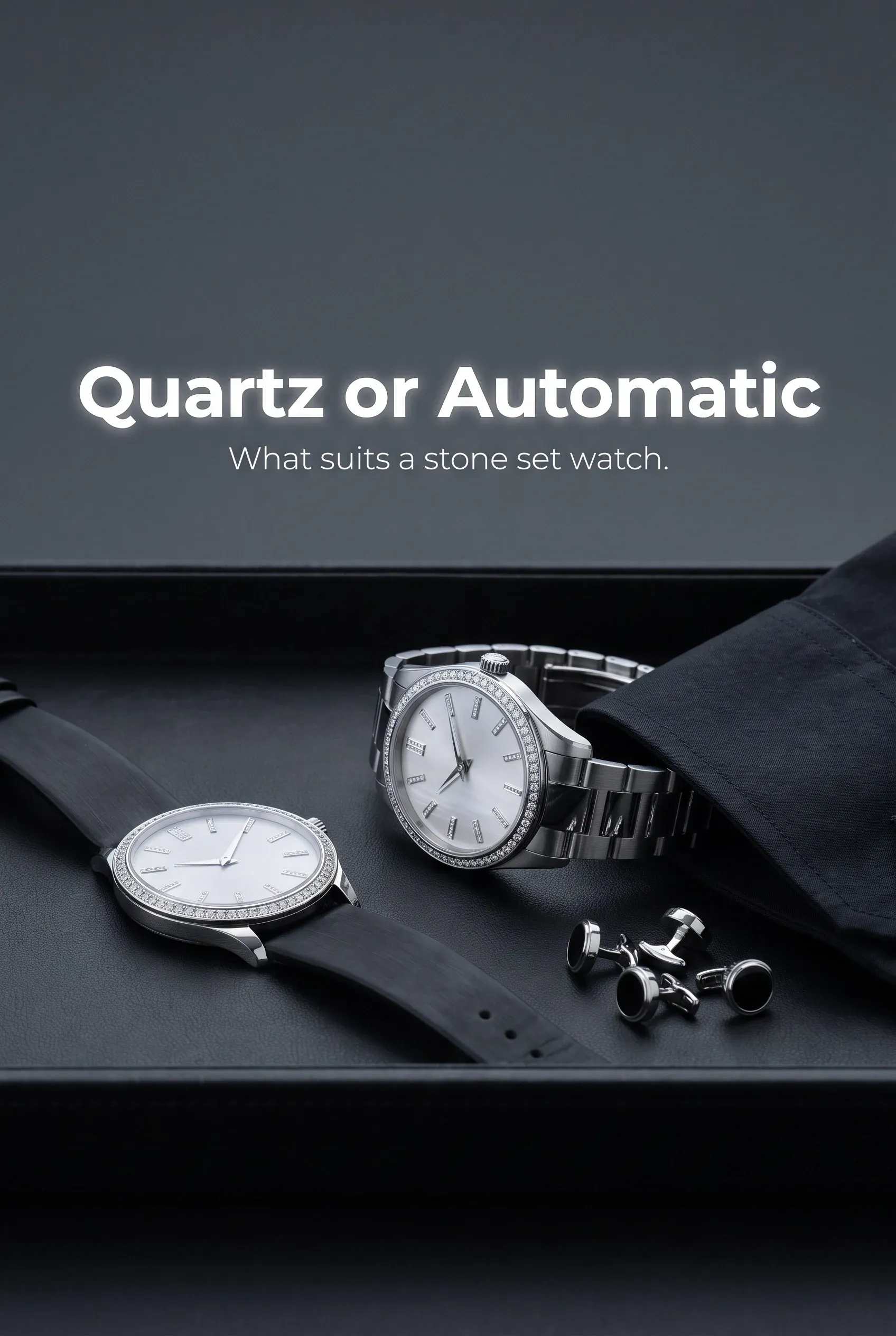
For most stone-set watches, quartz is the better movement. It is usually thinner, cheaper to maintain, and it is the normal choice in stone-set watches under $3,000. Automatic makes sense when you care about the movement itself, accept more thickness and service cost, and are buying a watch where the mechanics matter as much as the stones.
How the two movements actually work
A quartz watch uses a battery and an electronic movement. An automatic watch is mechanical, powered by a mainspring, with a rotor that winds as you move your wrist. Both can power a stone-set watch just fine.
The key difference is not whether one tells time at all, it is what you are paying for. With quartz, most of the money can go to the case, bracelet, crystal, and stone setting. With automatic, some of the budget goes into a more complex movement that sits under the dial and is mostly invisible during wear.
Quartz vs automatic watch at a glance
| Question | Quartz | Automatic |
|---|---|---|
| Power source | Battery powered electronic movement | Mechanical movement with rotor winding |
| Best fit for stone-set watches | Daily wear, heavy stone coverage, practical budgets | Buyers who care about mechanics as much as the exterior |
| Case profile | Usually slimmer | Usually thicker |
| Ongoing upkeep | Battery changes and basic checks, timing varies by maker | Periodic servicing, cost and timing vary by maker |
| Where it is common | The standard choice in stone-set watches under $3,000 | More common once the base watch and movement are part of the appeal |
| Short verdict | Practical choice | Enthusiast choice |
Why stone-set watches change the answer
A plain steel dress watch and a fully stone-set watch do not ask the same question. Once the bezel, dial, bracelet, or case is covered in stones, the watch already has strong visual impact. That changes what gives you value.
Most people notice the sparkle, setting quality, bracelet fit, and case size before they notice the movement type. That is especially true with pieces described as the meaning of iced out, where surface coverage is the main design point. In that context, paying extra for an automatic can make sense, but only if you personally care about mechanical watchmaking.
The case for quartz under $3,000
In stone-set watches under $3,000, Japanese quartz is the norm. That one fact shapes the market more than forum opinions do. If you are shopping in the common crystal, CZ, or moissanite ranges, quartz is what most makers use because it keeps cost and thickness under control.
That is usually good news for the buyer. A quartz movement lets more of the budget go toward better visible parts, like cleaner setting work, a more wearable case, or a better crystal. If you want more context on how movement fits into stone coverage and size, our guide to case size and movement basics is a helpful next read.
When automatic is worth it
Automatic is worth it when the movement is part of why you want the watch. Maybe you already own quartz pieces, or maybe you like the idea of a mechanical object powered by wrist motion. In that case, the extra thickness and future service are part of the deal, not a flaw.
Automatic also makes more sense once you move above the lowest stone-set tiers. If the watch starts with a good mechanical base, then gets lab diamonds or natural diamonds, the movement can feel consistent with the rest of the project. It is less convincing when a heavily decorated budget watch uses an automatic mainly as a marketing line.
Budget bands that change the decision
Your budget usually answers most of the quartz or automatic question before you even compare spec sheets. Stone type and setting quality change faster than movement prestige in this category.
| Budget band | What the stones usually are | Movement reality | What to prioritize |
|---|---|---|---|
| Under $400 | Usually crystal or CZ | Quartz makes the most sense | Setting method, bracelet fit, and realistic stone claims |
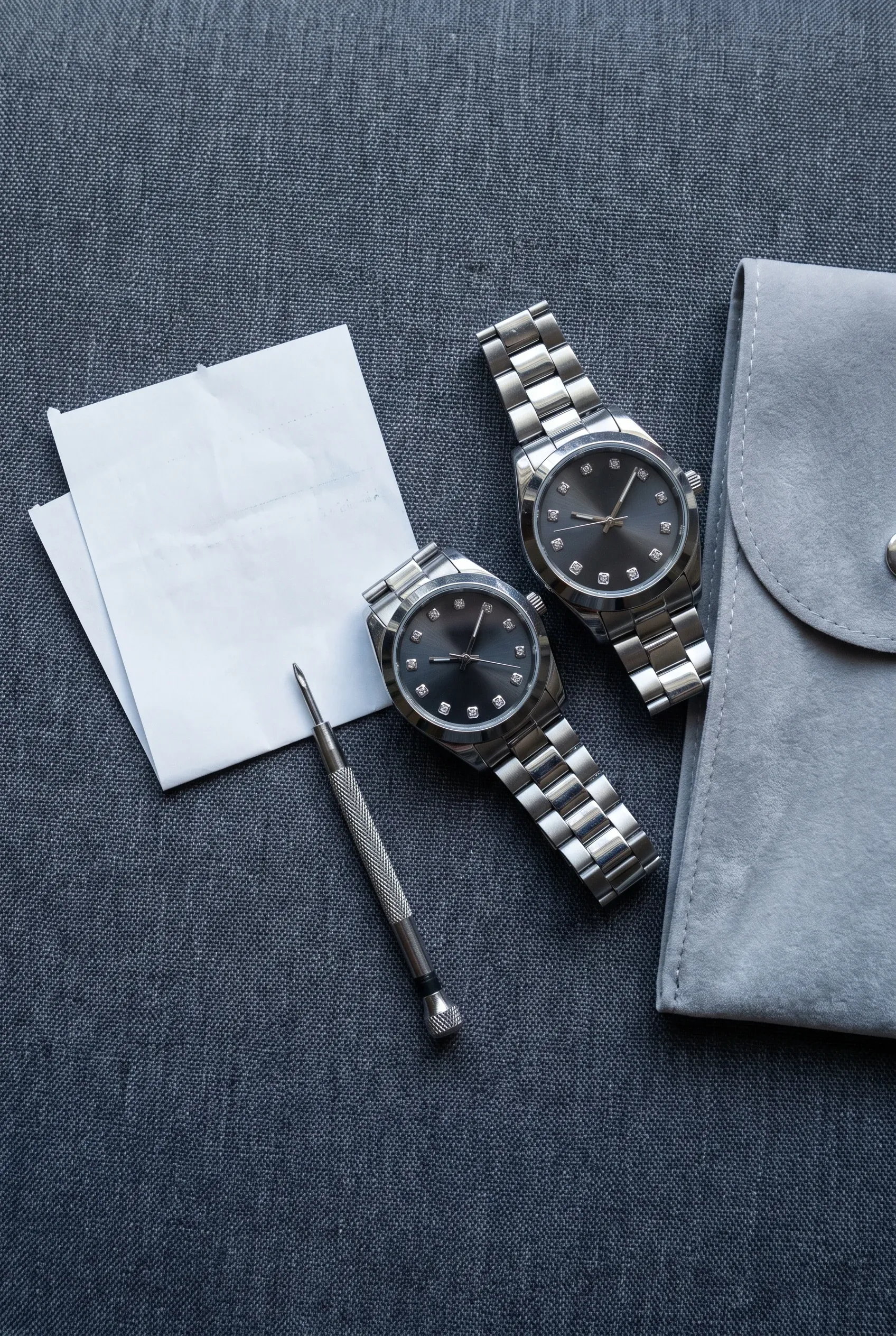
| $900 to $2,700 | Fully set moissanite is common | Quartz is still the normal choice | Hand-set stones, case comfort, and crystal material |
| $5,000 to $15,000 | Custom lab-diamond bust-down work | Movement choice depends on the base watch | Whether you value the underlying watch or just the surface work |
| $15,000 and up | Custom natural-diamond setting, with factory diamond-set pieces from major houses often starting at $40,000 and reaching $250,000 and up | Automatic is more common, but not automatic by rule | Overall watch quality, service support, and setting execution |
Stone quality matters more than movement at entry prices
At the entry end, the bigger risk is not quartz, it is bad stone work. Hand-set stones, using prong or bead setting, tend to stay put. Glued stones often start shedding within months, which is why a cheap automatic can be a worse buy than a plain quartz with better setting quality.
There is another reality check here. A watch sold as moissanite for under about $300 is almost certainly crystal or CZ, not moissanite. If you want to understand the difference in durability between real setting work and shortcuts, read why glued stones fail.
Thickness, weight and comfort on the wrist
Stone-set watches already wear larger than plain watches because the visual texture pulls the eye outward. Automatic movements usually add thickness, and that can push a full-stone piece from bold into clumsy. Side profile matters more than many buyers expect.
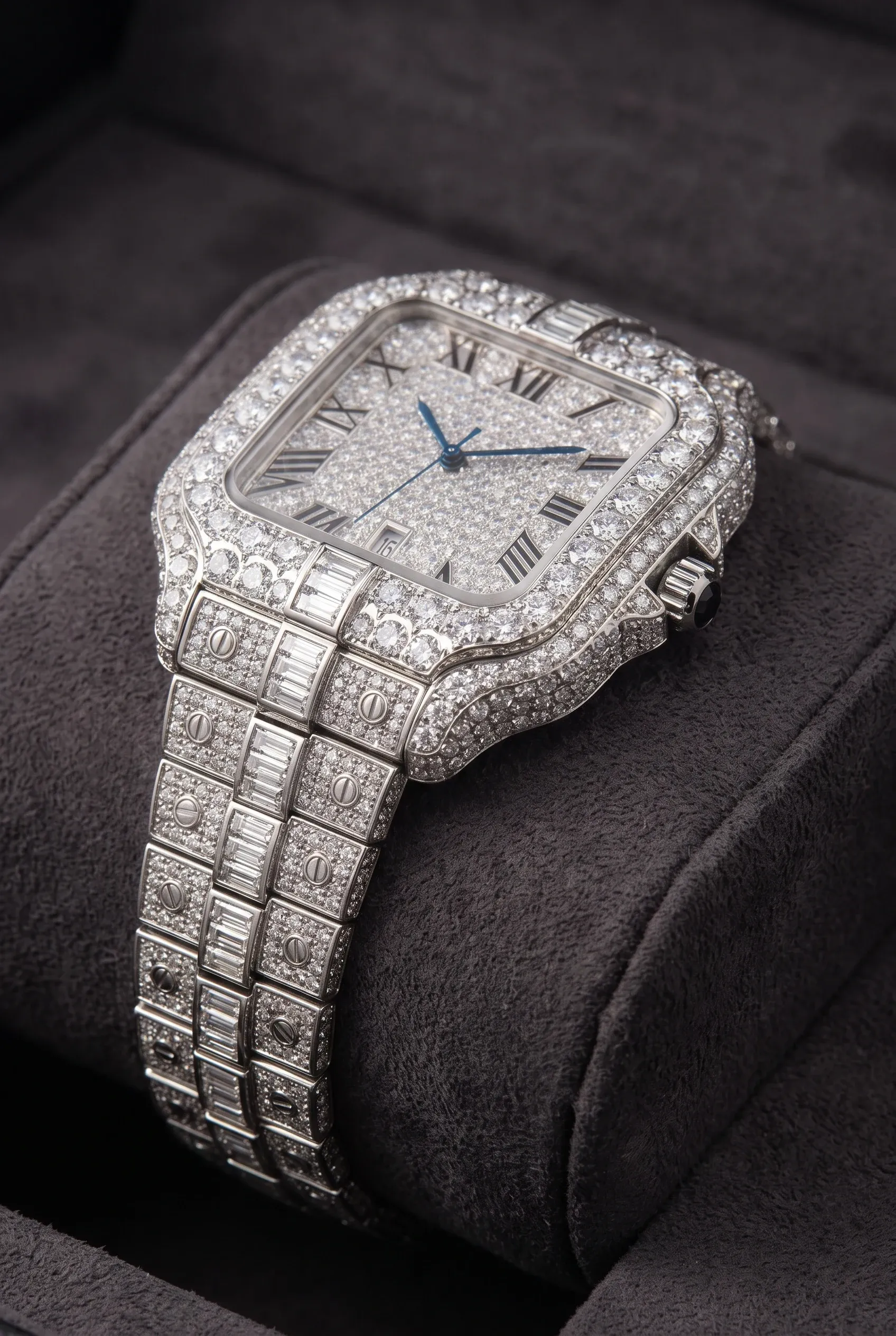
For fit, use wrist width and not just case diameter. Men usually land in the 40 to 44 mm range, unisex sizing sits around 38 to 40 mm, and a wrist under 6 inches should generally stay at or below 36 mm. The lug-to-lug span should not exceed your wrist width, and the average US men’s wrist is about 7 to 7.5 inches, so a 40 to 42 mm stone-set watch often works better than going as large as possible.
If you will not wear it every day
Many stone-set watches are occasion pieces. They come out for dinners, trips, parties, and weekends, then sit in a box the rest of the time. That pattern quietly favors quartz, because the watch is usually ready to wear when you pick it up.
An automatic can stop after it sits long enough, which means resetting the time, and sometimes the date, before you head out. Some buyers enjoy that ritual. Others find it annoying on a style-first watch that already asks for more care because of its stones and polished surfaces.
This is why the movement question often depends on your habits more than your ideals. If you rotate several watches, or only want one for special outfits, quartz is usually the easier owner’s choice. If you wear the same piece most days and like mechanical watchmaking, automatic becomes easier to justify.
Neither answer is more serious by default. A quartz stone-set watch can be the smarter long-term fit if convenience keeps you wearing it. An automatic only wins when its mechanics add pleasure, not when they merely sound more upscale on a product page.
Water resistance and crystal material
Movement type does not tell you whether a stone-set watch is safe around water. A 3 ATM rating means rain and hand-washing, not swimming. Many buyers assume an automatic is somehow more serious, but water resistance is a separate spec.
Crystal material matters too. Hardened mineral glass is common on stone-set watches, while sapphire crystal usually appears above roughly $1,500. If you wear your watch often, especially with long sleeves or daily desk contact, crystal material may affect long-term satisfaction more than choosing between quartz and automatic.
If the watch uses moissanite
Moissanite is silicon carbide, first found in a meteor crater in 1893 by Henri Moissan, and nearly all jewelry moissanite is lab grown. It is hard enough for watch use at 9.25 on the Mohs scale, compared with diamond at 10. In stone-set watches, fully set moissanite pieces usually fall in the same midrange shown earlier, which is why quartz remains common even when the stones themselves are a real upgrade.
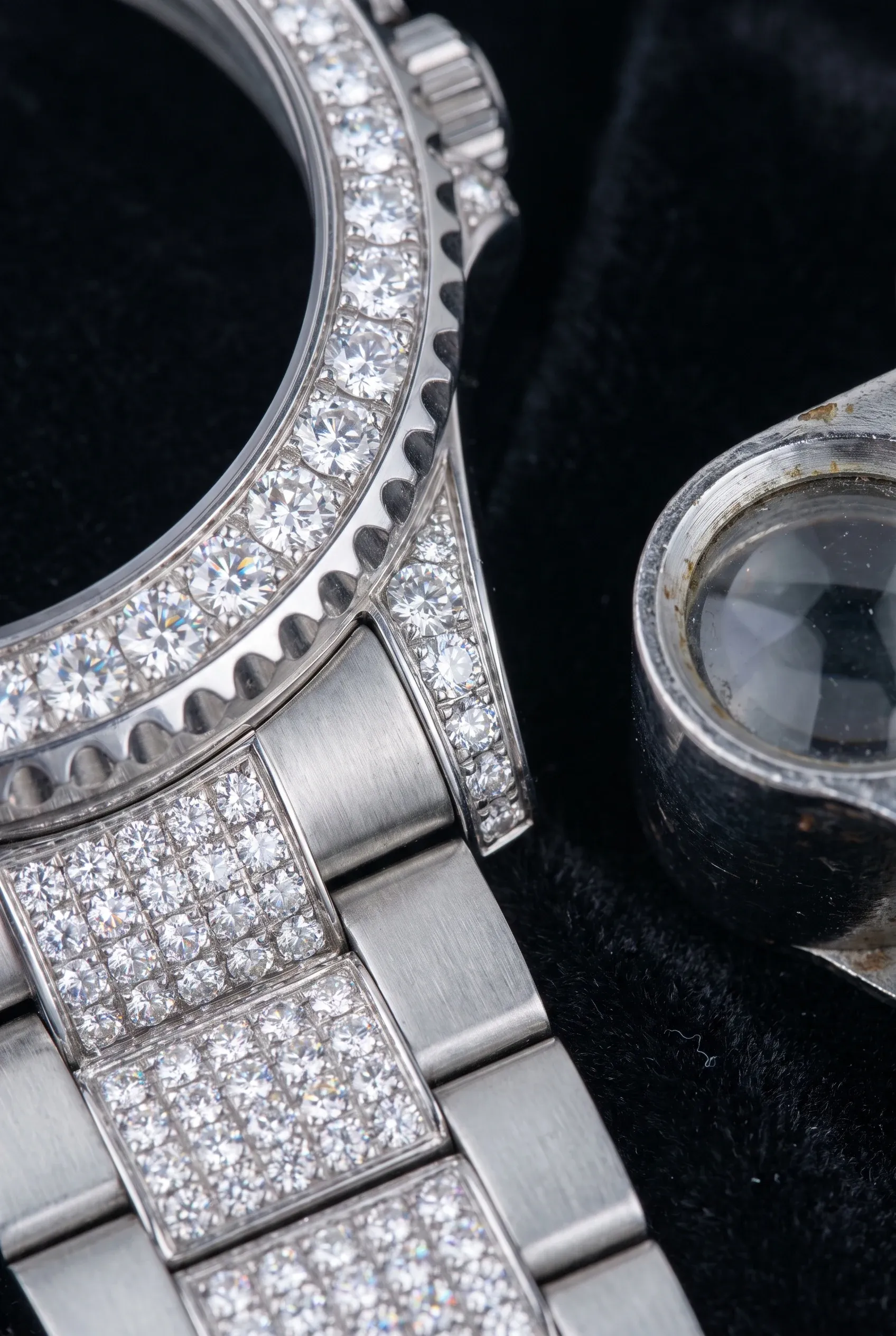
Verification matters because moissanite creates confusion. A basic thermal pen often reads moissanite as diamond, while a dual thermal and electrical tester separates them, which we explain in how moissanite testers work. If the watch comes with a GRA report, treat it as stone identification that lists carat, cut, and color, not as a GIA-style guarantee of watch or cut quality. For the stone basics, start with what moissanite is.
What to ask for before you buy
Stone-set watches are easy to overspend on because the spec sheet rarely highlights the right details. One glamour shot of the dial tells you almost nothing about thickness, stone setting, or how the bracelet falls on the wrist. Ask for a few plain details before you decide.
Get a side profile and wrist view
A straight-on photo flatters almost every watch. A side profile shows whether the case sits low or tall, which is crucial when you are comparing quartz with automatic. A wrist view, or at least the lug-to-lug measurement, helps you judge whether the watch will overhang your wrist.
Confirm how the stones are secured
Ask whether the stones are hand-set with prongs or beads, or glued in place. That one answer often matters more than the movement. If the setting method is vague, or the seller avoids the question, treat that as a warning sign.
Ask for the basic ownership specs in one list
You want the movement type, water rating, crystal material, and case size together. In this category, practical specs are often normal rather than luxurious, and that is fine. The point is to match the watch to your use, not to assume an automatic or a shiny dial makes the whole build better.
Ask about bracelet sizing and clasp feel
A stone-set bracelet that looks good on a display cushion can still fit badly. You want to know that the bracelet can be sized cleanly and that the clasp does not feel like an afterthought. On a heavier watch, poor bracelet fit is what makes the case head slide and twist.
If moissanite is claimed, read the paperwork correctly
Ask whether the stones come with identification, and read the language carefully. Color terms like D-E-F or G-H-I are standard moissanite grading language, and VVS is the usual offered clarity rather than a special upgrade. A GRA report identifies moissanite and lists basics, but it should not be treated as proof that the watch itself is exceptional.
Common buying mistakes
- Paying for the word automatic, not the whole watch. If the stones are glued or the case is awkward, the movement upgrade does not rescue the purchase.
- Ignoring wrist size. A 42 mm fully set watch can feel much larger than a plain 42 mm watch because of the visual coverage.
- Assuming all moissanite claims are real. At very low prices, stone claims are often the first thing to question.
- Confusing a tester result with full authentication. A pen result is only one clue, and not the right tool by itself for moissanite.
- Overreading VVS. In moissanite, VVS is the usual offered clarity and not a premium feature by itself.
- Thinking 3 ATM means pool safe. It does not, especially for a style-first watch.
The bottom line for stone-set buyers
If your goal is a wearable, lower-maintenance stone-set watch, quartz is usually the better answer. That is why it dominates the category below $3,000, including many watches that look expensive from a distance. You get a slimmer package, simpler ownership, and more room in the budget for what you actually see.
If your goal is a mechanical watch that also happens to be stone-set, automatic can be the right call. You just have to want the movement for its own sake, and be honest that thickness and service come with it. There is no universal winner, but for most buyers of stone-set watches, quartz is the sensible default and automatic is the deliberate choice.
Frequently Asked Questions
Is quartz or automatic better for an iced out watch?
For most iced out watches, quartz is better because the category puts money into visible stone coverage first. Automatic is better only if you personally value a mechanical movement enough to accept more thickness, higher upkeep, and less budget left for the exterior.
Do automatic stone-set watches cost more to maintain?
Usually yes. Automatic movements need periodic servicing, and the timing and cost vary by maker and caliber. Quartz watches are simpler to live with, since the usual routine is battery replacement and basic checks rather than full mechanical service.
Are most moissanite watches quartz?
Yes, especially in the common fully set moissanite range of $900 to $2,700. That price band is still firmly in the part of the market where quartz is standard, because it helps keep the watch thinner and leaves more budget for the visible setting work.
Does quartz mean a cheap watch?
No. Quartz often means the maker chose practicality over movement romance. In stone-set watches, that can be the smarter use of money, especially when the exterior finish, bracelet comfort, and setting quality matter more to the buyer than owning a mechanical movement.
Is a 42 mm stone-set watch too big?
Not necessarily, but stone coverage makes a watch wear larger. On an average US men’s wrist of about 7 to 7.5 inches, 40 to 42 mm often works well. If your wrist is smaller, pay close attention to lug-to-lug length and overall thickness.
Can you swim with a 3 ATM stone-set watch?
No. A 3 ATM rating is fine for rain and hand-washing, but it is not a swimming rating. Do not assume a heavier case or an automatic movement changes that. Check the stated water resistance, then wear the watch accordingly.
How can I tell if the stones are really moissanite?
Start with realistic pricing, then use the right tester. A thermal pen alone can read moissanite as diamond, so a dual thermal and electrical tester is the better tool. A GRA report can identify moissanite, but it is not a full quality guarantee for the watch.