Glued vs Hand-Set Stones: Why Cheap Iced Out Watches Shed Stones
Learn how glued and hand-set stones differ, what price bands reveal, and the checks that help you avoid an iced out watch that sheds stones.
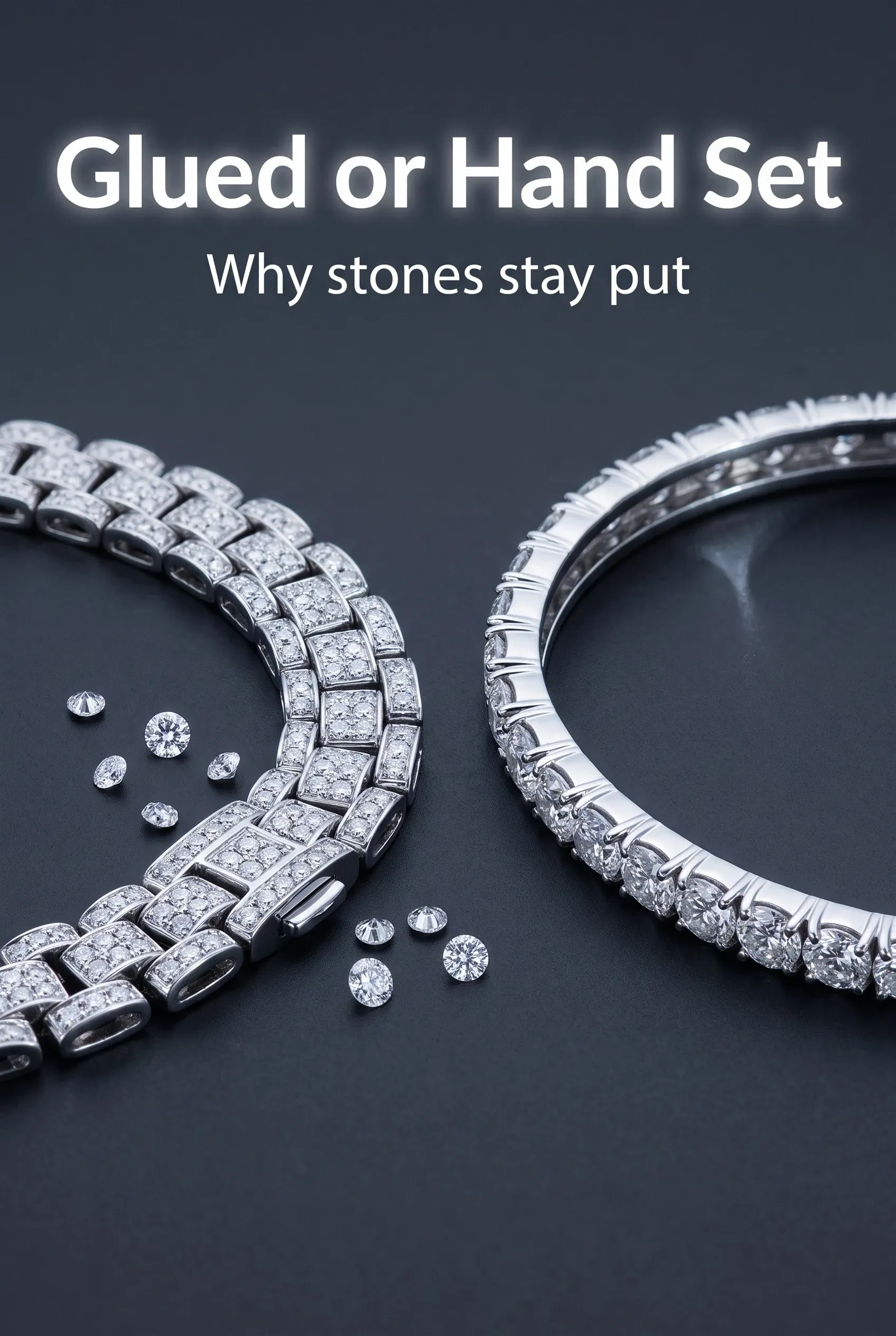
Cheap iced out watches usually lose stones because the stones are glued, not hand set. If you want a hand-set stone watch, look for visible metal holding each stone, realistic pricing, and a seller that states the setting method. The stone material matters, but the mounting matters more.
Why cheap iced out watches lose stones
Most entry-level fully iced watches are decorative fashion pieces, not fine stone-setting projects. The case, bezel, dial, and bracelet may carry hundreds of small stones, but the budget rarely covers hours of bench setting. Glue fills that gap because it is fast, cheap, and easy to scale.
That shortcut fails on a watch faster than on a pendant or stud. Links flex, clasps snap shut, wrists sweat, and bezels hit desks and door frames. Once adhesive dries out, softens, or shears, stones usually start disappearing from the first stress points.
If you are new to the category, start with what iced out means and then browse more iced out coverage. It helps to know whether you are shopping for a fashion piece, a moissanite watch, or a diamond-set watch before you judge the risk.
What a hand-set stone watch looks like
In a true hand-set watch, each stone sits in a cut seat and metal is pushed over the stone’s edge. That metal may appear as tiny prongs, beads, or shared walls depending on the pattern. The grip comes from metal pressure, not from adhesive under the stone.
Under zoom, the stones should sit level, line up cleanly, and show no cloudy residue between them. On a bezel, you should see metal doing the work. If one stone loosens, a setter can often tighten or replace that single stone without rebuilding the whole surface.
How glued watches are made
Glued watches use pre-made recesses or flat surfaces instead of individual cut seats. Workers place crystal or CZ stones into adhesive, press them into alignment, and cure sections in batches. The finished watch can look bright on day one, especially in studio photos.
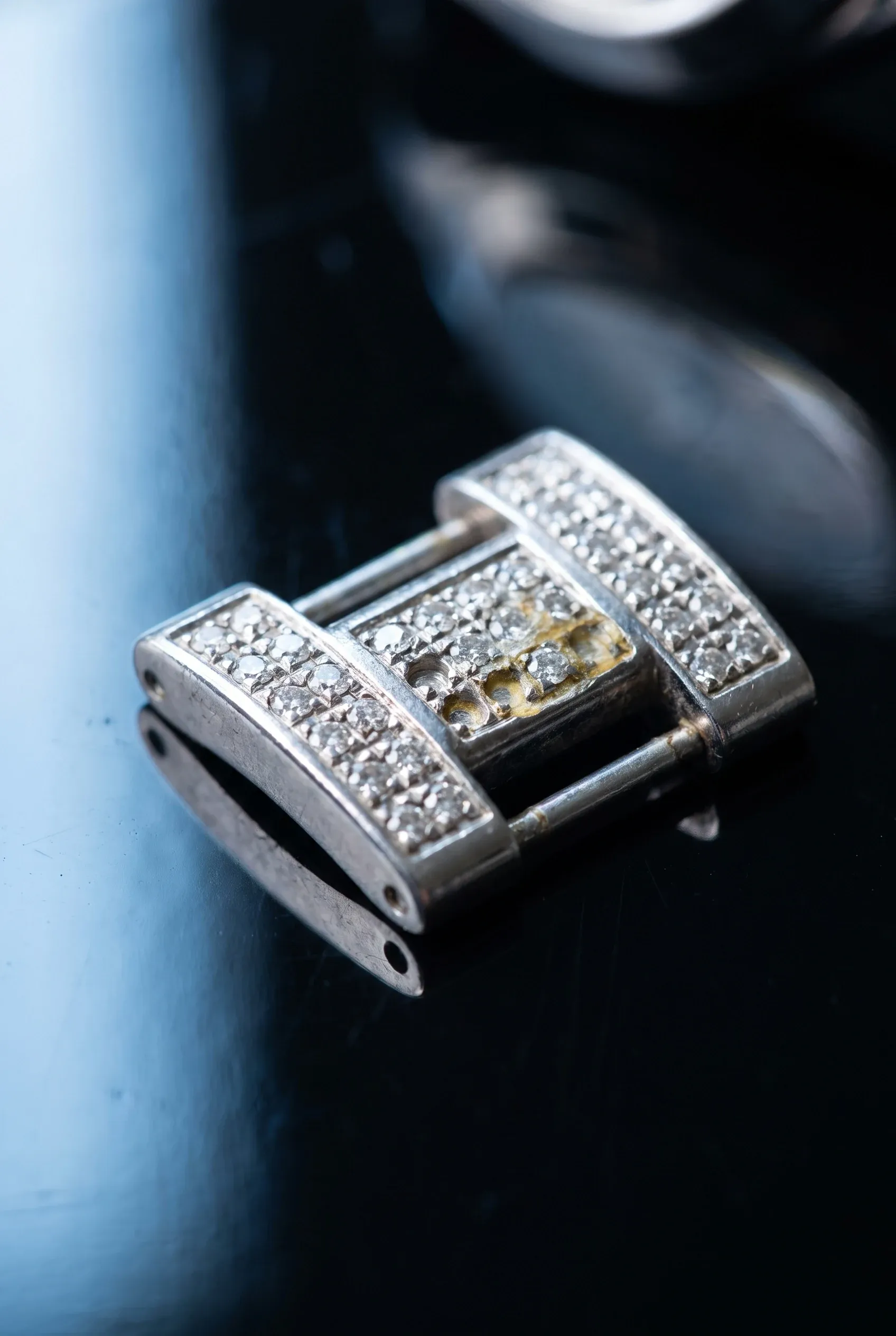
The problem is that glue does not like shock, heat, oil, cleaning chemicals, or repeated flex. Curved end links, bracelet edges, and clasp zones create uneven pressure, so one missing stone often turns into a trail of missing stones. That is why an iced out watch losing stones often starts at the corners and moving parts first.
A glued build is also harder to service. There is no metal to tighten, and replacement stones have to match size, color, and height. Many repairs become temporary cosmetic patches rather than a real fix.
Why a pave setting watch can be secure or flimsy
Pave describes a look, not a guarantee. A real pave setting watch uses many small stones packed closely together, with each stone captured by tiny beads or shared prongs cut from the surrounding metal. That surface can be durable when the setter leaves enough metal and spaces the stones correctly.
A fake pave surface copies the same look with molded dots and adhesive. From normal viewing distance, both can sparkle. Under macro photos, real pave shows crisp metal edges at the stone girdles, while glued faux pave looks flatter, smoother, and slightly messy around the gaps.
When you shop, ask one question before anything else. Are the stones bead set or prong set, or are they glued? If the seller only repeats the word pave, you still do not know how the watch is built.
Price tells you a lot before the specs do
Price is not perfect, but it is a strong filter. Stone setting takes labor, and labor costs real money. When a watch is covered in stones from case to bracelet, the selling price usually tells you whether the maker paid for setting work or for glue.
| Watch type | Usual stones | Common setting method | Typical price in 2026 | What buyers should expect |
|---|---|---|---|---|
| Fashion iced watch | Crystal or CZ | Often glued | $100 to $400 | Bright at first, higher stone-loss risk, basic watch spec sheet |
| Fully set moissanite watch | Moissanite | Usually hand set | $900 to $2,700 | Real gem material, stronger long-term value if the setting is good |
| Custom lab-diamond bust down | Lab diamond | Hand set | $5,000 to $15,000 | Jewelry-level labor, thick build, serviceable but costly |
| Custom natural-diamond set watch | Natural diamond | Hand set | $15,000 to $60,000 and up | High replacement cost, bought as luxury jewelry and watchmaking |
| Factory diamond-set piece from a major house | Diamond | Hand set at the factory | $40,000 to $250,000 and up | Integrated design, high-end finishing, very expensive to enter and maintain |
This is why a watch advertised as moissanite under about $300 should set off alarms. At that level, it is almost certainly crystal or CZ dressed up with moissanite language. The problem is not that low-cost fashion watches exist, it is that many buyers are sold the wrong story about what they are buying.
The stone type matters, but less than the setting
The watch does not care whether a stone is cheap or expensive. It cares how well that stone is seated. Still, material affects scratch resistance, edge wear, and the kind of sparkle you see across a fully covered bracelet.
| Material | Mohs hardness | Sparkle notes | Watch takeaway |
|---|---|---|---|
| Moissanite | 9.25 | Refractive index 2.65 to 2.69, fire 0.104 | Hard, bright, and lively across many small stones |
| Diamond | 10 | Refractive index 2.42, fire 0.044 | Hardest option, less rainbow fire than moissanite |
| CZ | About 8 to 8.5 | Refractive index 2.15 to 2.18, fire 0.060 | Can look good at first, but softer and less durable long term |
| White sapphire | 9 | Refractive index 1.76 to 1.77, fire 0.018 | Durable but less fiery, not common in fully iced watches |
| Crystal or glass | About 5.5 to 6 | Lowest scratch resistance in this group | Most vulnerable to wear and surface dulling |
Moissanite is silicon carbide, and nearly all jewelry moissanite is lab grown. It is harder than CZ or glass, so small facets stay sharper with wear, and it throws more fire than diamond, which is why a big moissanite surface can look extra rainbowy. If you want the gem basics first, browse the articles in our comparison guides.
Marketing around moissanite can still be sloppy. A pen-style diamond tester reads moissanite as diamond, so a seller video proves almost nothing, and a dual thermal and electrical tester is the tool that separates them. Before you trust a demo, read our diamond tester explainer.
If paperwork is included, expect a GRA report. That usually confirms the stone is moissanite and lists carat, cut, and color, but it is identification, not a GIA-style promise of superior make. Colorless moissanite is typically sold as D-E-F, near-colorless as G-H-I, and VVS is common enough that it should not command a big premium.
What to inspect before you buy
Good listings show macro photos from several angles, not just a front glamour shot. Ask for close views of the bezel, bracelet shoulders, clasp area, and side profile. Those are the places where glue and weak setting work show first.
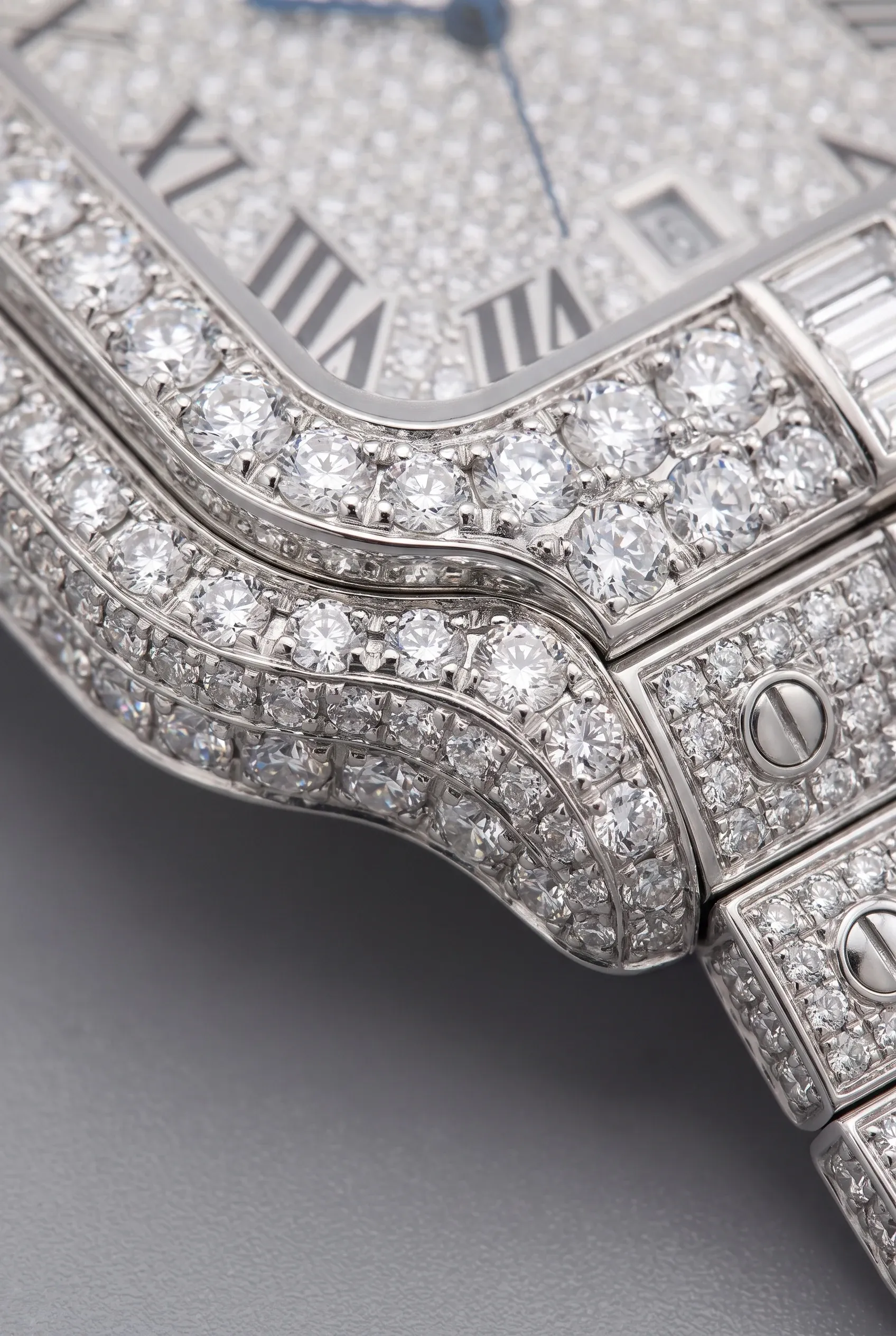
- Metal over each stone. Look for beads or prongs actually touching the stone edge, not decorative bumps sitting nearby.
- No cloudy residue. Glue often leaves haze, smearing, or shiny pooling between stones.
- Even stone height. Random high and low stones suggest poor seats or adhesive overflow.
- Clean corners. Sloppy alignment at bezel edges and first links predicts future loss.
- Bracelet flex video. The bracelet should articulate smoothly without stones rubbing or catching.
- Written setting disclosure. Pave alone is not enough, you want bead-set, prong-set, or hand-set stated clearly.
- Matching repair path. Ask whether missing stones can be replaced individually and whether matching stones are stocked.
If a seller refuses close-ups, only posts filtered sparkle clips, or cannot explain the setting method, move on. The best clue is usually not the front view. It is the macro shot that shows whether metal or glue is doing the holding.
Movement crystal and water resistance still matter
Even when the stone work looks decent, the watch itself can still be cheaply built. In stone-set watches under $3,000, Japanese quartz is the normal movement. It keeps cost down and avoids the extra thickness and future service cost that automatics bring.
The watch crystal matters too. Hardened mineral glass is common, while sapphire crystal usually appears once you move above roughly $1,500. Water-resistance claims need plain reading as well. A 3 ATM watch is fine for rain and hand-washing, not swimming or showering, and moisture can weaken adhesives and stain the dial around missing stones.
Size weight and fit affect stone retention
Oversized watches hit things more often. A case that overhangs your wrist edge, or a bracelet worn too loose, slams the bezel and clasp into hard surfaces. That raises the chance of edge stones loosening, especially on a heavy fully iced watch.
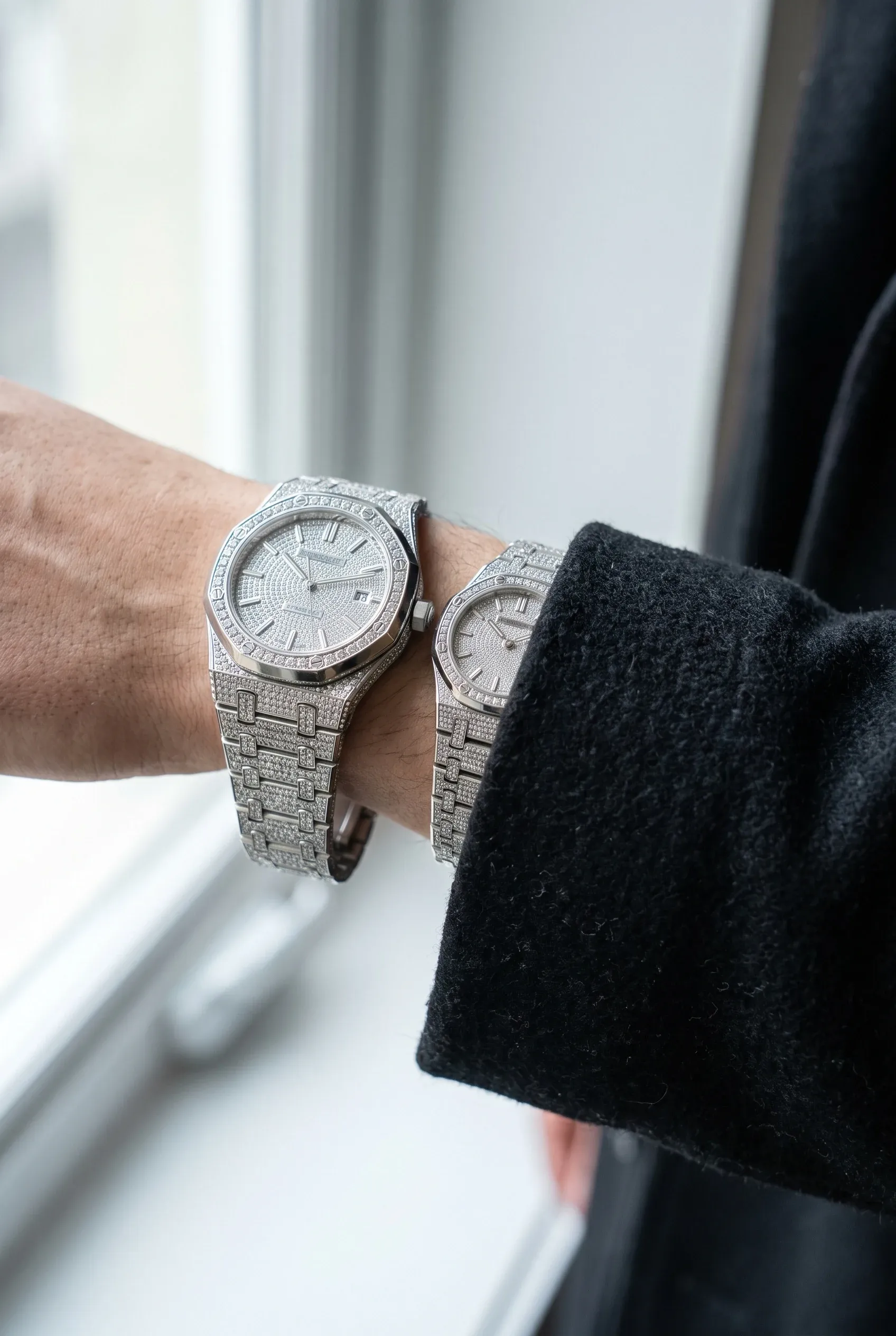
Use real wrist numbers when you size one. Women’s classic sizes sit around 26 to 32 mm, women’s contemporary around 34 to 36 mm, unisex 38 to 40 mm, and men’s 40 to 44 mm. If your wrist is under 6 inches, stay at or below 36 mm, and in every size the lug-to-lug should not exceed your wrist width.
Men’s average US wrist is about 7 to 7.5 inches, which is why many stone-set men’s watches land in the low 40s. If you need a reference before you compare styles, see our notes on men’s case sizes and stone coverage and our guide to women’s sizes and dial layouts.
What to do when a stone falls out
Stop wearing the watch until you inspect the surrounding area. One missing stone can expose sharp metal, catch a sleeve, and pry up the next stones. Continued wear often turns a small repair into a bigger one.
If you find the stone, keep it in a small bag. Then check whether the empty spot shows metal that used to hold the stone, or only adhesive residue. That one detail tells you whether the watch had a repairable setting or a glued surface that may keep failing.
Do not use household super glue. It can haze nearby stones, smear onto the metal, and make proper repair harder. A hand-set section can often be tightened or rebuilt by a jeweler or watch setter, but a glued section often keeps shedding because the surrounding bond has aged too.
When paying for moissanite makes sense
Moissanite makes sense when you want real gem durability and bright fire without diamond pricing. A loose 1 ct colorless moissanite usually retails around $300 to $600 per carat, while a similar 1 ct round diamond runs about $4,000 to $7,000 if natural, or about $800 to $1,500 if lab grown.
Watch pricing is different because labor dominates. Hundreds or thousands of seats must be cut and stones fitted, which is why a real moissanite watch starts far above fashion-watch territory even though moissanite is cheaper than diamond. The setting work is what you are really paying to keep.
For most buyers, the smartest order of priorities is simple. Pay for honest setting work first, pay for moissanite second, and pay extra for an automatic movement only if you actually want the mechanical watch experience.
Who should buy which type
- Occasional statement wearer. If your budget sits in fashion-watch territory and you wear the piece a few nights a month, a crystal or CZ watch can still be fun. Treat it like seasonal jewelry, keep it dry, and expect a shorter service life.
- Daily wearer who wants sparkle. This buyer benefits most from hand setting and moissanite. Better retention and harder stones matter when the watch goes from workdays to weekends.
- Fine watch buyer. If you care as much about the base watch as the stones, step into the lab-diamond, natural-diamond, or factory-set world. You are paying for engineering, serviceability, and the underlying watch as much as the shine.
The practical takeaway
A cheap iced watch sheds stones because glue cannot survive the same flex and knocks that metal setting can. When you shop, ignore vague words like pave and VVS until you confirm how the stones are mounted. If the listing will not show that detail, assume the weakest construction, not the strongest.
Frequently Asked Questions
Are hand-set stones always moissanite?
No. Hand setting describes the mounting method, not the gem material. A watch can be hand set with crystal, CZ, moissanite, lab diamond, or natural diamond. The important point is that metal is physically holding each stone, which is usually far more durable than glue.
Can a glued iced out watch still be worth buying?
Yes, if you treat it as a low-cost fashion watch and not as fine jewelry. For occasional wear, a glued piece can give the look for less money. The trouble starts when sellers present that build as moissanite luxury, or when buyers expect daily durability from a construction method that is not built for it.
Does pave mean the stones are secure?
No. Pave only describes a surface covered with many small stones set close together. Some pave is properly bead set or prong set. Other watches use glued faux pave that copies the look without the metal holding power. Always ask how the stones are mounted, not just what the pattern is called.
If a stone falls out, does that mean it was never real moissanite?
No. A missing stone is almost always a setting failure, not proof about the gem material. Glued stones shed regardless of whether they are moissanite, CZ, or crystal, because adhesive fails under wear. Check whether the empty seat shows metal or only adhesive residue to judge the setting, not the stone.
Is 3 ATM enough for an everyday iced out watch?
It is enough for rain and hand-washing, but not for swimming, showering, or soaking. That matters even more on glued watches, because moisture and temperature swings can speed up adhesive failure. Daily wear is possible, but water habits need to stay conservative.
Can a jeweler fix a watch that is losing stones?
Often yes, but the answer depends on how the watch was built. Hand-set sections are usually the best repair candidates because a setter can tighten metal or replace a single stone. Glued surfaces are less promising, since nearby stones may be ready to fail too, and matching replacements can vary by maker.
What is the quickest red flag in a listing?
The biggest red flag is vague language paired with no close-up photos. If a seller says moissanite, VVS, or pave but will not show the bezel and bracelet at macro range, you still do not know the construction. Cloudy residue, uneven stone height, and very low pricing are the next warning signs.