How Moissanite Watches Are Made: From Loose Stones to a Finished Bracelet
A clear guide to how moissanite watches are made, from loose lab-grown stones and hand setting to movements, quality checks, prices and red flags.
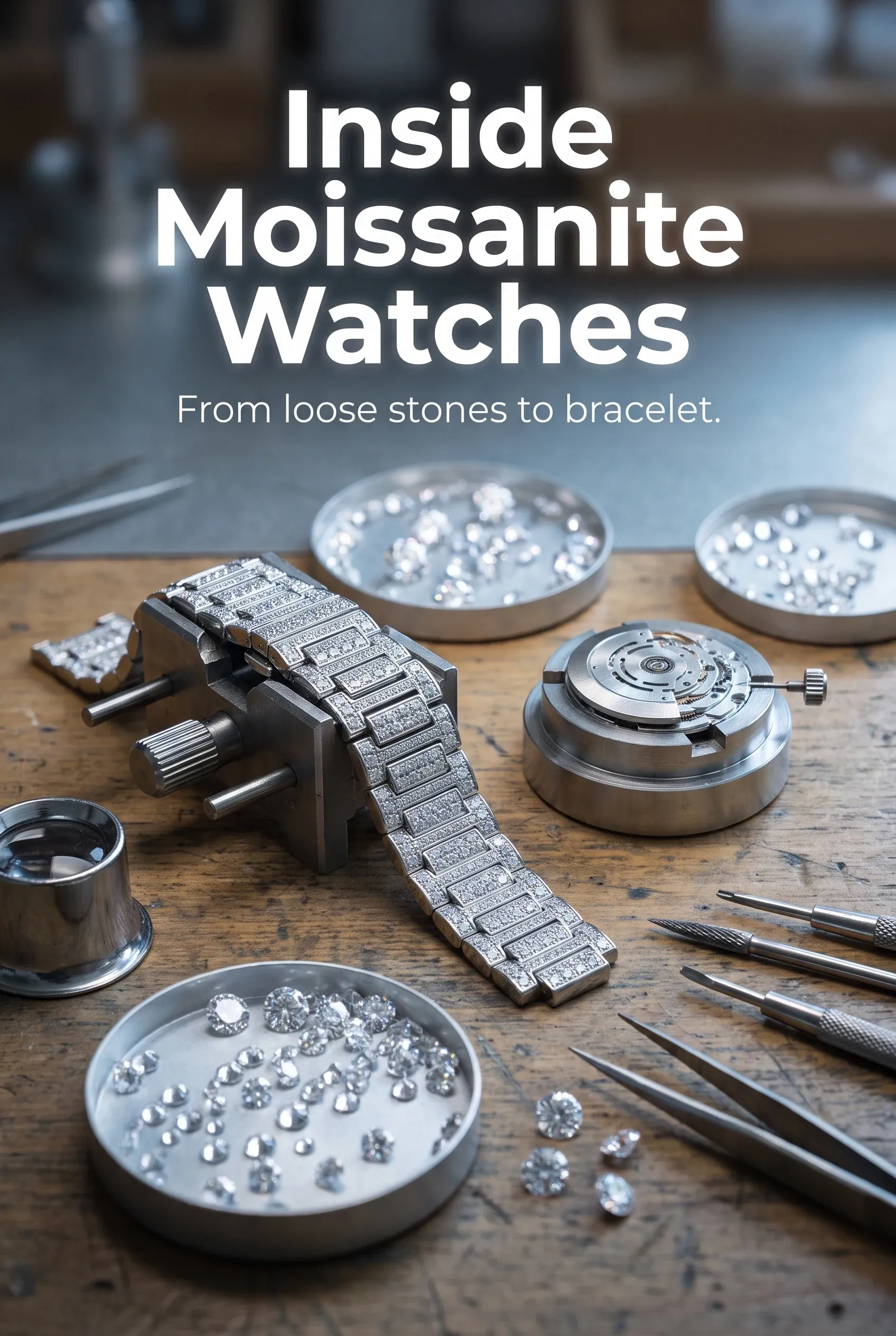
Moissanite watches start as empty metal parts and trays of calibrated lab-grown stones. If you want to know how moissanite watches are made, the short answer is this: makers finish the case and bracelet, sort matched stones by size, hand set them into drilled seats, then assemble the movement, dial, crystal and clasp. The quality difference comes from setting method, tolerances and inspection, not from sparkle alone.
What starts as a loose moissanite stone
Moissanite is silicon carbide, first identified in a meteor crater in 1893 by Henri Moissan. Nearly all jewelry moissanite today is lab grown, a point we cover in more detail in what moissanite is. Watch makers do not buy random stones, they buy calibrated rounds, baguettes and other cuts in exact millimeter sizes for bezels, dials and bracelet links.
Before a watch is ever set, stones are matched for color and clarity. In this market, D–E–F means colorless and G–H–I means near-colorless. VVS is common because lab growth makes it the norm, not a premium upgrade.
How moissanite watches are made, step by step
The broad process is the same way most iced out watches are made. What changes is the stone material, the number of setting surfaces and the amount of labor needed to keep those stones in place on a moving bracelet.
| Stage | What happens | Main risk |
|---|---|---|
| Metal parts prepared | Case, bezel and links are finished and marked for stones | Poor spacing creates crooked rows |
| Seats cut | Tiny holes and ledges are drilled or carved for each stone | Shallow seats loosen fast |
| Stones sorted | Sizes, colors and shapes are matched in parcels | Mismatched stones look patchy |
| Hand setting | Beads or prongs are pushed over each girdle | Glue used instead of metal setting |
| Cleaning and touch-up | Metal dust is removed and rough edges are polished | Overpolishing weakens seats |
| Watch assembly | Dial, movement, hands, crystal and caseback are installed | Dust under crystal or movement damage |
| Bracelet fitting | Links, clasp and pins are aligned and sized | Stiff links and poor closure |
| Final inspection | Stone security, alignment and basic function are checked | Loose stones missed before shipping |
The order matters. Most stone work happens before final watch assembly, because metal filings, polishing compound and hand pressure are bad for movements and dials.
The case and bracelet come first
A moissanite watch does not begin as a finished watch with stones sprinkled on top. The case, bezel and bracelet have to be made or modified so they can physically hold stones. On a fully iced piece, every visible surface needs a plan for spacing, symmetry and enough metal around each seat.
Bracelets add most of the labor. Every link moves, bends and rubs against the next link, so each one needs its own stone pattern and enough metal left for strength. If the seats are too deep, too shallow or off center, the finished rows look uneven and the stones loosen sooner.
Size changes the challenge. Men's watches usually land in the 40–44 mm range, unisex sizes in 38–40 mm, women's classic sizes in 26–32 mm and contemporary women's sizes in 34–36 mm. Once you start narrowing choices, a separate guide to watch size helps you match case width and lug span to your wrist.
Stones are sorted before setting
Watch setters work by millimeter size first, not by headline carat weight. A bezel row might need one calibrated size, while dial markers, center links and crown guards need others. That is why two watches with similar total carat weight can look very different on the wrist.
Matching matters because moissanite is so lively optically. Its refractive index runs 2.65 to 2.69 and its dispersion is 0.104, both higher than diamond. If a parcel mixes slightly different cuts or shades, the inconsistency shows up quickly under direct light.
Moissanite is also lighter than diamond for the same dimensions, with a density of 3.21 versus 3.52. That means equal-size stones do not weigh the same, so total carat weight alone tells you less than many shoppers think. Setters are really chasing visual uniformity, not a single big weight number.
On larger stones, moissanite's double refraction can create facet doubling when viewed through the pavilion under a loupe. In a watch, that is usually minor because the stones are small, but consistent cutting and placement still matter.
Why hand setting matters more than stone count
A hand set moissanite watch uses metal, not glue, to hold the stones. The setter cuts a seat, places the stone, then pushes tiny beads or prongs over the girdle so the stone is mechanically locked in. Under magnification, each stone should sit level, tight and centered.
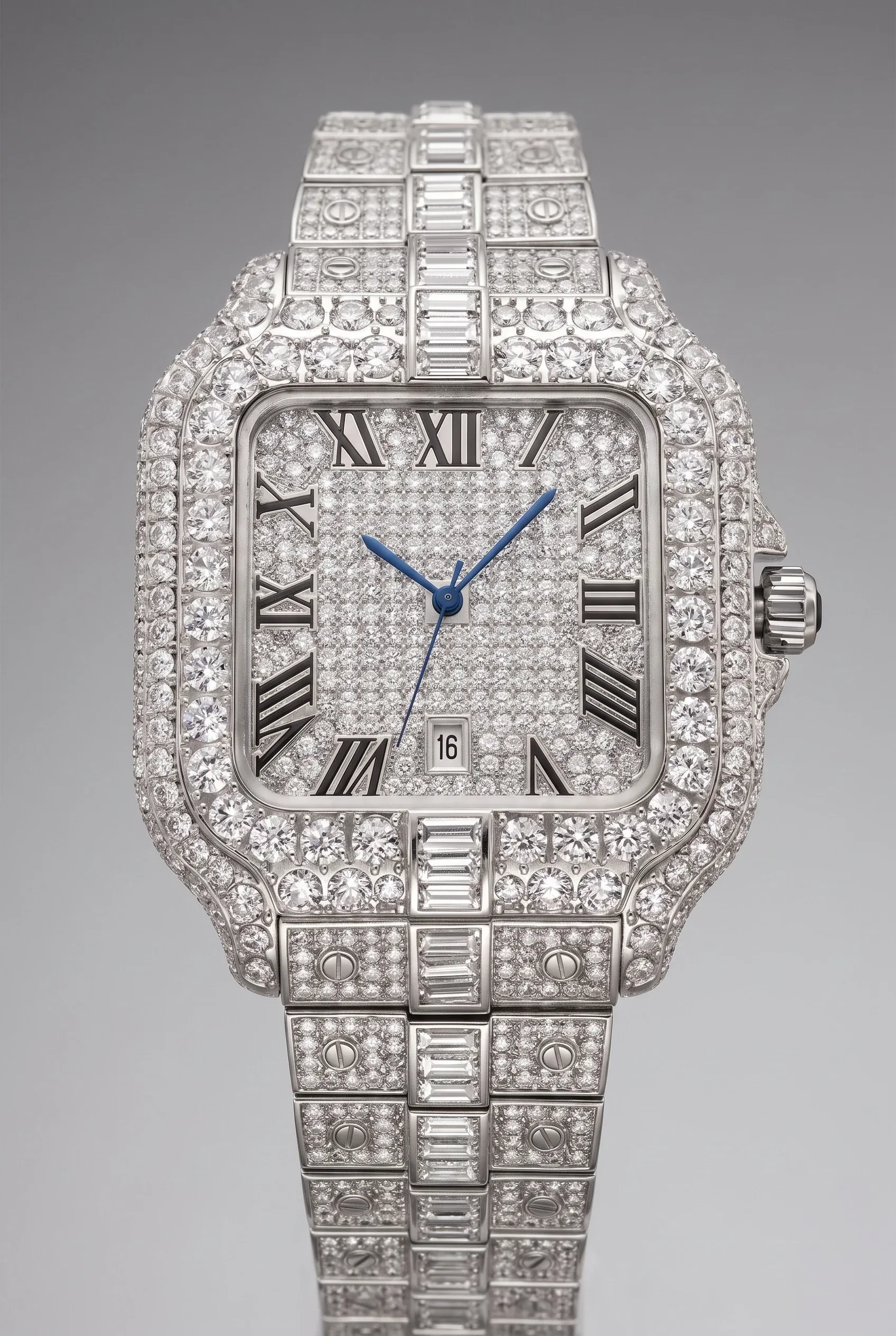
This is the main build choice to verify. In glued versus hand-set stones, we explain why adhesive-set stones often start shedding within months. A watch can advertise thousands of stones, but that count means little if the bracelet links were never properly cut and secured.
Bracelets are the hardest part
Setting a flat dial is simpler than setting moving links. Links flex, knock into desks and carry the watch's full weight when you take it on and off. Weak work often shows up at the bracelet edges and near the clasp first.
Baguette layouts raise the difficulty
Round stones are more forgiving because tiny spacing differences are harder to see. Baguette patterns need straighter rows, tighter seat tolerances and cleaner transitions around curves. If one stone sits high or turns slightly, the whole line shows it.
The dial, movement and crystal go in after stone work
Once the stone setting is finished, the watch can be cleaned and assembled. That usually means installing the movement, dial, hands, crown, crystal and caseback after the messy work is done. If assembly happens too early, filings and polishing residue can end up under the crystal or inside the movement.
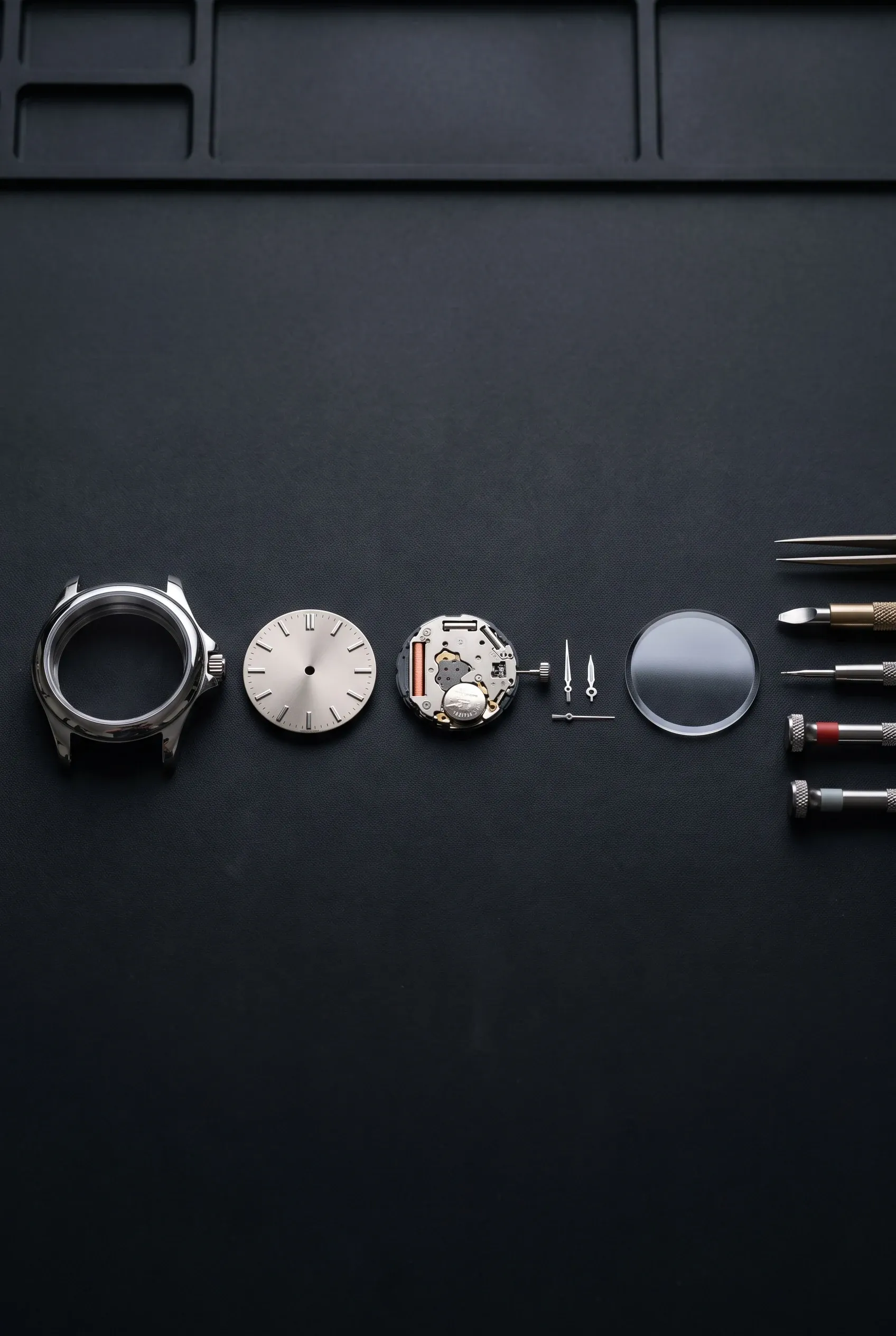
In stone-set watches under $3,000, Japanese quartz is the normal movement choice. It keeps cost, thickness and maintenance in check, which is why we prefer to separate fashion questions from movement questions in quartz versus automatic. Automatics can be appealing, but they add service cost and usually make a heavily set watch thicker.
Crystal choice matters too. Hardened mineral glass is common at the lower end, while sapphire crystal usually appears above about $1,500. Water resistance is often 3 ATM, which is fine for rain and hand-washing, not swimming.
Where cheap watches cut corners
The biggest shortcut is simple, they are not using moissanite at all. In the 2026 market, a fully set moissanite watch usually lands around $900 to $2,700, while crystal or CZ iced out watches sit around $100 to $400. A watch sold as moissanite for much under $300 is almost certainly crystal or CZ.
Labor is the second shortcut. Cheap pieces often rely on glue, inconsistent stone sizes and rough finishing around the seats. They may still look bright in listing photos, but stones start dropping once the bracelet flexes in real wear.
The third shortcut is vague information. If a listing hides the movement type, does not say whether stones are hand set, and leans hard on terms like VVS, it is telling you very little. VVS is normal for moissanite, so it should not distract from the construction questions.
What the final quality checks should catch
A proper inspection is not just a quick wipe down. It should catch loose stones, crooked rows, rough prongs, bracelet links that bind, clasps that do not close cleanly, and debris trapped under the crystal. Basic time-setting and crown action should also be checked before the watch leaves the bench.
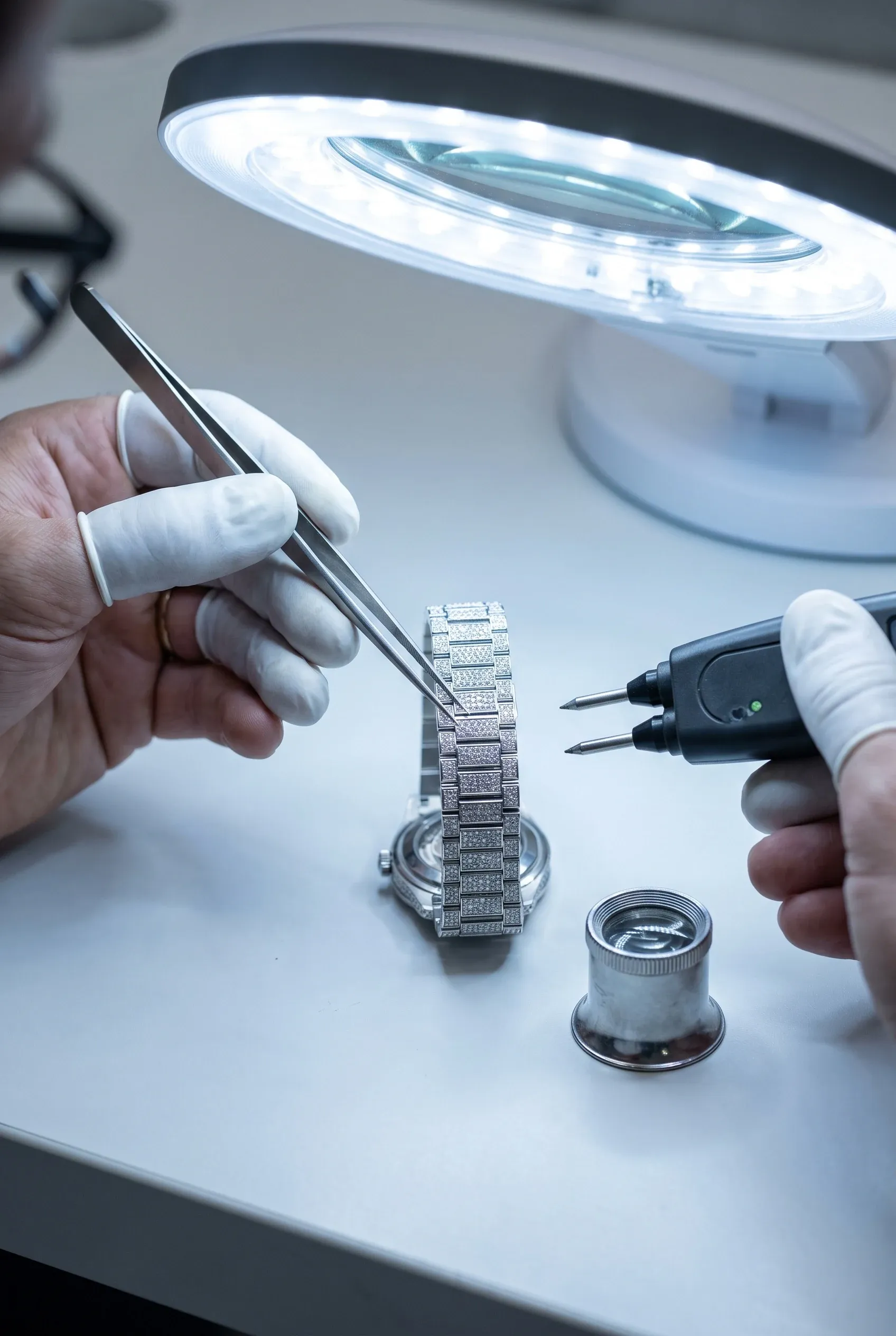
If a seller claims moissanite, testing matters, but the tool matters too. A simple thermal diamond pen reads moissanite as diamond, so that result proves very little. A dual thermal and electrical tester separates them, as explained in passes a diamond tester.
Good final checks also look for comfort. A fully iced bracelet should articulate freely and should not have sharp beads that catch knitwear or scrape the wrist. Sparkle is obvious at first glance, comfort problems are what owners notice after a week.
How moissanite compares with crystal, CZ and diamond in a watch
Moissanite sits in the middle ground between low-cost fashion stones and true diamond setting. It is harder and more durable than CZ or crystal, and it delivers more fire than diamond, but it does not carry diamond's resale or prestige. Those trade-offs explain why it has become the main diamond-look option in watches under the custom diamond tier.
| Material | Mohs hardness | Optical note | Typical fully set watch price |
|---|---|---|---|
| Moissanite | 9.25 | Very high fire, RI 2.65–2.69, dispersion 0.104 | $900 to $2,700 |
| Lab diamond | 10 | RI 2.42, dispersion 0.044 | $5,000 to $15,000 custom |
| Natural diamond | 10 | Same optics as lab diamond | $15,000 to $60,000 and up custom |
| Cubic zirconia | About 8 to 8.5 | RI 2.15–2.18, dispersion 0.060 | $100 to $400 |
| Crystal or glass | About 5.5 to 6 | Softer surface, scratches sooner | $100 to $400 |
Diamond and moissanite are close enough in appearance that many people first compare those two, but they do not behave identically. Moissanite gives off more rainbow fire, while diamond reads crisper and calmer to many eyes. If you want a deeper stone-by-stone breakdown, start with the pieces in our comparisons section.
CZ and crystal can look bright at first, especially in small pave settings, but they wear differently. Their lower hardness means more scratching and dulling over time. White sapphire is harder than CZ at 9, yet its dispersion is only 0.018, so it tends to look quieter than moissanite.
What paperwork means, and what it does not
The most common paperwork in moissanite jewelry is a GRA report. It usually confirms that the stone is moissanite and lists carat, cut and color. That is useful as identification, but it is not a GIA-style quality guarantee and it does not prove the watch was well made.
This matters even more in a watch than in a ring. A card can tell you something about the stones, but it cannot tell you whether the bracelet was hand set cleanly, whether the clasp feels solid, or whether the movement was assembled without dust under the crystal. Read paperwork as one small data point, not the final answer.
What buyers should ask before ordering
The best questions are practical ones. They help you separate a well-built watch from a bright listing photo.
- Is every visible stone hand set. You want a clear yes, not language about glue, adhesive or crystal setting.
- What movement is inside. In this segment, Japanese quartz is the normal and sensible answer.
- What crystal protects the dial. Hardened mineral glass is common, while sapphire is the more durable upgrade.
- What are the real case and bracelet dimensions. Wrist fit matters as much as shine, especially if your wrist is under 6 inches.
- How much surface is actually stone set. Bezel-only, dial-only and fully iced bracelets wear and cost very differently.
- What paperwork or testing is included. Identification helps, but construction quality decides whether the watch still looks good next year.
If you are still comparing categories, browse the wider iced out watch coverage before narrowing to one style. A well-made moissanite watch is mostly labor, not mystery. The stones matter, but the watch succeeds only when the metal seats are cut cleanly, the bracelet moves freely and the finished piece works like a watch, not just a display prop.
Frequently Asked Questions
Are moissanite watches made with real moissanite or with glass?
Both exist, which is why price matters so much. In 2026, a fully set moissanite watch usually costs about $900 to $2,700. A watch sold as moissanite for much under $300 is almost certainly using crystal or CZ instead of silicon carbide moissanite.
Is every moissanite watch hand set?
No. Better pieces are hand set with prongs or beads that physically lock each stone into metal seats. Cheap pieces often use glue, especially on bracelets. That shortcut lowers labor cost, but it also makes stone loss much more likely once the links start flexing in daily wear.
Why do most moissanite watches use quartz movements?
Quartz keeps the watch thinner, cheaper and simpler to maintain. In stone-set watches under $3,000, Japanese quartz is the norm for those reasons. Automatic movements can work, but they add thickness and future service cost, which matters once the case and bracelet are already heavy with stones.
Why does hand setting often cost more than the stones themselves?
Loose moissanite is inexpensive, often $300 to $600 per carat, so the stones alone rarely explain a $900 to $2,700 finished price. Hand setting many small calibrated stones by prong or bead takes skilled labor that glue skips entirely. That labor, not the raw stone cost, usually separates a well-made piece from a cheap one.
Do moissanite watches scratch easily?
The stones themselves are quite durable at 9.25 on the Mohs scale, so they resist scratching better than CZ, crystal or glass. What usually ages first is not the moissanite, but the build around it, such as loose settings, rough bracelet wear points or a mineral crystal over the dial.
Does a GRA report prove the watch is high quality?
No. A GRA report is mainly identification. It confirms that the stone is moissanite and may list carat, cut and color, but it does not guarantee clean hand setting, straight stone rows, better finishing or a better movement. Build quality still has to be judged separately.
How long should the stones stay in place on a good watch?
There is no universal lifespan because wear habits vary, but hand-set stones should not start dropping within months under normal use. That quick failure pattern is much more typical of glued watches. Bracelet links and clasp areas are the first places where poor setting work usually shows up.