Watch Size Guide: 36 mm vs 42 mm and How to Pick for Your Wrist
A practical watch size guide with wrist-size ranges, lug-to-lug rules, and the real difference between 36 mm, 40 mm, and 42 mm cases.
This watch size guide starts with your wrist, not the number on the spec sheet. On most men, 40 mm to 42 mm is the safe middle, 36 mm looks compact and dressy, and anything above 42 mm needs enough wrist width to avoid overhang. The right pick depends on wrist circumference, wrist width, lug-to-lug, thickness, and whether the watch is plain metal or fully stone set.
Start with your wrist, not the trend
Case diameter gets the most attention, but it is not the first thing your eye reads on the wrist. Your wrist width matters more than your wrist circumference once the watch is actually on. If the lugs stick past the flat top of your wrist, the watch is too large, even when the diameter sounds normal.
Men's watches usually live in the 40 mm to 44 mm range, because the average US men's wrist is about 7 to 7.5 inches. That does not mean every man should wear 42 mm. If your wrist is under 6 inches, staying at or below 36 mm is the safer move. If your wrist is larger, you can go bigger, but only if the lug-to-lug still fits inside your wrist width.
A watch case size guide by wrist size
Use the chart below as a starting point, not a rule. A short-lugged 40 mm watch can fit better than a long-lugged 38 mm watch. Still, these ranges help you narrow the field fast when you shop online.
| Wrist circumference | Good starting case size | How it usually reads |
|---|---|---|
| Under 6 inches | 34 mm to 36 mm | Balanced, clean, no overhang |
| 6 to 6.5 inches | 36 mm to 38 mm | Compact to classic |
| 6.5 to 7 inches | 38 mm to 40 mm | Versatile daily fit |
| 7 to 7.5 inches | 40 mm to 42 mm | Most common men's sweet spot |
| Over 7.5 inches | 42 mm to 44 mm | Proportionate, more visual presence |
Think of this as a starting lane. Move down a size if the watch is thick, slab sided, or fully stone set. Move up a size if the bezel is wide, the dial opening is small, or you want a sportier look.
Why 36 mm wears so differently from 42 mm
The jump from 36 mm to 42 mm looks small on paper, but it does not read small on the wrist. A 42 mm round case has about 36 percent more dial area than a 36 mm case. That is why 42 mm feels much more present, even before you factor in thickness or bracelet width.
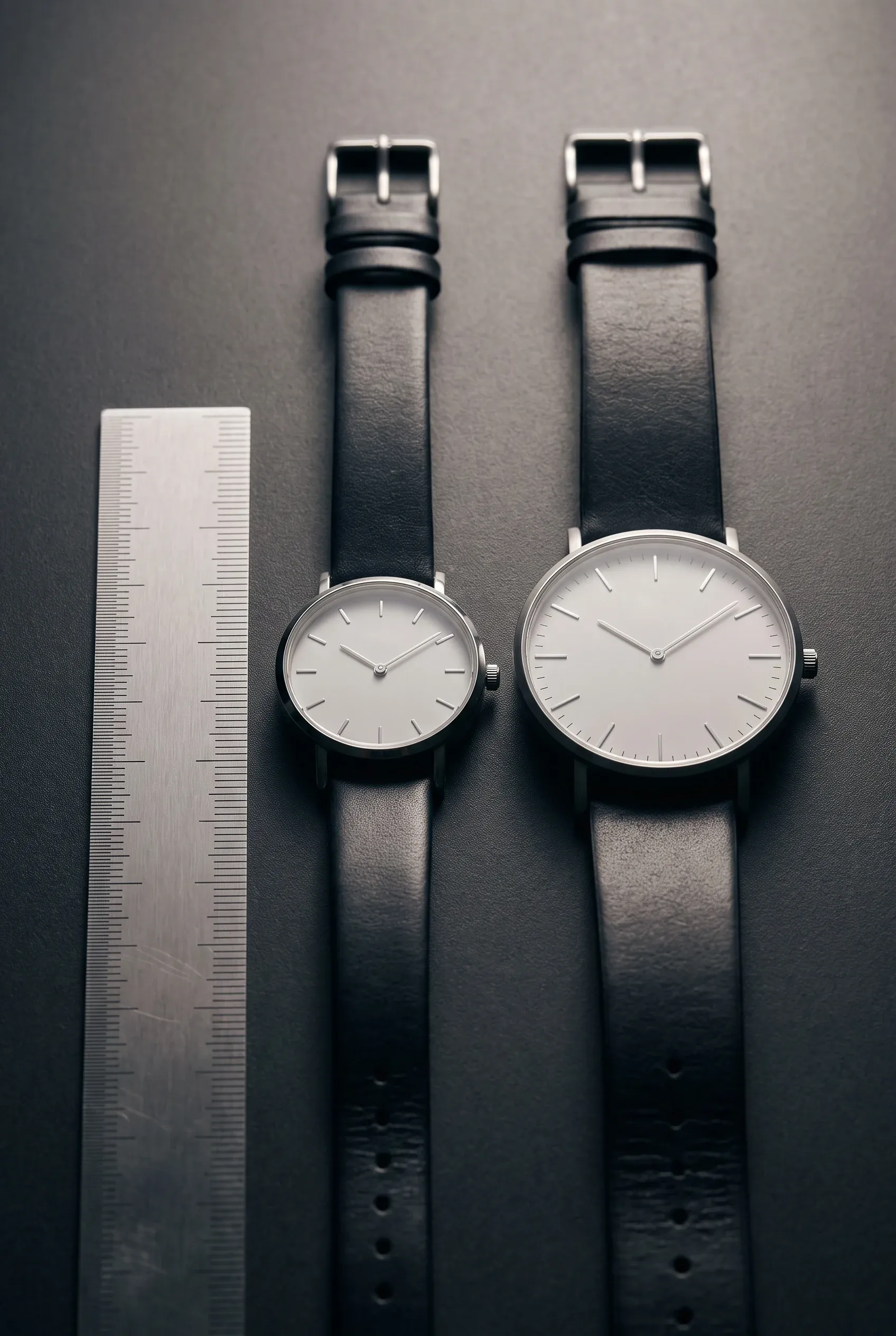
A 36 mm watch usually reads tidy, dressy, and a little more restrained. It slips under a cuff more easily and leaves more visible wrist around the case. A 42 mm watch reads more casual or sporty, fills the wrist faster, and becomes part of the outfit instead of a quiet accessory. On an average wrist, both can work, but they send different signals.
40 mm vs 42 mm watch, what changes on the wrist
This is the comparison most shoppers get stuck on. Two millimeters sounds trivial, but it changes the footprint, the dial opening, and often the bracelet width. If you sit between sizes, 40 mm is usually easier to live with every day, while 42 mm is usually easier to notice across the room.
| Question | 40 mm | 42 mm |
|---|---|---|
| Best on wrist sizes | About 6.5 to 7.25 inches | About 7 to 7.75 inches |
| Under a shirt cuff | Easier | Depends more on thickness |
| Daily wear feel | Balanced, flexible | More assertive |
| When fully stone set | Can already look large | Usually reads like a statement piece |
| Best use | One watch for most outfits | Sport or standout styling |
If your wrist is 7 to 7.5 inches, both sizes can work. The deciding factors become lug-to-lug, thickness, and bracelet design. If your wrist is closer to 6.5 inches, a 40 mm case is often the safer answer. A 42 mm case can still work, but only when the lugs are short and the case is not too tall.
Case diameter is only half the story
Always read four measurements before you buy: case diameter, lug-to-lug, thickness, and bracelet width. Diameter tells you the headline size. Lug-to-lug tells you whether the watch will spill over your wrist. Thickness tells you how heavy and top loaded it may feel. Bracelet width tells you whether the watch reads sleek or blocky.
Bezel design also changes the visual size. A wide bezel makes the dial opening smaller, so the watch wears slightly smaller than its stated diameter. A thin bezel makes the dial look larger. Long straight lugs stretch the watch across the wrist, while compact curved lugs pull it inward. That is why two 40 mm watches can wear nothing alike.
Thickness, bracelet taper, and bezel style
Thickness matters more than many first-time buyers expect. A thin 42 mm watch can feel elegant and sit close to the wrist. A thick 40 mm watch can feel larger, heavier, and less comfortable under sleeves. This is one reason many stone-set watches under $3,000 use quartz. In our coverage of quartz versus automatic movement choices, we explain why automatic movements usually add height and service cost.
Bracelet taper changes the look too. A bracelet that narrows toward the clasp makes the watch seem slimmer. A wide straight bracelet makes the case feel larger. Stone coverage pushes this effect even further. A fully paved bezel and bracelet draw the eye edge to edge, so the watch reads broader than the same case in plain metal.
Small wrist rules that save you from a bad buy
If your wrist is below average, do not shop by men's categories alone. The usual 40 mm to 44 mm range exists because many buyers want presence, not because every wrist needs it. Start smaller and judge the fit in photos or videos with the watch centered on the wrist, not hanging over the bone.
Three rules prevent most mistakes. First, keep lug-to-lug inside your wrist width. Second, favor thinner cases and shorter lugs. Third, remember that bright dials, polished bracelets, and full stone coverage all make a watch look larger. If your wrist is under 6 inches, sizing logic overlaps with our advice on small wrist watch fit, even if you prefer men's styling.
How stone setting changes the visual size
A plain steel 40 mm watch and a fully set 40 mm watch do not wear the same. Stone setting adds visual density and glare, especially across the bezel and first links. That extra brightness makes the case look bigger from normal viewing distance. It is the same reason a polished bracelet feels louder than a brushed one.
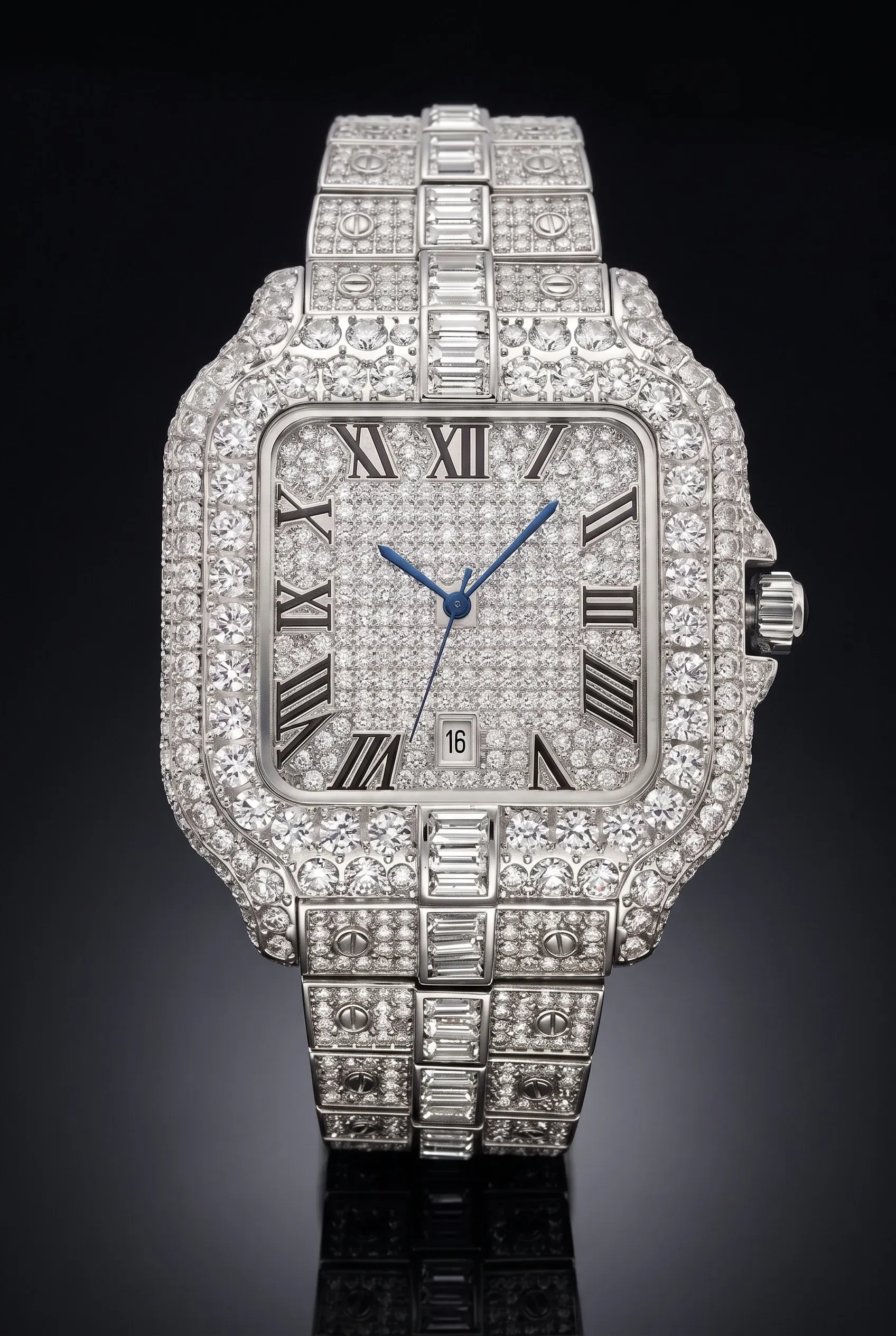
Moissanite adds even more effect because its fire is high. Moissanite is silicon carbide, nearly all jewelry examples are lab grown, and its dispersion is 0.104, compared with 0.044 for diamond. A fully set moissanite watch can look larger than its measurements suggest, which is why many buyers who wear 42 mm in plain metal prefer 40 mm or a short-lugged 42 mm in stone set form. If you want the sizing side and the price side together, see our pieces on hand set stones and moissanite watch prices.
Price also tells you what you are really getting. Fully set moissanite watches usually run about $900 to $2,700. Crystal or CZ iced out watches usually sit around $100 to $400. A watch sold as moissanite under about $300 is almost certainly crystal or CZ, not moissanite.
Dress, daily, sport, and statement use
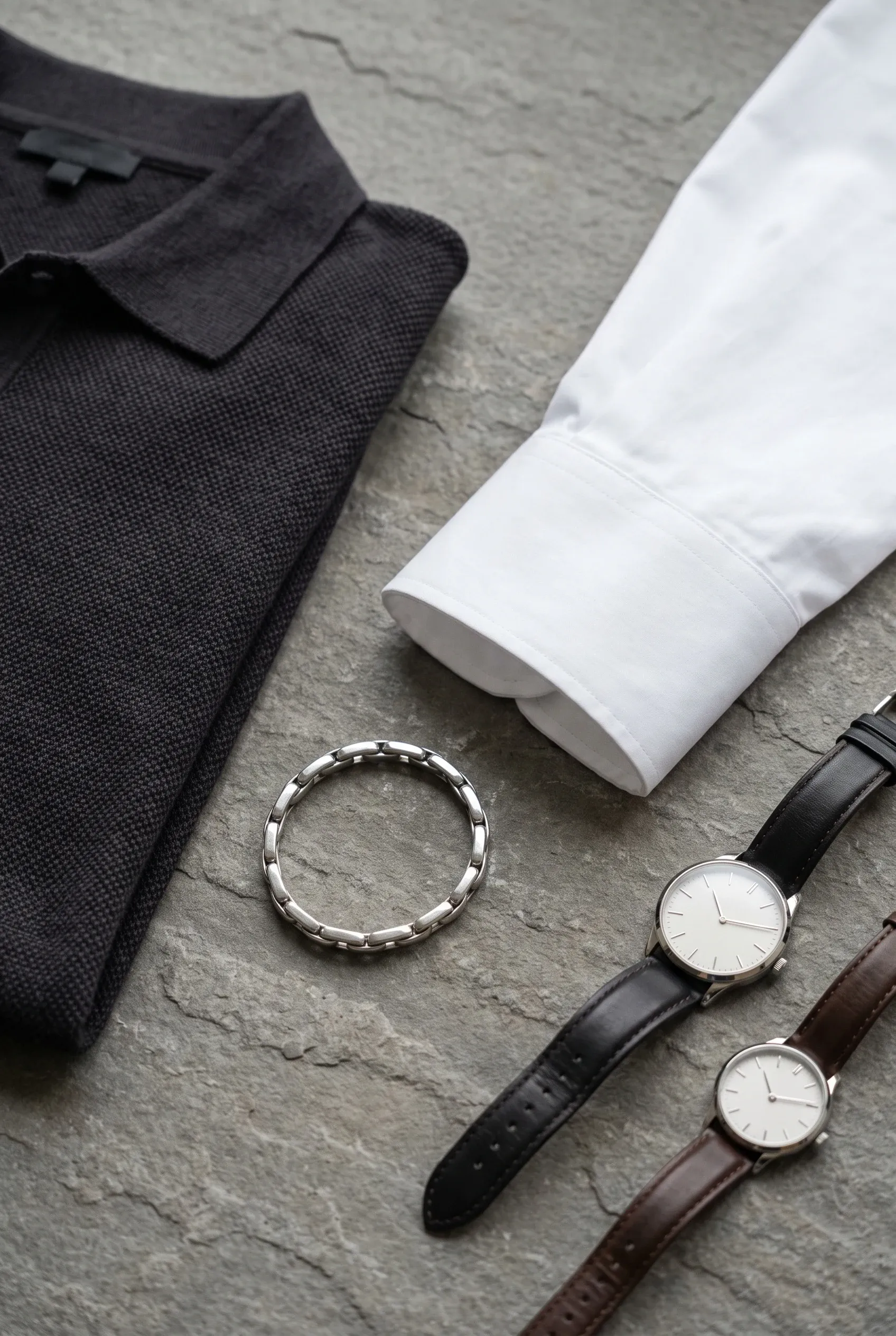
The best size also depends on what the watch needs to do. For dress use, 36 mm to 38 mm often looks cleaner because it slides under a cuff and does not dominate the outfit. For daily wear, 38 mm to 40 mm is the most flexible zone for many wrists. For sportier styling, 40 mm to 42 mm gives more presence and better legibility at a glance.
Statement watches live in a different lane. A fully iced 42 mm piece can be right when the watch is meant to be seen first. That is especially true with streetwear, short sleeves, or layered bracelets. The same size can feel too loud with business clothing. We go deeper on proportions and outfits in our article on styling a stone set watch.
A simple five step fitting method
You can get surprisingly close without trying the watch on in person. What matters is using a consistent method, then adjusting for the details that make watches wear larger or smaller than their spec sheet.
- Measure your wrist circumference. Use a soft tape where the watch will sit. Write the number down in inches.
- Measure your wrist width. Look at the flat top of your wrist from edge to edge. This is the limit the lugs should stay within.
- Pick a starting diameter. Use the wrist chart above to choose a first range, not a final answer.
- Check the full spec sheet. Read lug-to-lug, thickness, and bracelet width before you look at dial color or stones.
- Adjust for style. Go smaller for dress use, thick cases, and heavy stone coverage. Go larger only when your wrist width supports it.
If you are shopping online, look for wrist shots taken straight on and from the side. A side view exposes thickness better than a front view. If only a floating product shot exists, assume the watch may wear larger than it looks.
What to buy in 2026 at each budget
For stone-set watches, price narrows the field fast. At $100 to $400, you are usually looking at crystal or CZ, Japanese quartz, and hardened mineral glass. At about $900 to $2,700, genuine moissanite becomes realistic. Above roughly $1,500, sapphire crystal starts appearing more often. In these categories, 40 mm to 42 mm remains the most common men's size because it gives the stones room to read.
Once you move higher, you are no longer deciding only on size. Custom lab-diamond set watches often land around $5,000 to $15,000. Custom natural-diamond set watches often run about $15,000 to $60,000 and up, while factory diamond-set pieces from major houses start much higher. At any price, prioritize fit, hand setting, and realistic use. A 3 ATM rating means rain and hand washing, not swimming.
The short version is simple. Choose 36 mm if you want a compact, dress-leaning fit or have a small wrist. Choose 40 mm if you want the safest one-watch answer. Choose 42 mm if your wrist is average to large and you want more presence, especially in sport or iced out styles. Then confirm the decision with lug-to-lug, thickness, and how much sparkle the watch adds on wrist.
Frequently Asked Questions
Is 36 mm too small for a man?
No. A 36 mm watch can look excellent on a man, especially on a smaller wrist or in a dress context. It reads compact and classic, not automatically feminine. The key is proportion. If the lugs stay inside your wrist width and the watch matches your style, 36 mm is a valid men's size.
Is 42 mm too big for a 6.5 inch wrist?
Often, yes, but not always. On a 6.5 inch wrist, 42 mm usually starts to feel large unless the lugs are short, the case is thin, and the bracelet is not too wide. A fully stone-set 42 mm will look even bigger. For many people at that wrist size, 38 mm to 40 mm is easier to wear.
Does lug-to-lug matter more than case diameter?
For actual fit, yes. Case diameter tells you the general category, but lug-to-lug tells you whether the watch physically fits the top of your wrist. A smaller watch with long lugs can wear worse than a larger watch with compact lugs. If the lugs overhang, the watch is too large.
Is 40 mm the safest first watch size?
For many men, yes. A 40 mm watch sits near the middle of the modern men's range and works in casual, office, and light dress settings. It also avoids the compact feel of 36 mm and the stronger presence of 42 mm. You still need to check thickness and lug-to-lug before buying.
Do iced out watches wear larger than plain watches?
Yes. Full stone coverage makes a watch look larger because the bezel, dial, and bracelet all reflect light more aggressively. Moissanite increases that effect because its fire is high. That is why a fully set 40 mm watch can have the visual impact of a plain 42 mm watch.
Should I choose quartz or automatic for a stone-set watch?
Quartz is often the practical choice under $3,000. It is the norm in that segment, usually keeps the case slimmer, and avoids the added service cost that comes with automatic movements. Automatic watches can be appealing, but they often add thickness, which can make the same diameter wear larger on the wrist.
Can I size a watch online without trying it on?
Yes, if you measure your wrist and read more than the diameter. Start with wrist circumference, then confirm your wrist width. Compare that with the watch's lug-to-lug, thickness, and bracelet width. Product photos on wrist help, but the spec sheet matters more than a flattering marketing angle.