Moissanite vs White Sapphire: Sparkle Durability and Cost
Compare moissanite and white sapphire with real numbers for sparkle, durability, tester behavior, and cost, so you can choose the right stone.
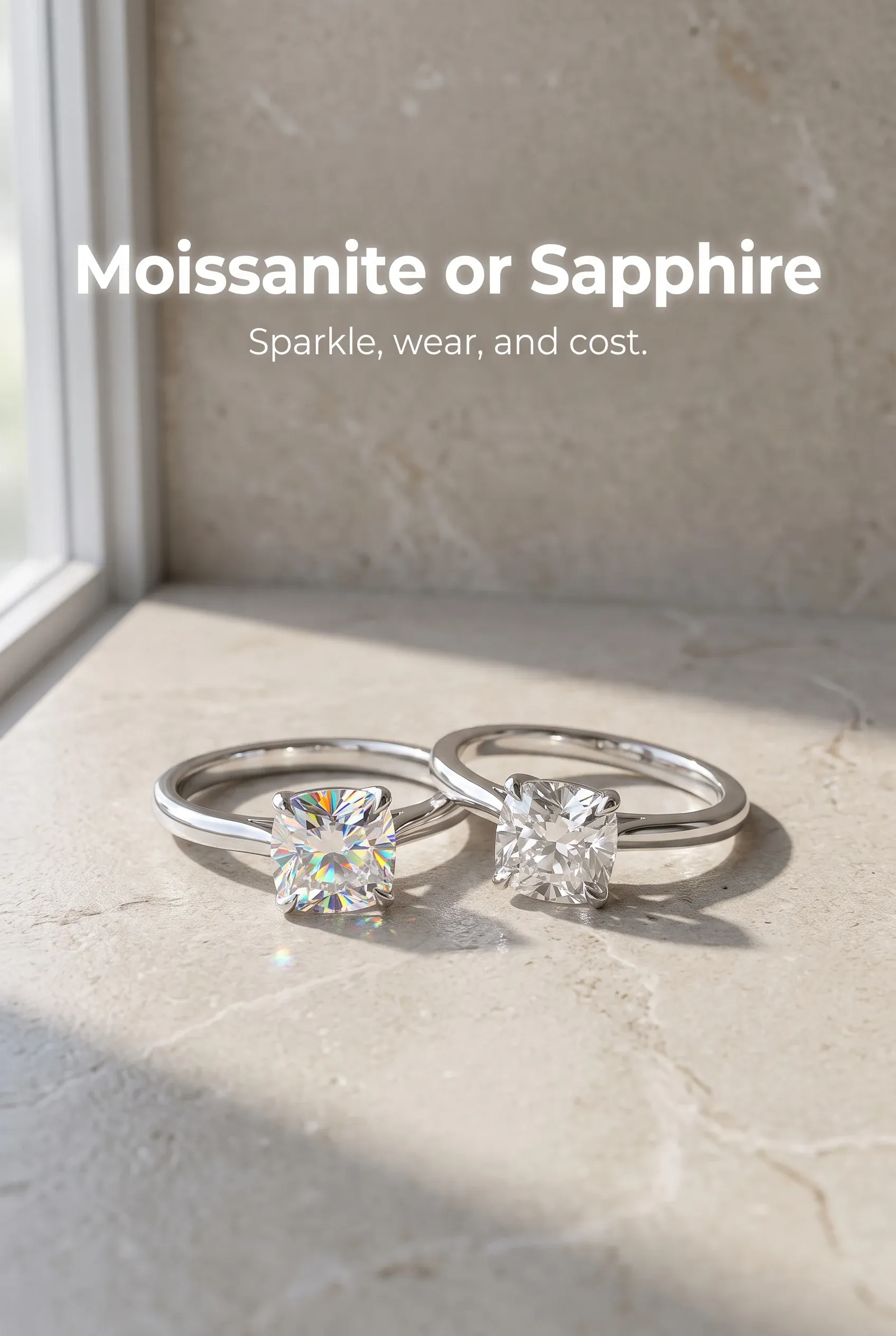
For most shoppers comparing moissanite vs white sapphire, moissanite wins on sparkle, daily-wear durability, and price clarity. White sapphire can still make sense if you want a quieter, less rainbow-heavy look, but it usually appears softer and less lively once the stone gets larger.
Moissanite vs white sapphire at a glance
These two stones fill a similar role in jewelry, but they do not behave the same way once light hits them. The biggest differences are optical performance, day-to-day wear, and how predictable the market is when you shop online.
| Category | Moissanite | White sapphire |
|---|---|---|
| What it is | Silicon carbide, nearly always lab grown for jewelry | A colorless sapphire used as a white stone |
| Hardness on the Mohs scale | 9.25 | 9 |
| Refractive index | 2.65 to 2.69 | 1.76 to 1.77 |
| Dispersion, or fire | 0.104 | 0.018 |
| Common look | Very bright, strong rainbow flash, high contrast | Softer white sparkle, much less rainbow fire |
| Typical paperwork | GRA identification reports are common | Paperwork varies by seller and price level |
| Quick tester behavior | A thermal diamond pen can read it as diamond, a dual thermal and electrical tester separates it | Do not rely on a pen demo to judge this stone or its cut quality |
| Typical loose 1 ct retail | About $300 to $600 for a colorless stone | No single national band, pricing varies widely by source and cut |
The table tells the short story. Moissanite is harder, bends light more aggressively, and throws much more fire. White sapphire is the calmer stone. That can read elegant, but it also means less brightness when the stone is not perfectly lit.
What each stone actually is
Moissanite is silicon carbide. It was first identified in a meteor crater in 1893 by Henri Moissan, but gem-quality material for jewelry has been grown in labs since the late 1990s. Nearly all jewelry moissanite sold in 2026 is lab grown, and we cover the background in more detail in this guide to what moissanite is.
White sapphire is simply sapphire chosen for its lack of strong body color. That sounds close enough to overlap with moissanite in search results, but the market feels different once you shop. Moissanite is usually sold with specific color grades such as D-E-F or G-H-I, and its listings are often more standardized. White sapphire listings can be less uniform, so photos and video matter more.
How sparkle looks in real life
This is the section that decides most purchases. Moissanite has a much higher refractive index than white sapphire, and its fire is far stronger. In daylight, under office LEDs, and under restaurant spot lighting, moissanite tends to return more white light and more rainbow flashes. It looks active from farther away.
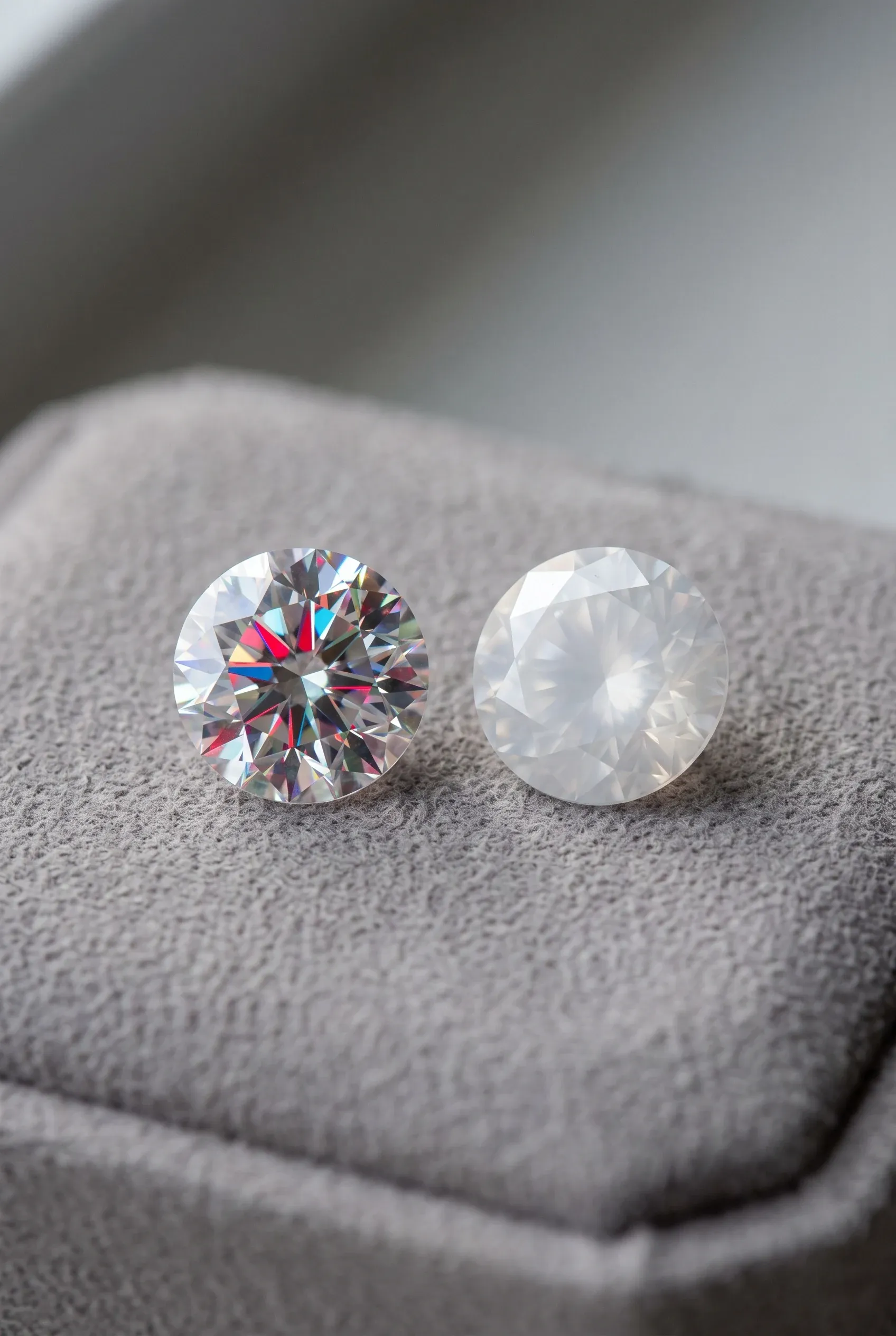
White sapphire gives a quieter kind of sparkle. Some buyers prefer that. If you dislike rainbow flash and want a restrained stone that stays visually polite, white sapphire has a real case. The trade-off is that it can look flatter when lighting is weak or when the cut is only average.
Stone size changes the comparison. In small accents, earrings, or halos, the difference is less dramatic. In a center stone, especially once you want noticeable finger coverage, moissanite usually keeps its life better. A larger white sapphire can read more like a clear stone than a bright one unless the cutting is excellent.
Durability for daily wear
Both stones are suitable for jewelry, but they are not equally resistant to long-term wear. Moissanite sits slightly higher on the Mohs scale, and that matters most in rings worn every day. Surface wear builds slowly, so shoppers often do not notice the difference in the first month. They notice it after years of hand washing, desk contact, and routine bumps.
That does not make white sapphire fragile. A careful wearer can enjoy it for a long time. Still, if the ring will be worn daily, stacked with bands, or used as a large center stone, moissanite has the stronger case. It is the easier recommendation when durability is part of the brief, not an afterthought.
Color and clarity expectations
Moissanite is one of the easier stones to shop by listed specs. Sellers commonly use D-E-F for colorless and G-H-I for near-colorless. Clarity is often listed as VVS, but that should not be treated like a rare upgrade. Lab growth makes VVS the norm in this category, not a premium event, and we explain that in our guide to VVS moissanite.
White sapphire requires a more visual approach. Listings may not use the same standardized language, and the stone’s lower light return means cut quality shows quickly. If a seller gives only a top-down photo, treat that as missing information. Ask for side angles, hand shots, and video in mixed lighting, because sparkle and body tone are harder to judge from one still image.
Which cuts and shapes favor each stone
Shape changes how these stones present themselves. Round brilliant cuts are the safest choice when you want the most brightness from either material, because they are built to return light efficiently. Once you move into larger ovals, pears, emerald cuts, or other elongated shapes, the difference between the two stones becomes easier to see.
Moissanite tends to hold visual energy better across more shapes, especially when you want a center stone with obvious presence. White sapphire can still work beautifully, but it asks more from the cutting. In step cuts and broad facets, its softer light return becomes easier to notice, which can make a large stone look quieter than expected.
This does not mean white sapphire should only be bought in round. It means you should match shape to your goal. If you want white sapphire, a well-cut round or cushion is usually the lower-risk path. If you want moissanite but hope for a calmer look, step cuts can tone down some of the rainbow activity compared with a brilliant round.
How metal color changes the final look
Many shoppers judge the center stone when the setting color is doing part of the talking. White metal tends to keep both stones looking crisper and more neutral. Yellow and rose metal can reflect warmth upward, especially in open baskets, slim prongs, and side profiles where more of the stone is exposed.
This matters more than some listings suggest. A colorless moissanite in white metal usually reads clean and bright, while a near-colorless stone in warm metal may show a softer tint from some angles. White sapphire also picks up its surroundings easily, and its lower light return means the metal tone around it can have more visual influence in low light.
If you are comparing options online, try to compare like with like. Do not judge one stone in white metal against the other in yellow gold and assume the stone alone created the difference. The fairest comparison is the same shape, similar size, and the same metal color in similar lighting.
Size, presence, and the bigger-stone question
Moissanite is strong in larger sizes because its price per carat rises slowly. That lets shoppers chase a bold look without crossing into diamond pricing. White sapphire can fill the same physical space, but it does not scale in visual impact the same way. As size increases, its softer light return becomes more obvious.
That does not mean every buyer should avoid a larger white sapphire. If your taste leans antique, low-key, or understated, the quieter look may be exactly the point. But if your goal is obvious brilliance from arm’s length, moissanite is better aligned with that brief. Bigger stones magnify the personality of both materials, not just their measurements.
Cost and value
Moissanite has one major shopping advantage: a predictable retail band. In 2026, a loose 1 ct colorless moissanite usually lands around $300 to $600. By comparison, a 1 ct round diamond of similar color is about $4,000 to $7,000 if natural and about $800 to $1,500 if lab grown. That makes moissanite easy to budget for, especially when you want a larger stone.
White sapphire is less tidy. There is no single national retail range that works the way it does for mainstream moissanite, so headline price is not enough to judge value. One white sapphire may be modestly priced and still look fine in person. Another may cost more than expected and still look sleepy because the cutting is weak. With white sapphire, you need to compare the whole ring, not just the stone line item.
The value question also depends on your definition of success. If success means maximum sparkle per dollar, moissanite has the edge. If success means a soft white look with less rainbow activity, white sapphire may satisfy even when it looks less bright on paper. The right answer depends on the visual outcome you want, not just which receipt is lower.
How to tell them apart in a store
Do not let a pen demo make the decision for you. A basic thermal diamond tester can read moissanite as diamond, which is why quick in-store demonstrations often confuse buyers. A dual thermal and electrical tester can separate moissanite correctly, and we break that down in this diamond tester guide.
If you have a loupe, moissanite also has a useful visual clue. Because it is doubly refractive, facet doubling can be visible through the pavilion. Paperwork helps, but know what it means. GRA reports are the usual moissanite documents, and they mainly confirm that the stone is moissanite while listing carat, cut, and color. They are identification paperwork, not a GIA-style guarantee of top cut quality.
Setting quality matters as much as the stone
Many disappointing rings are really setting problems. Thin prongs, weak finishing, and lifeless cutting will hold back either stone. Before debating gem type, inspect the craftsmanship. Check that the center stone sits straight, prongs are even, side stones line up, and the gallery does not look rushed.
Maintenance matters too. Oil, soap film, and lotion reduce sparkle, especially in stones that depend on clean facet edges. A gentle cleaning routine makes a bigger difference than most shoppers expect, and the same basic method works for both stones. If you need a simple routine, start with our guide on how to clean moissanite, then apply the same soft-brush approach to white sapphire.
Should you choose a white sapphire engagement ring
A white sapphire engagement ring makes sense for a buyer who wants restraint. If the wearer dislikes pronounced rainbow fire, prefers a vintage-adjacent softness, or wants a center stone that does not shout from across the room, white sapphire is a legitimate choice. It also suits shoppers who care more about the outline and setting design than about maximum brilliance.
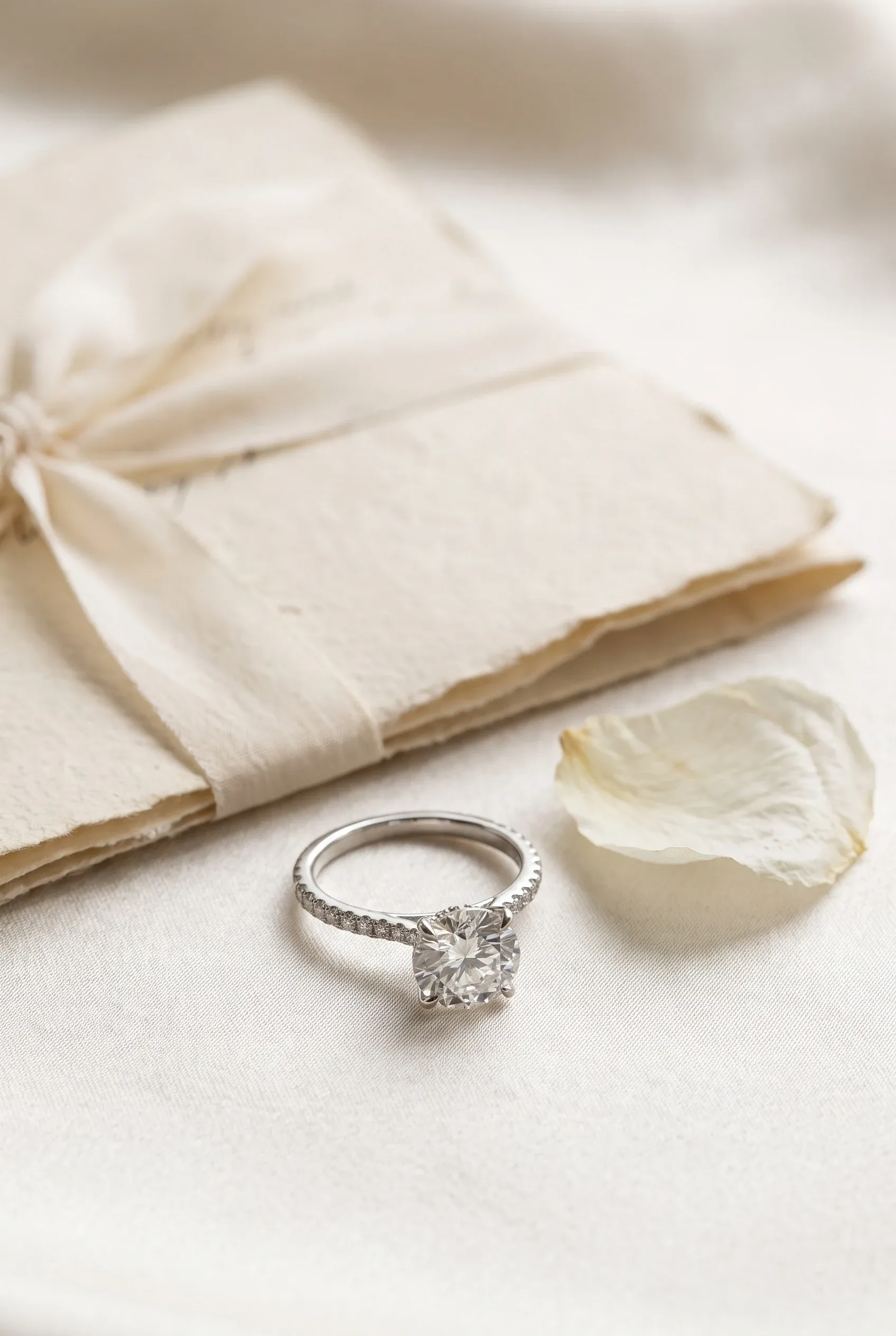
Moissanite is usually the better fit for buyers who want a lively center stone, stronger day-to-day brightness, and more certainty while shopping online. It is also easier to recommend for active hands and for rings that will be worn daily for years. The honest answer is not that one stone is universally better. It is that white sapphire asks you to want its lower-key look on purpose.
Which stone fits which buyer
If you are still split, think in terms of preferences, not labels. The right pick usually becomes obvious when you decide whether you care more about sparkle output or a quiet appearance.
| If you want | Leans moissanite | Leans white sapphire |
|---|---|---|
| Maximum sparkle in mixed lighting | Yes | No |
| Less rainbow flash | No | Yes |
| A larger center stone on a controlled budget | Usually the better fit | Possible, but visual payoff is lower |
| More standardized online specs | Yes | Less often |
| A subtle, understated look | Sometimes too lively | Often a better match |
| Best edge for everyday wear | Yes | Good, but slightly less durable |
For most readers, moissanite is the easier stone to recommend because it combines brightness, toughness, and a more transparent shopping market. White sapphire remains worth considering when muted sparkle is part of the appeal, not a compromise you are settling for. If you are comparing more stone types, our library of other stone comparisons can help narrow the field.
Frequently Asked Questions
Is moissanite more sparkly than white sapphire?
Yes. Moissanite has both a higher refractive index and much stronger dispersion, so it returns more brightness and more rainbow fire. White sapphire can still sparkle, but its look is calmer and less active. In larger center stones, the difference becomes easy to see even without tools.
Which lasts better for an everyday ring?
Moissanite has the edge for daily wear because it is slightly harder and tends to resist long-term surface wear better. White sapphire is still suitable for jewelry, but the small durability gap matters most in engagement rings and other pieces worn every day.
For moissanite vs white sapphire, which looks closer to diamond?
It depends on which part of a diamond look you care about. White sapphire has less rainbow flash, which some people read as more restrained. Moissanite is brighter and more fiery, but that extra fire can look less diamond-like to buyers who want a quieter look.
Can white sapphire get dull faster?
It can appear dull sooner because it starts with less light return than moissanite, so dirt and routine wear show up more quickly. That does not mean the stone is damaged. It means regular cleaning and stronger cutting quality matter a lot if you want it to stay lively.
Do I need a certificate for either stone?
For moissanite, a GRA report is common and mainly works as identification. It confirms the stone is moissanite and lists basic details such as carat, cut, and color. It should not be treated as proof of elite cut quality. For white sapphire, paperwork varies more by seller.
Is VVS moissanite worth paying more for?
Usually no. In moissanite, VVS is the standard clarity you will see because lab growth makes that level common. It is not the same kind of rare upgrade it can be in diamonds. Most shoppers should focus more on cut, color range, and setting quality.
Which is better for a larger center stone?
Moissanite is usually the stronger choice when you want a bigger center stone. Its price scales gently, and it keeps more brightness as size goes up. White sapphire can work if you want a subdued look, but the larger it gets, the more its softer sparkle becomes part of the result.