What Is VVS Moissanite?
VVS is a clarity label, not a quality verdict. What it means, what it does not, and why cut deserves your money before clarity does.
VVS moissanite is moissanite with extremely tiny inclusions that are difficult to detect under 10× magnification. In practical terms, it gives you an eye-clean gemstone with a high clarity grade, strong brilliance, and a price that stays far below a comparable diamond.
If you are shopping for a ring, earrings, or fine jewelry, the key point is simple: VVS describes clarity, not the entire quality of the stone. Color, cut, carat size, and craftsmanship still determine how beautiful the finished piece looks on your hand, neck, or ears.
What Is VVS Moissanite?
Defining Moissanite and the VVS Grading System
Moissanite is a gemstone made of silicon carbide. All moissanite used in jewelry today is lab-created, and gem-quality natural moissanite is extremely rare.
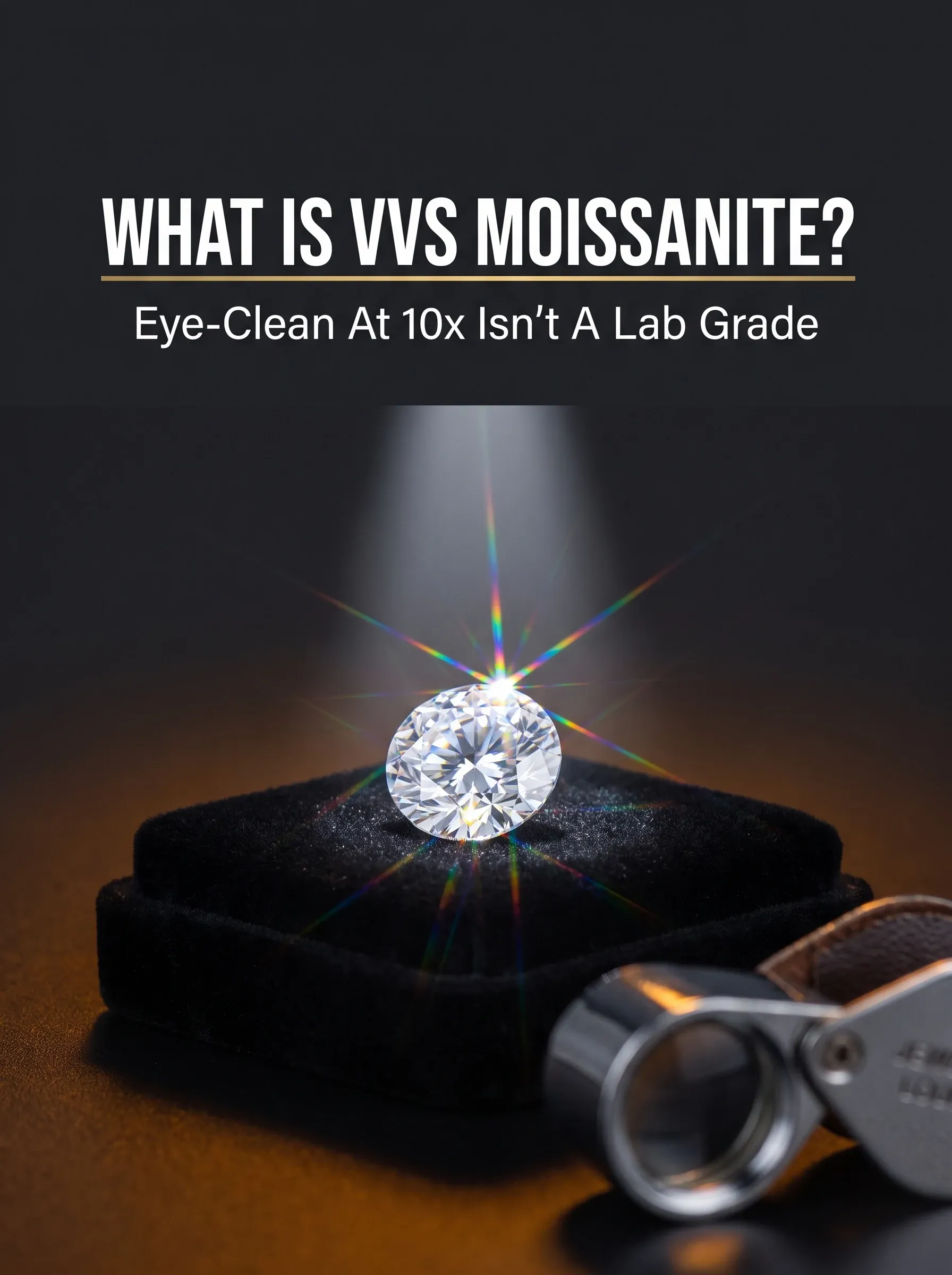
VVS stands for Very Very Slightly Included. In a VVS moissanite stone, the internal inclusions are so small that they are difficult to find even under 10× magnification. The grade is split into two levels:
- VVS1: the higher clarity grade, with smaller or less noticeable inclusions
- VVS2: still very high clarity, with inclusions slightly easier to locate under magnification
Without magnification, both VVS1 and VVS2 look eye-clean in normal viewing conditions. For most buyers, that means you will not see a visible difference between them once the stone is set in jewelry.
Clarity grading focuses on five things: size, number, location, nature, and visibility of inclusions or blemishes. Internal marks are inclusions. Surface marks are blemishes. Together, they place the gemstone on a clarity scale that ranges from flawless grades down to included grades.
One caveat matters more than anything else on this page. VVS is a scale built for diamonds, and the major gem labs do not issue clarity reports for moissanite the way they do for diamond. When a listing says VVS moissanite, that is the seller describing their own stone using borrowed vocabulary, not an independent laboratory verdict. The term is still useful — it tells you the seller is aiming at the eye-clean end of their inventory — but it carries no third-party guarantee behind it. Judge the stone by photographs, video, and return terms rather than by the letters alone.
Historical Background and Rise in Popularity
Moissanite entered the jewelry market as a modern diamond alternative in the late 1990s. A 1997 GIA study identified synthetic moissanite being produced for jewelry use and recorded two traits that still matter to buyers today: a Mohs hardness of 9.25 and double refraction, which contributes to its lively optical performance.
Its popularity grew for clear reasons. Moissanite delivers strong sparkle, a white appearance in higher color grades, durability for everyday wear, and a much more affordable price than diamonds. As lab creation improved, buyers gained access to more consistent color, cut, and clarity, including premium VVS moissanite.
That rise also changed how people shop. Instead of choosing moissanite only as a budget substitute, many buyers now choose it on purpose for its brilliance, ethical lab creation, and value in engagement and fashion jewelry.
Characteristics and Quality Attributes
Color, Clarity, and Brilliance Explained (Including White Appearance)
When you see a listing for VVS moissanite, clarity is only one part of the quality picture. The stone’s visible look comes from the interaction of color, clarity, and brilliance.
Clarity tells you how free the stone is from visible internal features. In VVS moissanite, those features are minute. That is why the stone looks clean and crisp without magnification.
Color tells you how white the gemstone appears. A colorless grade such as D color paired with VVS clarity creates a bright white, eye-clean look. That combination is popular in engagement ring settings because it produces a clean, icy appearance.
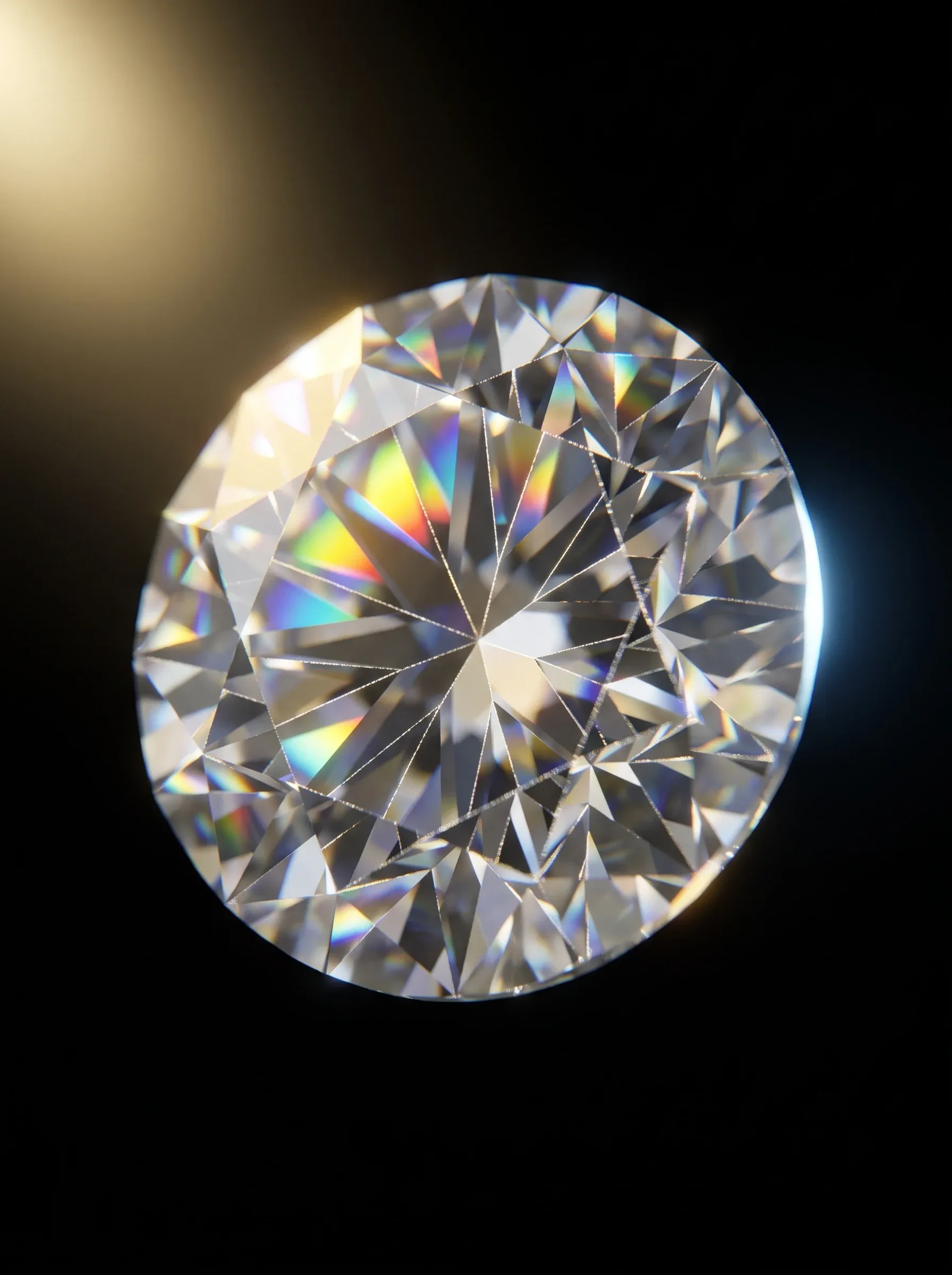
Brilliance refers to the return of white light, while fire refers to colored flashes. Moissanite is famous for intense sparkle because it has a high refractive index and is doubly refractive. That optical structure gives it a different personality than diamond: both are beautiful, but moissanite throws more rainbow fire.
A useful way to think about it is this:
| Quality Factor | What It Means | What You Actually Notice |
|---|---|---|
| Clarity | Amount and visibility of inclusions and blemishes | How clean the stone looks |
| Color | How colorless or tinted the stone appears | How white or warm the stone looks |
| Brilliance | Return of white light | Brightness and liveliness |
| Fire | Dispersion of colored light | Rainbow sparkle |
If you want a white look, prioritize color first and clarity second once you are already in eye-clean territory. Moving from VS to VVS matters less visually than moving from a tinted stone to a truly colorless one.
The Importance of Cut, Carat, and Sparkle in Gemstone Quality
Cut has the strongest effect on how much a moissanite sparkles. A high-clarity stone with a weak cut will not look as impressive as a slightly lower clarity stone with excellent proportions and crisp faceting.
Carat size also changes what you see. In a smaller stone, inclusions are harder to notice. In a larger stone, every detail becomes easier to inspect, so cut precision and color consistency matter more. That is why a large engagement ring demands a more careful balance of clarity, color, and cut.
If you are choosing between two eye-clean stones, spend your budget on the better cut before paying extra for a tiny paper-grade difference in clarity. That decision improves real-world sparkle more than chasing the highest label.
- Cut drives brilliance and sparkle
- Color shapes the white appearance
- Clarity confirms the stone looks clean
- Carat affects visual presence and price
VVS Moissanite Versus Diamonds
Comparing Quality, Appearance, and Scale
VVS moissanite and VVS diamonds share one trait: both have very small inclusions. That does not make them the same gemstone. Diamond is carbon. Moissanite is silicon carbide. Their optical behavior differs, so their sparkle differs too.
Diamonds tend to show a more restrained balance of white light and fire. Moissanite shows stronger flashes of colored light. If you want maximum sparkle, moissanite stands out. If you want the more familiar diamond look, a diamond stays distinct.
The clarity scale language also overlaps, which causes confusion. VVS is a clarity grade, not a gemstone type. You can have a VVS diamond and a VVS moissanite, but they remain different materials with different price structures and optical performance.
| Feature | VVS Moissanite | VVS Diamond |
|---|---|---|
| Material | Silicon carbide | Carbon |
| Clarity meaning | Extremely tiny inclusions under 10× magnification | Extremely tiny inclusions under 10× magnification |
| Visible look without magnification | Eye-clean | Eye-clean |
| Sparkle style | Stronger rainbow fire, very lively brilliance | More traditional diamond light return |
| Hardness | 9.25 on the Mohs scale | Higher than moissanite |
| Origin in jewelry market | Lab-created | Natural or lab-grown |
| Price | Far more affordable | Much higher |
One more practical note: thermal diamond testers do not always separate moissanite from diamond accurately. The U.S. Federal Trade Commission has warned that testers used to distinguish diamonds from cubic zirconia may not accurately identify moissanite. That matters if you rely on a quick handheld test instead of proper gem identification.
Price, Affordability, and Overall Value
Price is where VVS moissanite becomes especially attractive. You get a high-clarity, white-looking, durable gemstone for a fraction of what a comparable diamond costs.
Finished jewelry costs more because metal type, design complexity, and labor all add to the final price.
Value depends on what you want from the piece. If your goal is maximum size, sparkle, and clarity for the money, VVS moissanite is hard to beat. If your priority is owning a diamond specifically, moissanite does not replace that preference; it serves a different value proposition.
VVS Moissanite in Engagement and Fine Jewelry
Engagement Rings: Style, Quality, and Versatility
VVS moissanite works especially well in an engagement ring because it combines durability, a bright white look, and a premium clarity grade. Since the stone appears eye-clean, the ring looks polished and refined in everyday wear.
It also gives you flexibility in design. You can choose a larger center stone, a halo ring, or a solitaire without pushing the price into diamond territory. That freedom lets you direct more of your budget toward the setting, metal, or overall craftsmanship.
For engagement jewelry, focus on the full visual result:
- Choose a cut that returns strong light
- Match the color grade to the white tone you want
- Pick a carat size that suits your hand and setting
- Use VVS clarity when you want premium paper specs and an eye-clean look
If you are deciding between VVS1 and VVS2 for an engagement ring, the visible difference is minimal. In most cases, the better use of money is upgrading cut quality or setting design.
Other Jewelry Pieces: From Statement Designs to Everyday Wear
VVS moissanite is not limited to engagement rings. It is widely used in studs, tennis bracelets, pendants, necklaces, and fashion-forward statement jewelry because it delivers strong sparkle under indoor and outdoor light.
For earrings and pendants, VVS clarity is more than enough to create a clean, luxury look. In bracelets and chains, especially pieces with many stones, consistent matching matters as much as the individual clarity grade. A well-made piece with uniform color and cut looks better than a mismatched piece built around a single premium label.
That makes VVS moissanite a strong choice for both classic fine jewelry and bold contemporary designs.
Pricing Factors and Market Considerations
How Price Reflects Quality and Craftsmanship
The price of VVS moissanite jewelry reflects more than the stone’s clarity grade. Four things shape the final cost most directly:
- Stone quality: color, cut, clarity, and carat
- Setting metal: sterling silver costs less than gold
- Craftsmanship: finer finishing and secure stone setting raise quality
- Design complexity: halo, pavé, and multi-stone pieces require more labor
A VVS label alone does not guarantee the best piece. A poorly made ring with a VVS stone still looks less refined than a well-crafted ring with a slightly lower clarity stone and a superior cut.
When comparing listings, read them in this order: metal, center stone specs, cut description, total design quality, then price. That sequence gives you a clearer sense of real value.
Affordable Alternatives and Investment Perspectives
VVS moissanite is an affordable alternative to diamonds, but it is not an investment asset in the same way buyers sometimes imagine rare natural gemstones to be. You should buy it for beauty, wearability, and value, not for expected resale performance.
That is not a weakness. It simply means the return is personal rather than speculative. You get a durable gemstone, a larger visual presence for the same budget, and a piece you can wear daily without the financial burden of a comparable diamond purchase.
If your goal is smart spending, VVS moissanite makes strong sense. If your goal is long-term collectible rarity, the case is weaker because moissanite is intentionally created in a lab for consistency and accessibility.
The Lab Creation Process of Moissanite
How VVS Moissanite Is Created in the Lab
Moissanite used in jewelry is created in a lab from silicon carbide. That lab process gives producers control over growth conditions, which is one reason high-clarity grades such as VVS are widely available.
The result is a gemstone with fewer visible imperfections than many natural stones. Once the crystal material is grown, it is cut and polished into shapes such as round, oval, cushion, or radiant. At that stage, cut quality becomes decisive because the faceting determines how the stone handles light.
Since VVS moissanite starts with very small inclusions, the finished look depends heavily on how well the cutter brings out brilliance, symmetry, and sparkle.
Ensuring Consistency, Quality, and Ethical Production
Lab creation gives moissanite a level of consistency that buyers appreciate. Color matching, clarity control, and repeatable quality are easier to achieve in a controlled production environment than in mined gemstones.
It also supports the ethical appeal of the stone. Because moissanite in jewelry is lab-created, buyers who want a non-mined center stone have a clear alternative. That does not make every finished piece identical in quality, though. You still need to evaluate the seller’s grading standards, cutting quality, and setting workmanship.
A well-chosen VVS moissanite piece combines ethical production with strong visual performance, but the lab origin does not remove the need for careful buying.
Tips for Choosing and Caring for VVS Moissanite Jewelry
Guidelines for Selecting the Perfect Gemstone Piece
If you want the best result, choose VVS moissanite as part of a complete quality profile rather than treating clarity as the only important grade.
- Start with cut: it has the biggest effect on brilliance and sparkle
- Check color: if you want a crisp white appearance, stay in the colorless range
- Use clarity wisely: VVS1 and VVS2 are both eye-clean
- Think about size: larger carat weights reveal more about cut and color
- Match the setting: solitaire, halo, and pavé settings change how the stone looks
For a practical buying framework, this ranking works well: cut first, color second, clarity third once the stone is eye-clean, then carat based on budget.
Best Practices for Maintenance and Long-Term Care
Moissanite is durable enough for everyday jewelry, with a Mohs hardness of 9.25. Still, good care protects both the gemstone and the setting.
- Clean the piece regularly to remove oils and residue that dull sparkle — our cleaning routine covers the full method
- Use mild soap, warm water, and a soft brush
- Store pieces separately to avoid scratching metal surfaces
- Check prongs and settings periodically, especially on rings worn daily
- Remove fine jewelry during heavy manual work to protect the setting
Most loss of beauty in moissanite jewelry comes from dirt buildup or worn settings, not from the stone losing brilliance. Proper cleaning restores the lively sparkle quickly.
Future Trends and Sustainability in Moissanite Jewelry
Innovations and Evolving Market Trends
The moissanite market keeps moving toward better cutting, more precise color control, and broader design variety. Buyers now expect more than a basic diamond substitute. They want premium cuts, larger center stones, distinctive shapes, and fine jewelry settings that treat moissanite as a first-choice gemstone.
That shift benefits VVS moissanite directly. As consumer standards rise, high-clarity stones paired with strong cut quality become the default for premium moissanite jewelry rather than a niche upgrade.
You can also expect continued growth in custom engagement ring design, where moissanite gives buyers room to personalize shape, metal, and carat size without losing affordability.
Ethical Considerations and Environmental Impact
Moissanite appeals to buyers who want a lab-created gemstone instead of a mined diamond. That preference is often tied to sourcing transparency, environmental concerns, and budget control.
The sustainability case is strongest when you compare a lab-created stone with a mined alternative and value lower material extraction. The balanced view is that a finished jewelry piece still has an environmental footprint through energy use, metal production, manufacturing, and shipping. Moissanite reduces one part of that equation, not all of it.
Even with that nuance, VVS moissanite remains one of the clearest options if you want a bright, durable, white gemstone with strong ethics, strong sparkle, and an affordable price.
Frequently Asked Questions
Is VVS moissanite real moissanite?
Yes. VVS moissanite is real moissanite; VVS only describes the clarity grade of the stone.
What does VVS mean in moissanite?
VVS means Very Very Slightly Included, which indicates extremely small inclusions that are difficult to detect under 10× magnification.
Is VVS1 moissanite better than VVS2?
Yes, VVS1 is the higher clarity grade, but both VVS1 and VVS2 look eye-clean without magnification in normal viewing.
Does VVS moissanite look like a diamond?
It can look similar in color and clarity, especially in a white engagement ring, but moissanite shows more colored fire and has different optical properties than diamond.
Is VVS moissanite worth buying for an engagement ring?
Yes, if you want a durable, eye-clean, affordable gemstone with strong sparkle. It is especially attractive when you want a larger center stone for the same budget.
Does higher clarity make moissanite sparkle more?
No, not by itself. Once a stone is eye-clean, cut has a much bigger effect on brilliance and sparkle than moving from one very high clarity grade to another.
What color looks best with VVS moissanite?
A colorless grade creates the brightest white appearance, especially when paired with a well-cut VVS stone.
How durable is VVS moissanite for daily wear?
It is very durable. Moissanite has a Mohs hardness of 9.25, which makes it suitable for daily wear in rings, earrings, pendants, and bracelets.