Is Moissanite Good? Pros, Cons, and Who It’s Right For
A plain-English answer to whether moissanite is good, with durability, sparkle, tester results, price ranges, and who should choose it.
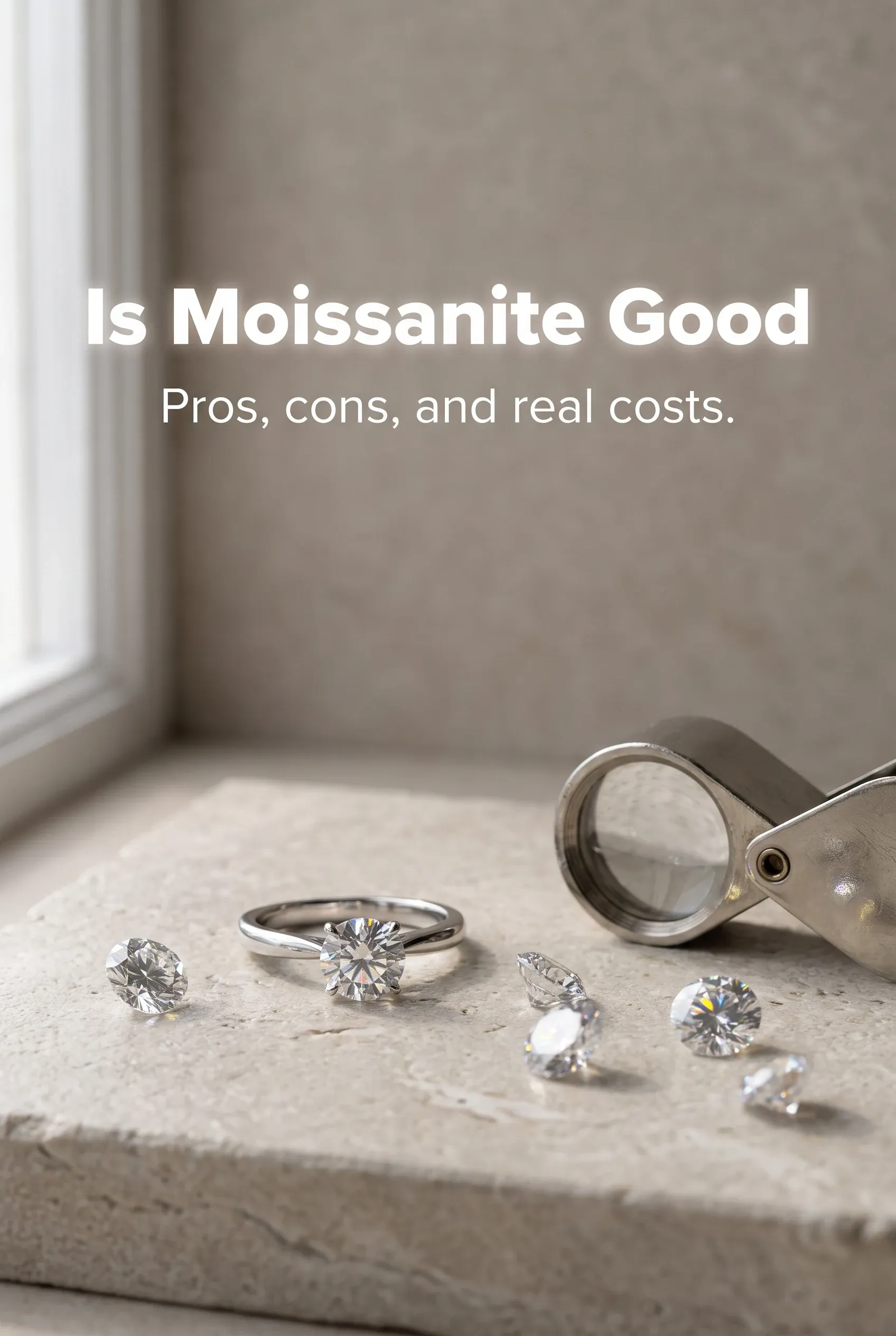
If you are asking whether moissanite is good, the short answer is yes for many buyers. It is a hard lab-grown silicon carbide stone with intense sparkle and a much lower price than diamond. It makes the most sense when you want daily durability and visible fire, and the least sense when you want diamond status or the most restrained look.
What moissanite actually is
Moissanite is silicon carbide, or SiC. The mineral was first identified in a meteor crater in 1893 by Henri Moissan, but gem-quality material for jewelry has been grown in labs since the late 1990s. Nearly all moissanite sold in jewelry today is lab grown.
That matters because you are not buying a mined rarity. You are buying an engineered gemstone with repeatable supply, consistent clarity, and pricing that stays far below diamond. If you want a fuller primer on the material itself, start with what moissanite is.
Why many buyers say yes
Most people who like moissanite like it for practical reasons, not because they think it is identical to diamond. It gives you strong sparkle, solid daily-wear durability, and more visible size for the money. That combination is hard to match.
- It sparkles a lot. Moissanite has high brilliance and very strong fire, so it throws obvious flashes in sun and indoor spot lighting.
- It is durable enough for daily wear. Its hardness sits well above common fashion stones and well above glass or crystal.
- It is accessible. The budget that buys a modest diamond often buys a larger moissanite or a more substantial setting.
- It is widely available. Because most stones are lab grown, matching pairs and larger sizes are easier to source than comparable diamonds.
Those are real advantages. They also explain why moissanite works especially well for engagement rings, stud earrings, pendants, and fully set watches where visual impact matters.
The numbers that matter
If you want an honest answer, start with the physics. Moissanite is not a diamond substitute because people say so. It sits in a real middle ground between diamond and cheaper alternatives on hardness, light return, and cost.
| Stone | Mohs hardness | Refractive index | Dispersion | What that means |
|---|---|---|---|---|
| Moissanite | 9.25 | 2.65–2.69 | 0.104 | Very bright, very fiery, durable for daily wear |
| Diamond | 10 | 2.42 | 0.044 | Hardest option, crisp sparkle, less rainbow fire |
| White sapphire | 9 | 1.76–1.77 | 0.018 | Subtler sparkle, good durability, calmer look |
| Cubic zirconia | about 8–8.5 | 2.15–2.18 | 0.060 | Bright at first, lower durability, budget choice |
| Morganite | 7.5–8 | 1.57–1.58 | 0.014 | Soft color, gentler sparkle, more care needed |
Two details matter more than most shoppers expect. First, moissanite’s fire is much stronger than diamond’s, which is why it can look more rainbow-heavy. Second, moissanite is doubly refractive, so facet doubling can appear under a loupe when you view it from the pavilion side.
How moissanite looks in real life
Face up, moissanite usually looks bright, sharp, and lively. In daylight it gives fast white flashes mixed with more colored fire than diamond. Under jewelry store lights or restaurant spot lights, that rainbow effect becomes even stronger.
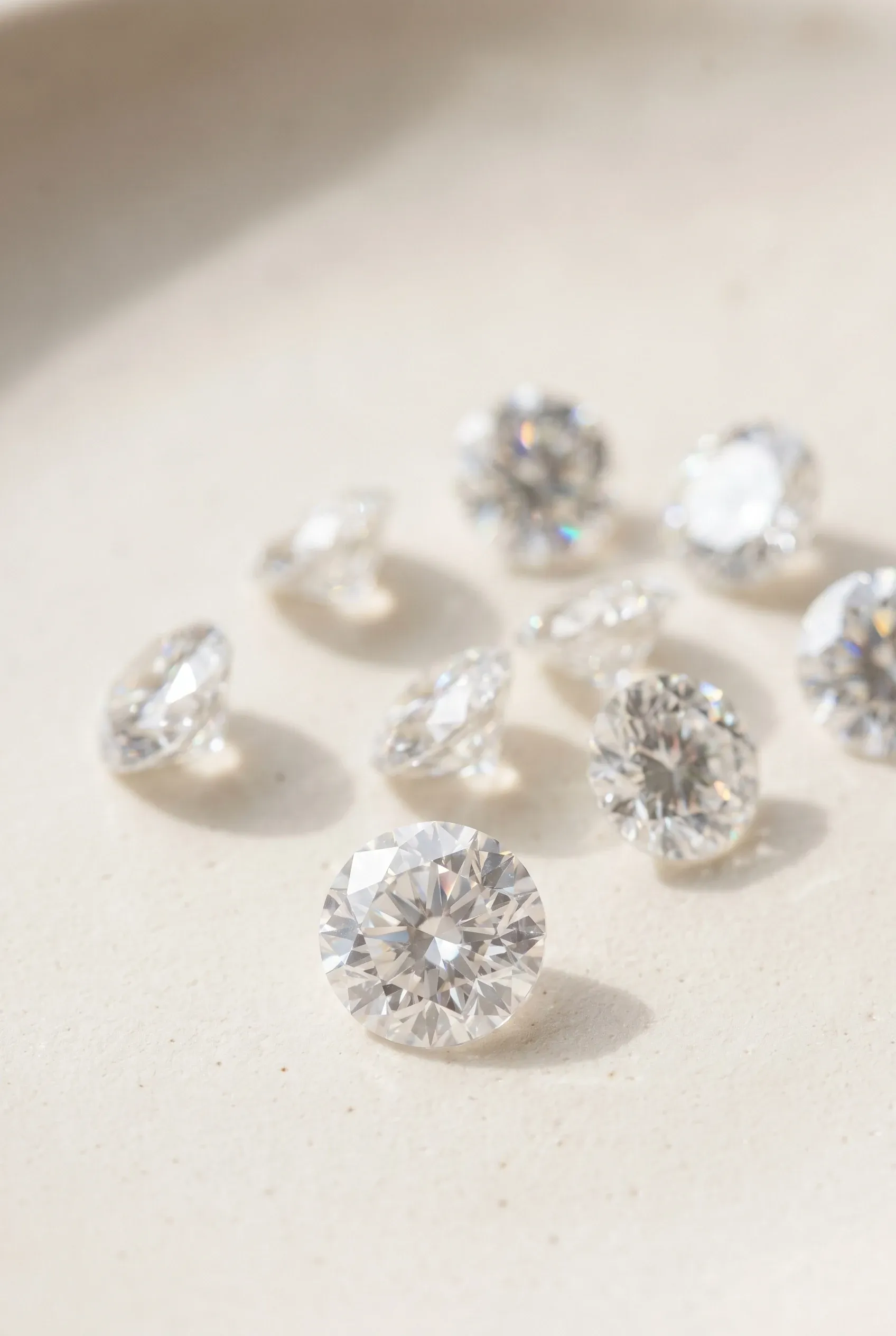
Some buyers love that extra drama. Others read it as slightly less restrained, especially in larger stones or fancy cuts with broad facets. Round cuts usually hide the difference best, while larger elongated stones can make the moissanite look easier to identify.
Size matters too. A moderate center stone often looks simply bright and clean. Once you push into very large stones, the visual gap between moissanite and diamond becomes more obvious, not because moissanite looks bad, but because it looks like its own stone.
Durability for daily wear
Moissanite is one of the few non-diamond stones that truly makes sense for everyday jewelry. That hardness gives it a strong edge over crystal, glass, and CZ, and it also puts it above softer colored stones often used in fashion jewelry. For rings that hit desks, bags, and door handles, that matters.
Still, durable does not mean indestructible. Any gemstone can chip if struck at the right angle, and a poor setting can ruin even a good stone. Routine care matters, and regular washing does more for sparkle than most upgrades. If you want the basics, see how to clean moissanite.
The practical takeaway is simple. Moissanite is strong enough for everyday rings and bracelets, provided the setting is competent and the wearer is not expecting magic immunity from damage.
Price and value in 2026
Price is where moissanite becomes compelling for many shoppers. The cost gap is not small, and it widens as center stones get larger. That is why moissanite often feels like a deliberate value choice rather than a compromise.
| Category | Typical 2026 price | What to know |
|---|---|---|
| 1 ct loose colorless moissanite | $300 to $600 | Price per carat rises slowly with size |
| 1 ct round natural diamond of similar color | $4,000 to $7,000 | Price per carat rises steeply with size |
| 1 ct round lab-grown diamond of similar color | $800 to $1,500 | Cheaper than natural, still above moissanite |
| Fully set moissanite watch | $900 to $2,700 | Usually quartz below $3,000 |
| Crystal or CZ iced out watch | $100 to $400 | A watch sold as moissanite under about $300 is usually not moissanite |
| Custom lab-diamond stone-set watch | $5,000 to $15,000 | Custom work changes total cost |
| Custom natural-diamond stone-set watch | $15,000 to $60,000 and up | Large spread based on stone quality and coverage |
| Factory diamond-set watch from a major house | $40,000 to $250,000 and up | This is a different market entirely |
There is one caveat. Lower purchase price does not mean strong resale. Moissanite is best treated as a wear-and-enjoy purchase, not as a store of value. If you mainly care about getting a lot of visible stone for your budget, it often delivers. If you care about long-term asset logic, it usually does not.
When moissanite feels worth it
Moissanite often feels worth it when the wearer cares more about performance and appearance than category prestige. It solves real budget problems without dropping all the way into disposable jewelry. That is why many buyers end up happy with it.
- You want a larger look without diamond pricing. This is the most common reason people choose it.
- You want an everyday ring. It has the durability to handle regular wear better than many cheaper alternatives.
- You want matching stones. Lab growth makes pairs and coordinated sets easier to source.
- You want travel jewelry. Many people like wearing a convincing, durable stone without carrying the value of a larger diamond.
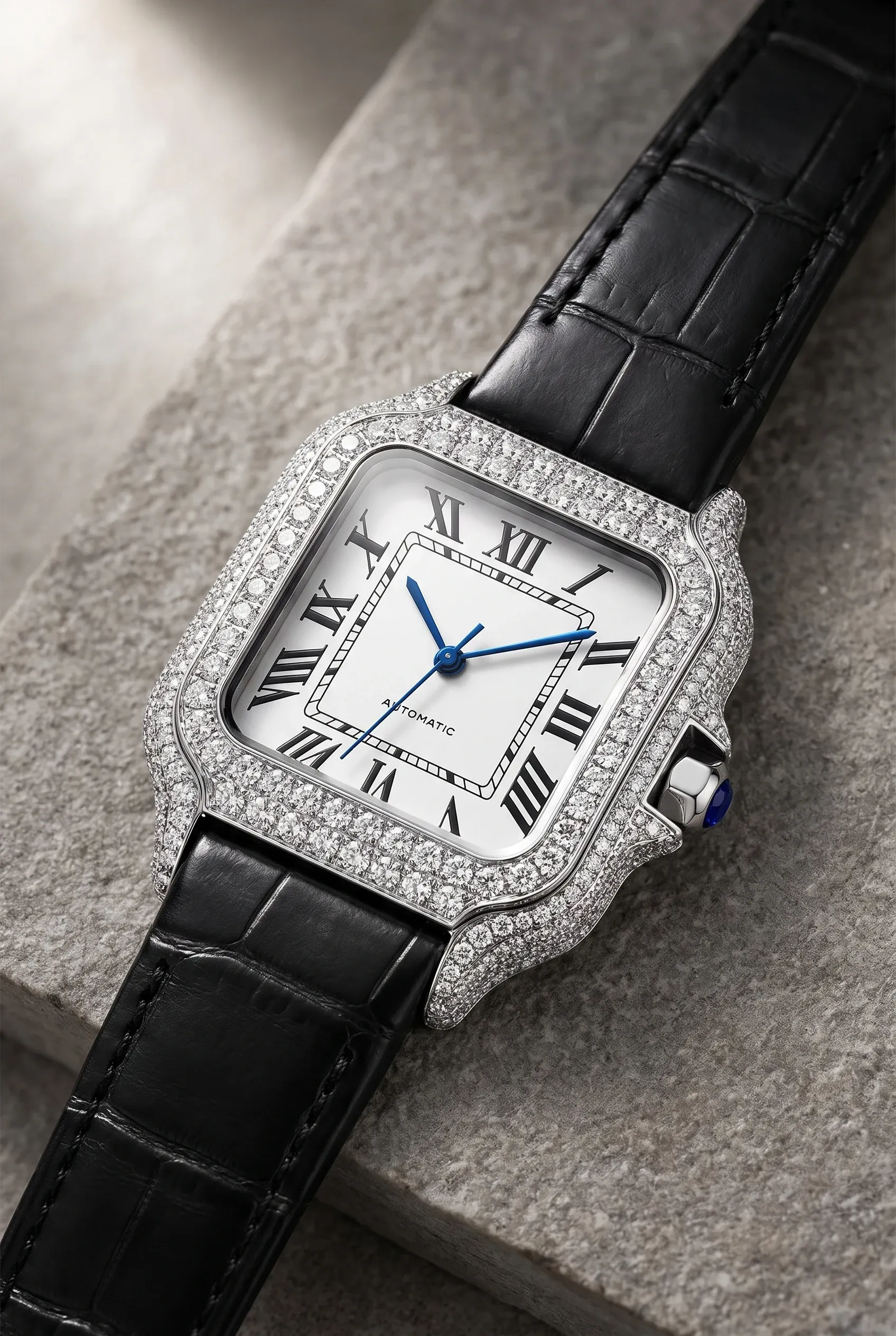
- You want visible sparkle in a watch. Stone coverage that would be inaccessible in diamond can become realistic in moissanite.
It is also a strong choice for buyers who know exactly what it is. The happiest owners usually are not trying to pass it off as something else. They simply like how it looks and what it costs.
When moissanite may disappoint you
Moissanite has clear trade-offs, and ignoring them leads to buyer’s remorse. It is not the right stone for every style or every reason for buying fine jewelry. Here are the main cases where it can miss the mark.
- You want a diamond because it is a diamond. Moissanite cannot satisfy that emotional goal.
- You dislike rainbow fire. Its strongest visual trait may be the very thing that bothers you.
- You inspect stones closely. Under magnification, its optical behavior differs from diamond.
- You assume VVS means rare. In moissanite, high clarity is standard, not a premium event.
- You expect resale to work like diamond. That is usually the wrong framework.
Color sensitivity can matter too. Colorless moissanite is typically sold in D-E-F grades, while near-colorless sits in G-H-I. Many buyers are happy with near-colorless, but very picky shoppers may prefer the iciest look available.
How it compares with diamond
Diamond is still the benchmark for hardness, tradition, and social recognition. Moissanite competes by offering more fire and much lower cost. If you need the clearest possible explanation of the trade-offs, read this guide on the difference between moissanite and diamond.
The two stones also behave differently in tools and in hand. A basic thermal pen often reads moissanite as diamond, which is why counter staff can get it wrong. A dual thermal and electrical tester separates them more reliably, and a jeweler’s loupe can show the doubling noted earlier. We break that down in diamond tester results for moissanite.
Weight adds another wrinkle. Moissanite is less dense than diamond, so equal carat weights do not map to equal physical size perfectly. In practice, shoppers should care more about millimeter measurements and face-up look than the label alone.
Moissanite compared with other alternatives
Against CZ, moissanite wins on durability and long-term wear. CZ remains useful for very low budgets and occasional fashion pieces, but it is not in the same performance tier. If you are deciding between those two specifically, moissanite usually earns its higher price.
Against white sapphire, the choice is more about taste. White sapphire gives a quieter, less fiery look and still offers respectable hardness. Against morganite, moissanite is plainly better for active daily wear, though morganite offers its own soft pink color story. There is no single winner here, only a better fit for the look you want.
What paperwork really means
The paperwork most shoppers see with moissanite is a GRA report. It generally confirms that the stone is moissanite and lists carat, cut, and color. It is useful as identification, but it is not a GIA-style guarantee of top cut quality.
That is why videos, return policy, and real measurements matter so much. The usual clarity label is VVS, but that should not impress you by itself because lab-grown moissanite is commonly very clean. Judge the face-up performance, not the acronym.
How to shop smart for rings and watches
For rings
Start with the wearer, not the certificate. Ask for millimeter dimensions, a clear color grade, and videos in both daylight and indoor light. A smaller, well-cut moissanite often looks better than a larger stone chosen only for carat claims.
Think about lifestyle as well. If the ring will be worn daily, a secure setting matters more than tiny differences in marketing language. Four or six prongs, sensible stone height, and a return window are more useful than inflated descriptions.
For watches
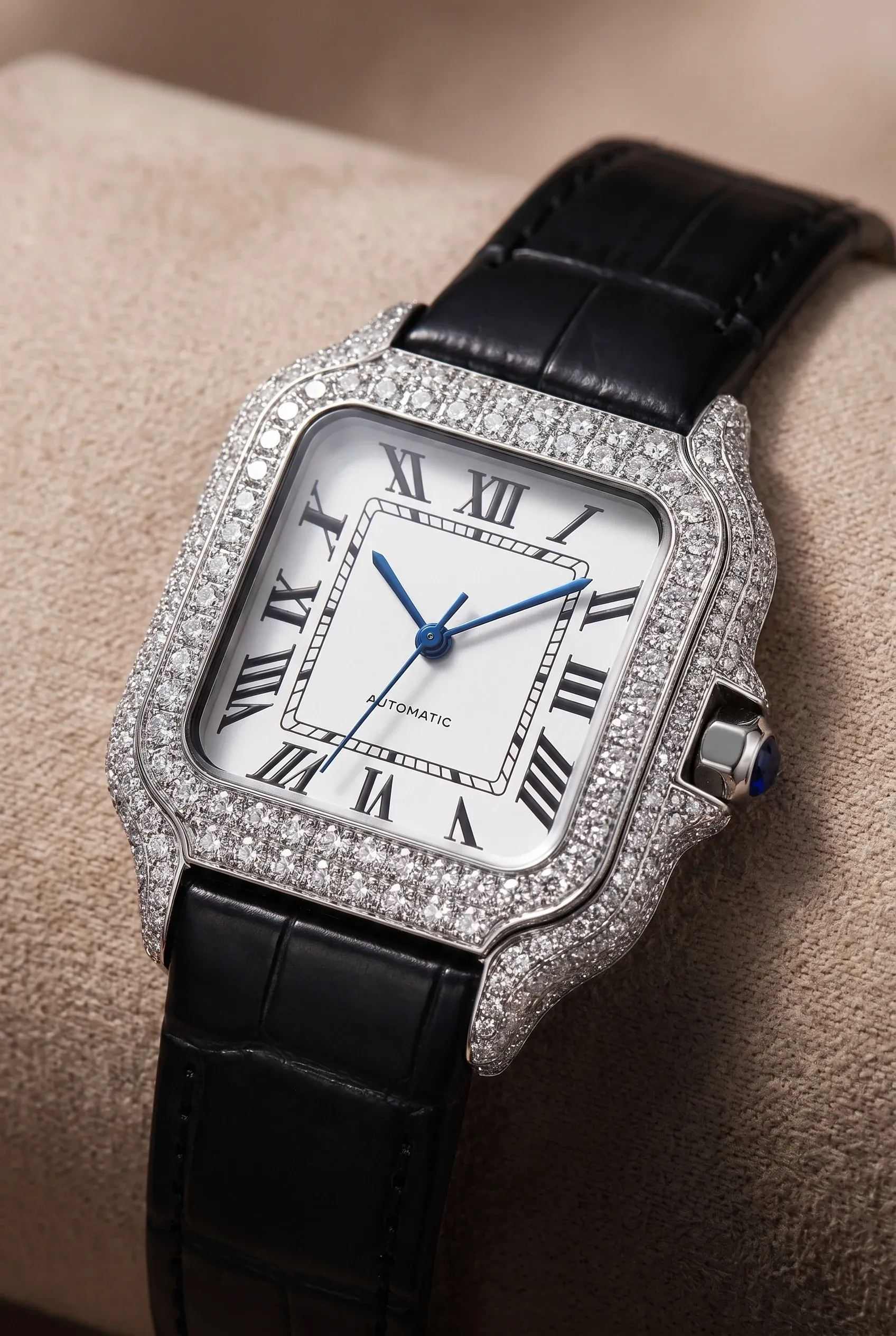
Use the price ranges above as a reality check. A genuine fully set moissanite watch lives far above basic crystal and CZ pieces, and the setting method matters as much as the stone. If you are comparing iced-out watches, learn the difference between glued versus hand-set stones before you buy.
Movement expectations should also stay realistic. Japanese quartz is normal in stone-set watches under $3,000, automatic movements add thickness and service cost, and 3 ATM water resistance means rain and hand-washing, not swimming. Hardened mineral glass is common, while sapphire crystal tends to appear above roughly $1,500.
Finally, match the case to the wrist. Women’s classic sizing usually falls around 26 to 32 mm, contemporary women’s sizing around 34 to 36 mm, unisex around 38 to 40 mm, and many men’s styles around 40 to 44 mm. On a wrist under 6 inches, staying at or below 36 mm is usually the safer call.
So is moissanite good
Yes, moissanite is good when your priorities are sparkle, durability, and price. It is especially strong for buyers who want a wearable stone, not a status symbol, and who understand that its look is not identical to diamond. It is less right for people who want the social meaning of diamond, the calmest possible sparkle, or a purchase that they hope behaves like an investment.
Frequently Asked Questions
Does moissanite look fake?
Not automatically. Good cutting and reasonable size matter more than the label. What gives moissanite away is usually its stronger rainbow fire, and sometimes facet doubling under magnification. If you want a quieter look, choose a well-cut round or oval and avoid the largest sizes.
Is moissanite good for an engagement ring?
For many couples, yes. It has the durability for daily wear and costs far less than a comparable diamond, which lets buyers prioritize size, setting, or overall wedding budget. It is less ideal if one partner specifically wants a diamond’s tradition, status, or resale expectations.
Can a jeweler easily tell moissanite from diamond in person?
Yes, an experienced jeweler has better tools than a shopper does. A basic thermal pen often misreads moissanite as diamond, but a dual thermal and electrical tester separates them quickly. A loupe can also reveal moissanite’s facet doubling through the pavilion, since it is doubly refractive and diamond is not.
Is VVS moissanite actually special?
Usually not. VVS is the common clarity grade offered for moissanite because lab growth makes very clean stones normal. Treat that label as expected, not as a premium by itself. Cut quality, face-up look, and color grade usually matter more than the clarity acronym.
Does moissanite get cloudy over time?
Moissanite itself does not typically turn permanently cloudy from normal wear. More often, lotion, soap, and skin oils build up on the surface and mute the sparkle. Regular cleaning restores the look, though chips and scratches are still possible if the piece takes a hard enough hit.
Is moissanite better than cubic zirconia?
For most daily-wear jewelry, yes. Moissanite is harder, more durable, and usually holds up better over time. It also has stronger fire and better long-term appeal. CZ can still make sense for very low budgets or trend pieces that you do not plan to wear often.
Are moissanite watches worth buying?
They can be, if you understand the category. A real fully set moissanite watch usually sits well above the crystal and CZ tier, and Japanese quartz is normal under $3,000. Focus on hand-set stones, honest water resistance, and a case size that actually fits your wrist.