Moissanite vs Morganite: Two Different Stones People Confuse
A clear side by side guide to moissanite and morganite with hardness, sparkle, tester behavior, care, and which stone works better for daily ring wear.
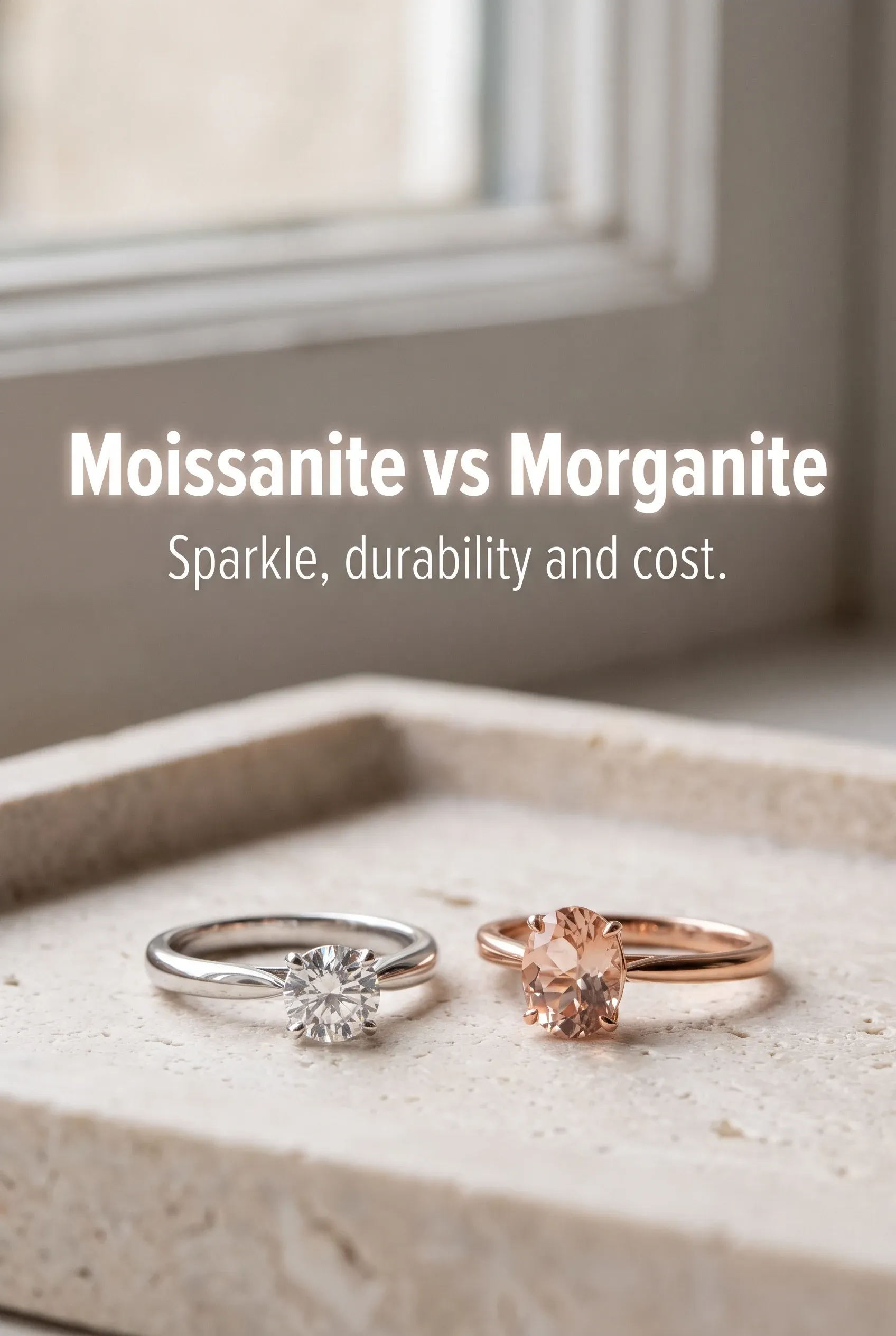
Moissanite and morganite are not close substitutes. In a moissanite vs morganite choice, you are deciding between a hard, fiery, usually colorless lab-grown stone and a softer pink gem with a gentler glow. For daily wear, especially engagement rings, moissanite is usually easier to live with, while morganite makes sense when blush color matters more than maximum sparkle.
Moissanite vs morganite at a glance
If you expected two versions of the same gem, this is the main correction. They are different materials, different colors, and different maintenance levels. The biggest practical gap is not marketing, it is how they handle light and how quickly they show wear.
| Category | Moissanite | Morganite | What it means in real wear |
|---|---|---|---|
| Material | Silicon carbide | Pink to peach beryl | Different chemistry creates a different look and different care needs. |
| Hardness on Mohs | 9.25 | 7.5 to 8 | Moissanite resists everyday scratching better. |
| Refractive index | 2.65 to 2.69 | 1.57 to 1.58 | Moissanite returns more light and looks brighter. |
| Dispersion | 0.104 | 0.014 | Moissanite throws far more rainbow fire. |
| Typical look | White, bright, lively | Pastel, soft, understated | One aims for brilliance, the other for color mood. |
| Usual source in jewelry | Nearly all stones are lab grown | Usually sold as a natural gem | Moissanite is more consistent from stone to stone. |
Most shoppers decide quickly once those trade-offs are clear. Moissanite fits the white, brilliant, low-upkeep lane. Morganite fits the soft, romantic, peach-pink lane, but it asks for more care.
What each stone actually is
Moissanite is silicon carbide. It was found in a meteor crater in 1893 by Henri Moissan, but gem-quality growth for jewelry only arrived in the late 1990s, and nearly all jewelry moissanite is lab grown. If you want a quick primer before comparing performance, start with what moissanite actually is.
Morganite is a pink to peach member of the beryl family. It is usually chosen for its body color rather than as a stand-in for a white diamond look. That difference in chemistry is why these stones do not behave alike under light, on your hand, or after years of wear.
Sparkle in daylight and indoor light
This is where moissanite pulls away. Its light performance numbers are much higher, so it returns more white light and much more rainbow fire. In direct sun, it can look almost electric. Under indoor light, it usually stays lively.
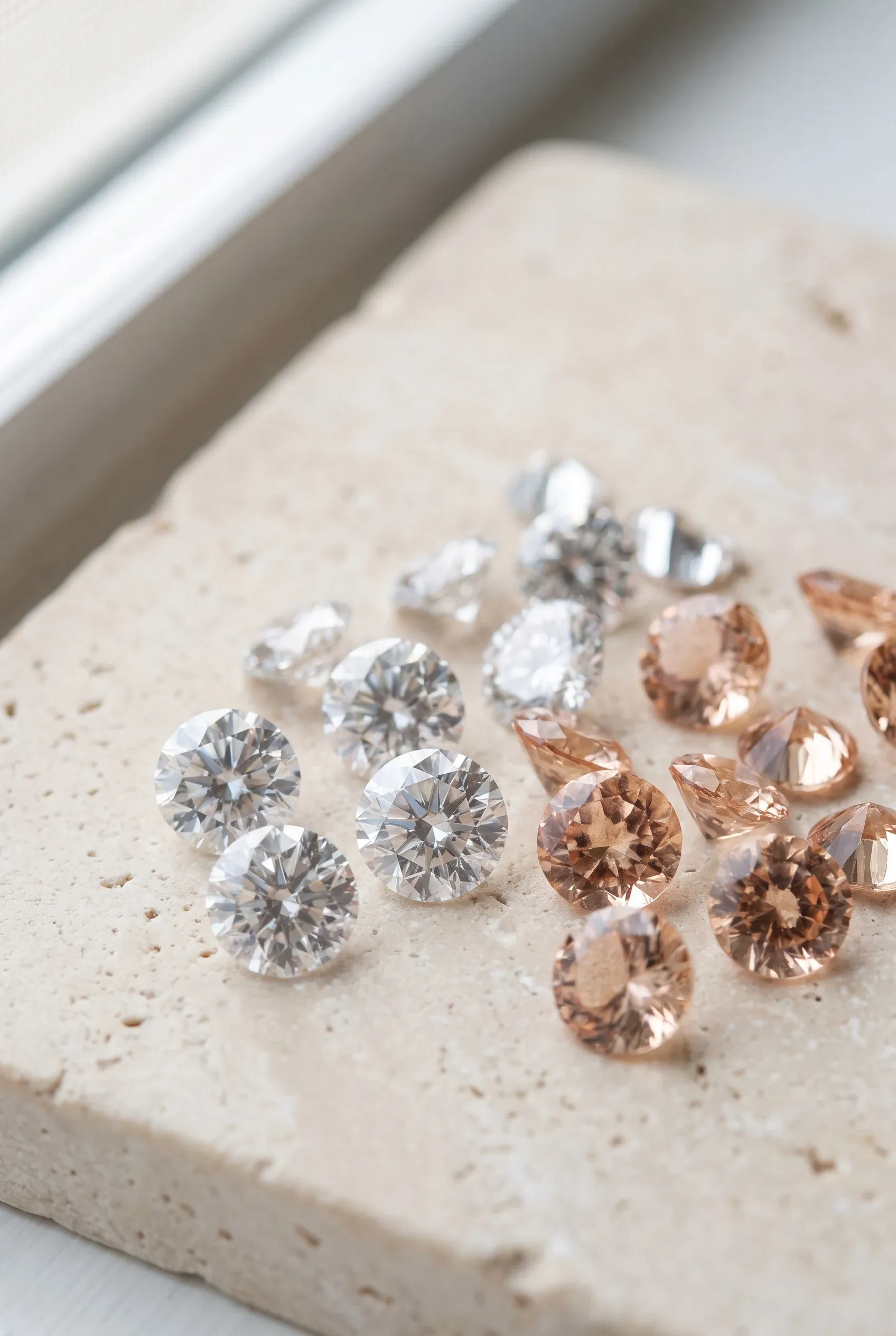
Morganite gives a quieter look. You see more blush body color and less flash, which some people prefer because it feels softer and less busy. The trade-off is simple, if you want the center stone to read bright from across a room, moissanite does that better.
Cut matters for both stones, but it matters differently. Round, oval, and cushion moissanite usually make the most of its fire. Morganite often looks best in cuts that show off face-up size and color, especially ovals, emerald cuts, and cushions, where the stone reads gentle rather than brilliant.
Color, clarity and the look from a distance
Moissanite is usually sold in white ranges, most often D-E-F colorless or G-H-I near-colorless. It is also commonly listed as VVS, but that is normal for lab-grown moissanite, not a rare upgrade. We explain that in more detail in why VVS is routine in moissanite.
Morganite is the opposite. Color is the feature, so you are looking for a peach, blush, or pink tone you genuinely like. Small stones can read pale, and some lose their charm in cool light. In rose or yellow metal they often look warmer, while white metal can make some stones seem washed out.
From normal conversation distance, moissanite reads white and lively. Morganite reads pastel and understated. In a morganite vs moissanite decision, that visual identity matters more than any sales label.
Durability for everyday wear
The hardness gap is large enough to matter in real life. Moissanite is a strong everyday stone and resists scratching far better. Morganite sits in a range where rings can pick up abrasion on facet edges and the table, especially if you wear them daily and never take them off.
That does not mean morganite falls apart. It means the stone needs a more realistic lifestyle plan. Hand weights, gardening, childcare, heavy cleaning, and desk friction all add up faster on a softer stone. Over time, that surface wear can make morganite look duller, even if the setting is fine.
Both stones can chip if hit at the wrong angle. Hardness is about scratch resistance, not invincibility. Still, for a ring you expect to wear every day for years, moissanite is plainly the lower-maintenance choice.
Is a morganite engagement ring practical
When it works well
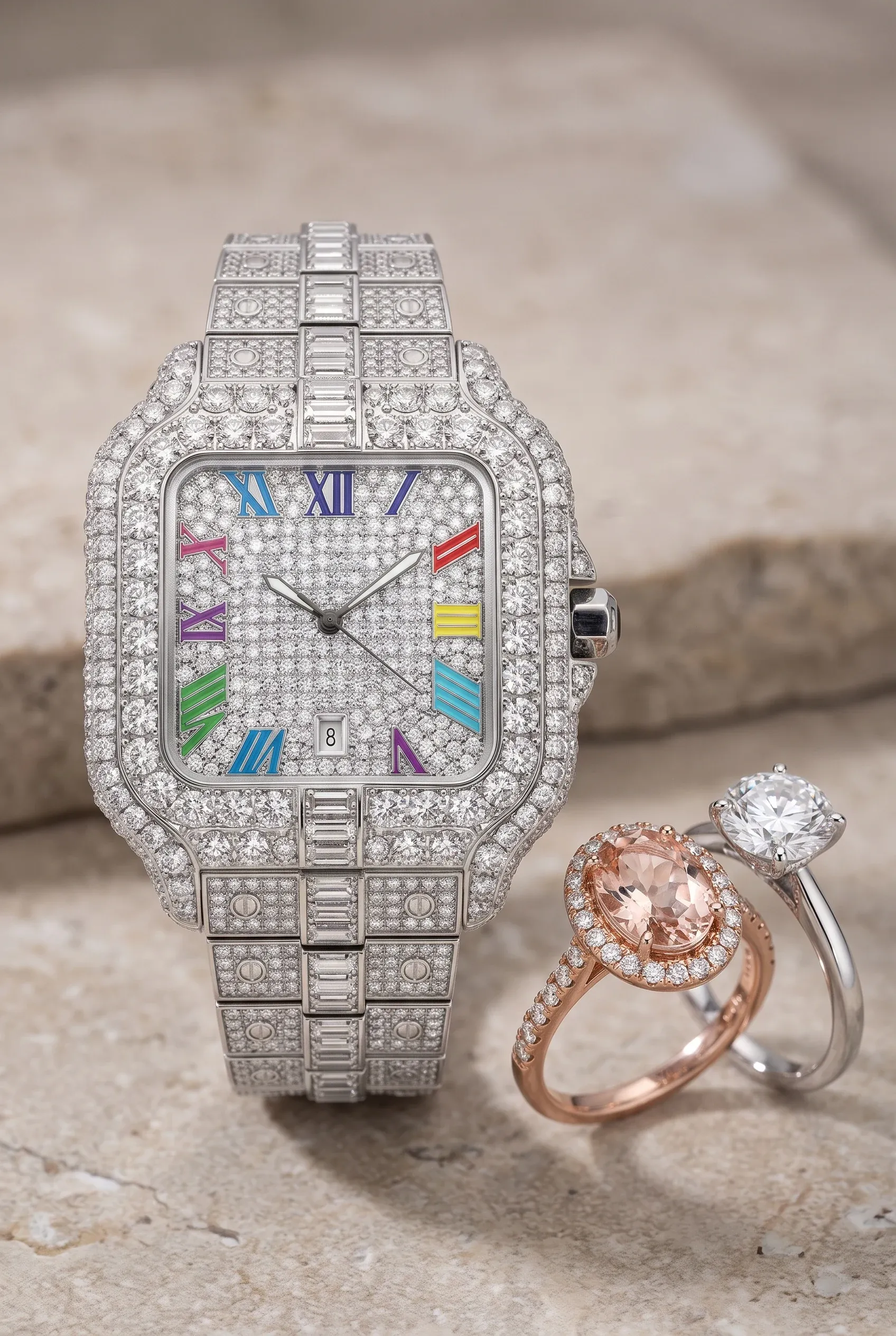
A morganite engagement ring can work if the wearer truly wants a pink center stone and does not expect diamond-like brilliance. It also helps if they already remove rings for workouts, yard work, showers, and sleep. The best results usually come from a protective design, such as a low setting, a bezel, or prongs that cover vulnerable points.
When it disappoints
It often disappoints when the buyer mainly wants sparkle and only chose morganite because the soft color looked good in photos. Real wear is less forgiving than a styled product shot. If the stone is small, very pale, or set high in white metal, the ring can lose presence fast.
For many people, the better compromise is simple. Choose morganite when color is the reason for buying. Choose moissanite when performance is the reason. Those are different goals, and mixing them usually creates regret.
How size changes the comparison
Size shifts what your eye notices first. In smaller center stones, moissanite usually still reads bright because its sparkle stays visible even when the stone is modest. Morganite at smaller sizes can look delicate, but it can also read paler than you expected, especially in cool office light or on a white metal setting.
As stones get larger, moissanite shows more of the strong fire that attracts some buyers and overwhelms others. A larger morganite usually shows its peach or blush tone better, which is good if color is the whole point. The trade-off is that a bigger table and longer facet lines can make later surface wear easier to notice on a ring worn every day.
This is why stone size should match the reason you are buying. If you want obvious color from arm's length, morganite often needs enough size to show it. If you want a crisp white look in a modest center stone, moissanite is easier. Bigger is not automatically better for either gem, but scale changes how forgiving each stone feels.
Price and long-term value
On loose stones, moissanite pricing is unusually predictable. A 1 ct colorless stone is roughly $300 to $600 per carat, and the price per carat rises slowly as size increases. For context, a similar 1 ct round diamond usually runs $4,000 to $7,000 if natural, or $800 to $1,500 if lab grown.
Morganite pricing varies more by color depth, cut, clarity, and how much face-up size you want, so there is no single fair retail number that fits every listing. On finished rings, the setting, accent stones, and metal weight often matter as much as the center stone. Neither moissanite nor morganite should be bought as a resale play. Buy for wear, not for investment.
How grading and paperwork differ
Moissanite often comes with a GRA report. That paperwork usually confirms the stone is moissanite and lists carat, cut, and color. It is useful as identification, but it is not a GIA-style promise of top cut quality, and it should not make a routine stone seem rare.
Morganite is less standardized at everyday jewelry price points. Many pieces are sold with a store description, a basic appraisal, or no lab report at all. Since color drives the look, seeing the stone in daylight, indoor light, and from arm's length matters more than chasing a fancy card.
How to judge online photos and videos
A lot of confusion starts with edited product images. Morganite often looks deeper and pinker in warm lighting than it does in ordinary daylight. Moissanite can be photographed so bright that its actual personality disappears into a white blur. Neither result helps you decide what the ring will look like on a normal Tuesday.
Ask for a short video in daylight and another in indoor light. A hand shot helps, but arm's-length distance matters more than an extreme close-up because that is how people really see a ring. A side view also matters. It shows whether a pale morganite is relying on rose metal underneath for warmth, or whether a moissanite is cut to look lively without exaggerated lighting.
Use plain white paper or a neutral tray as your reference, not velvet, wood, or skin tone. Warm backgrounds flatter morganite and can hide how light the stone really is. For moissanite, ask whether the stone is in the colorless or near-colorless range if you are sensitive to warmth. Before ordering sight unseen, read the inspection and return terms carefully, because policies vary by seller.
How to tell them apart
Start with color and sparkle. Face-up, moissanite usually looks whiter and throws more sharp flashes. Morganite shows body color first, often peach or pink, with a softer return. If you compare them beside plain paper instead of warm skin or rose metal, the difference is easier to see.
A pen-style thermal diamond tester adds another clue, but only if you know its limits. Moissanite often reads as diamond on a basic tester, while morganite does not, and a dual thermal and electrical tester separates them. We break that down in why a pen tester can be misleading.
With a loupe, moissanite can also show slight facet doubling through the pavilion because it is doubly refractive. That is one reason its sparkle pattern looks different from diamond and from softer pastel stones. You do not need gem tools to shop well, but they help when listings are vague.
Cleaning and maintenance
Both stones do best with mild soap, warm water, and a soft brush. Moissanite stands up better to everyday grime because its surface resists scratching better, and the stone itself does not tarnish. If you want upkeep steps that work without special equipment, see a simple cleaning routine. Morganite benefits from the same basic cleaning, but it also rewards gentler wear habits because surface abrasion shows sooner.
Maintenance also includes how you store and wear the ring. A harder moissanite center is less likely to pick up fine marks from everyday contact with keys, zippers, or stacked bands. Morganite deserves a bit more separation in a jewelry box and more discipline about taking the ring off before rough tasks. Those habits do not make it high drama, but they do affect how fresh the stone looks after a year or two.
Which metal and setting suit each stone
Moissanite is flexible. In white metal it leans closest to the look most shoppers mean when they say bright and colorless. In yellow or rose metal it can feel warmer and less clinical, especially in antique-inspired settings.
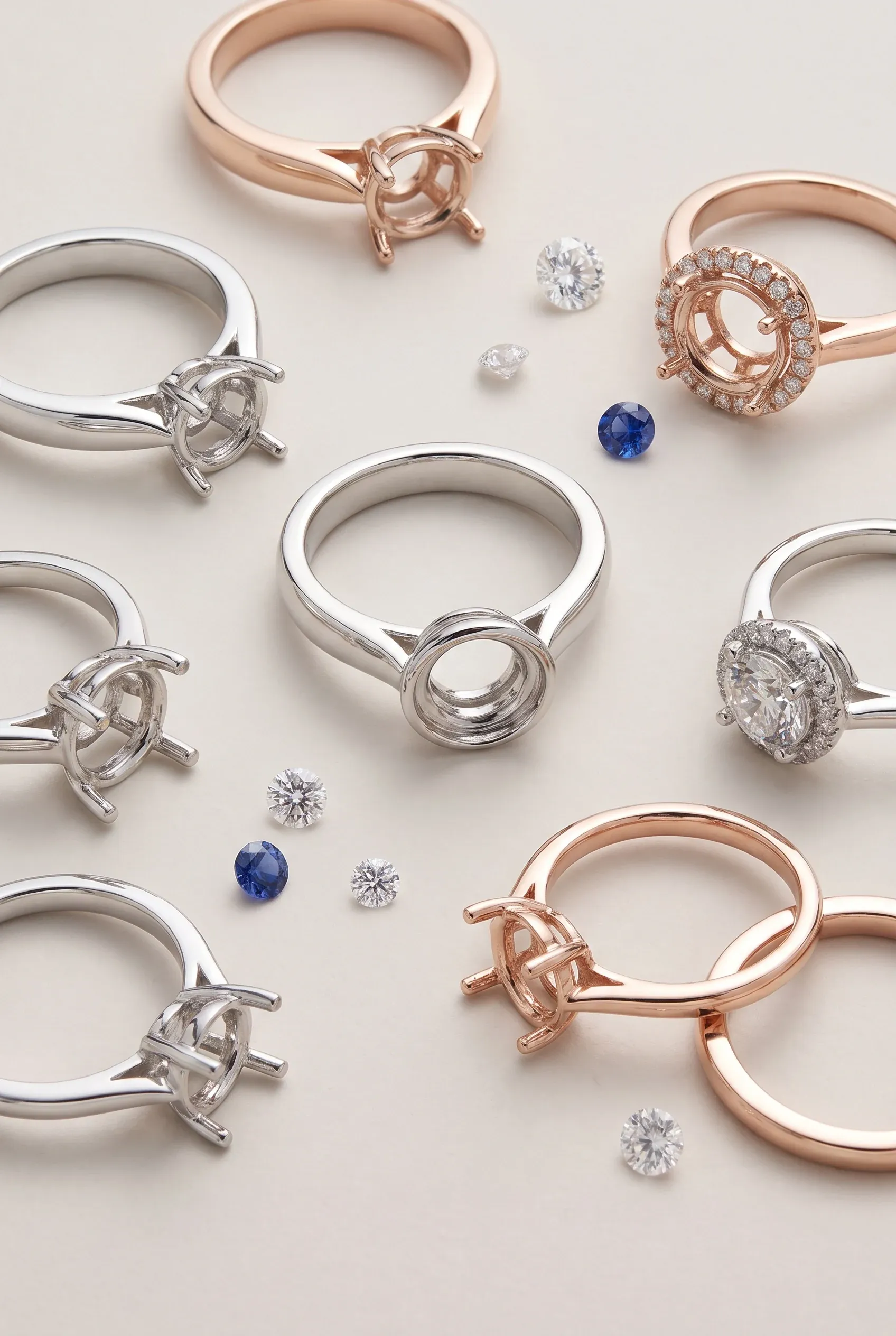
Morganite usually looks strongest in rose or yellow metal, where the setting supports the stone's warmth. It also benefits from protective designs. Halos, bezels, and lower profiles help more than they do with moissanite. Pears, marquises, and emerald cuts can all look good, but exposed points and corners need more care.
If you are mixing a colored center with white accent stones, pay attention to contrast. Very bright side stones can make a pale morganite look even lighter. With moissanite, that same contrast usually feels intentional because the center already aims for a white look. The setting should support the stone's identity, not fight it.
Who each stone suits best
Moissanite makes sense for shoppers who want a white center stone, strong sparkle, daily durability, and clear price expectations. It is especially convincing if you want a larger look without entering diamond pricing. If you are also weighing other white stones, our white stone side by side can help place moissanite in the wider field.
| Priority | Usually the better fit | Why |
|---|---|---|
| Daily wear and low upkeep | Moissanite | It keeps crisp facets and sparkle longer under constant use. |
| White stone look | Moissanite | Its brightness and fire are much stronger. |
| Small center stone | Moissanite | The sparkle reads clearly even when the stone is not large. |
| Hands-on lifestyle | Moissanite | It tolerates friction and contact better. |
| Soft pastel mood | Morganite | The color creates the personality without extra design tricks. |
| Peach or pink color | Morganite | That is the main reason to choose it. |
Morganite suits the buyer who loves blush color more than maximum brilliance. It works best when the stone is not pretending to be a colorless substitute. The sweet spot is usually a warm metal setting, a design that protects the stone, and a wearer who already treats fine jewelry with some care.
If that sounds like you, morganite can feel personal and distinct. If you mostly want brightness, durability, and an easy everyday ring, moissanite is the more practical answer. Neither stone is universally better. They simply solve different problems. You can browse more side-by-side guides in our comparison section.
Frequently Asked Questions
Is moissanite more durable than morganite
Yes. Moissanite is significantly harder, so it keeps facet edges sharper and resists everyday scratching better. Both stones can chip from a hard impact, but morganite usually shows wear sooner on a ring that is worn constantly.
Does morganite sparkle like moissanite
Not really. Morganite gives a softer glow with more visible body color, while moissanite throws stronger brightness and more rainbow fire. If your idea of beauty is calm and pastel, morganite can be appealing. If you want crisp brilliance, moissanite reads livelier.
Is a morganite engagement ring okay for daily wear
It can be, but only with realistic expectations. A protective setting, lower profile, and careful habits help a lot. It suits someone who removes rings for rough tasks. It is less forgiving than moissanite on a hand that sees heavy daily use.
Can a diamond tester tell moissanite from morganite
A basic thermal pen often confuses moissanite with diamond, so it is not enough on its own. Morganite behaves differently. A dual tester is better, and visual clues such as body color and the style of sparkle are still useful when stones are mounted.
Is moissanite always colorless
No. Most jewelry moissanite is sold in colorless or near-colorless ranges, and the visual difference can be subtle once the stone is set. If you want the whitest look, compare stones on white paper and in daylight rather than under warm showroom lighting.
Which looks better in rose gold
Morganite usually gains the most from rose gold because the metal supports its warm peach and pink tones. Moissanite can also look attractive in rose gold, but white metal usually keeps its colorless look crisper if that is your main goal.
Does moissanite or morganite hold value better
Neither stone is usually bought for strong resale. The typical reason to choose between them is appearance, maintenance, and budget, not long-term appreciation. If resale matters most, neither is a clear answer, and the setting quality often affects real-world secondhand value more than shoppers expect.