His and Hers Watches: 10 Matching Ideas That Do Not Look Matchy
A practical guide to his and hers watches, with size rules, honest price ranges, and 10 pairing ideas that coordinate without looking identical.
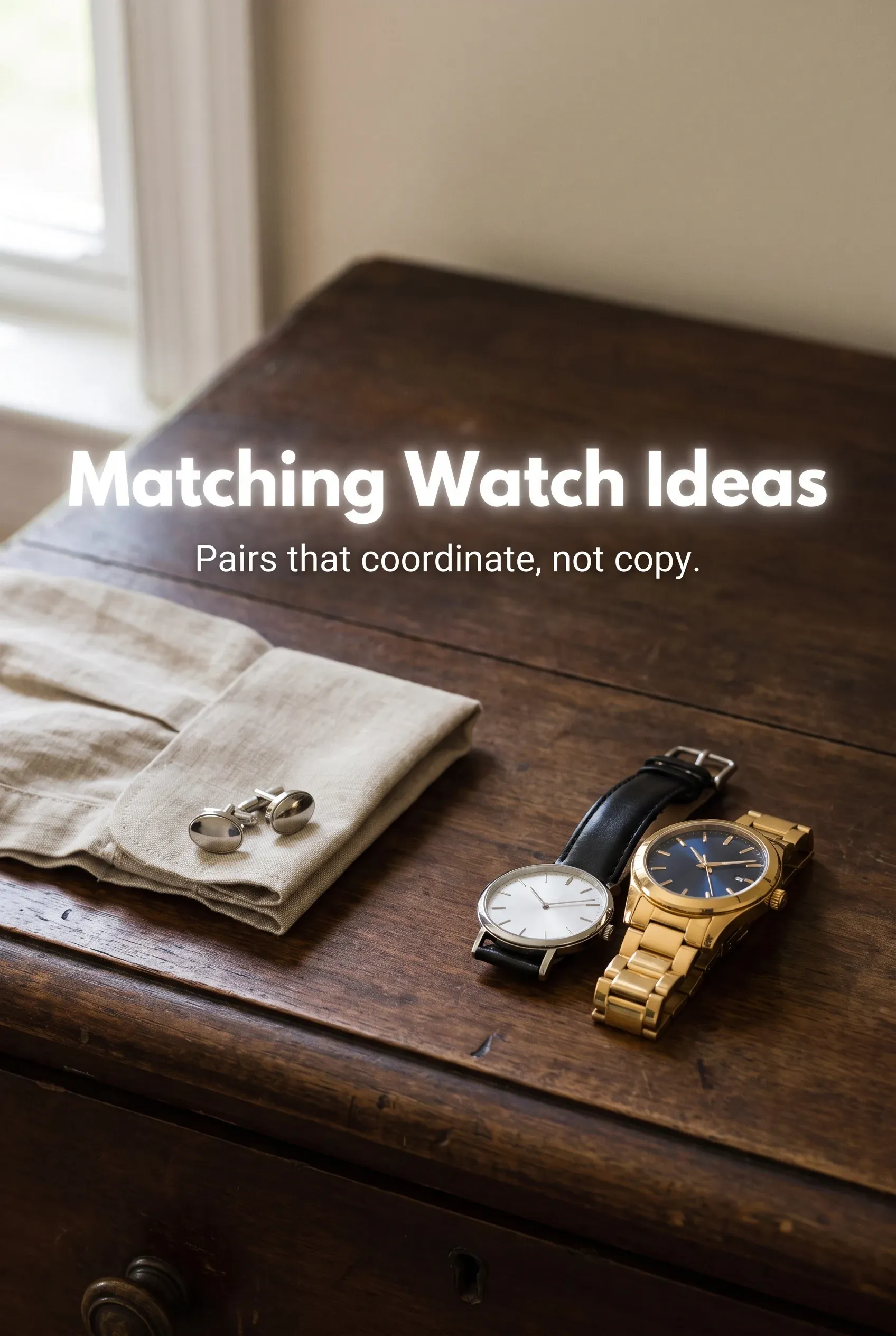
The best his and hers watches share a design language, not the exact same watch. Start with size, metal, dial mood, and budget, then let each wrist keep its own proportions. That is how matching watches for couples look intentional instead of costume-like.
How his and hers watches should match
Your pair should match on one or two variables, not five. Think same metal, same dial color family, or the same case shape. Leave room for different sizes, different bracelets, or different levels of sparkle.
Most couples look better in related watches than identical ones. A small square watch next to a large square watch can feel cleaner than two round watches with forced details. The goal is visual harmony, not twins.
Start with wrist size, not gender
Fit decides whether a pair looks refined or awkward. Women’s classic sizes sit around 26–32 mm, women’s contemporary sizes around 34–36 mm, unisex around 38–40 mm, and men’s sizes around 40–44 mm. On a wrist under 6 inches, staying at or below 36 mm usually looks more balanced.
Lug-to-lug matters as much as diameter. The watch should not overhang the wrist width, especially on the smaller partner. If you need more detail on proportions, use this watch size guide and our breakdown of women’s watch sizes.
| Smaller wrist | Larger wrist | Why the pair works |
|---|---|---|
| 28–32 mm | 40–42 mm | Classic contrast, still clearly related |
| 34–36 mm | 38–40 mm | Modern unisex feel, easy for daily wear |
| 32–34 mm square | 40–42 mm round | Same dressy mood, less forced matching |
| 36 mm | 42–44 mm | Works when both like bold watches |
Men’s average US wrist is about 7 to 7.5 inches, so many couples naturally land in a 34–36 mm and 40–42 mm pairing. That size gap usually reads like a set without looking copied.
Set a real budget before you compare dials
Budget changes the kind of match you can build. In simple paired watches, the biggest jump is usually from basic quartz fashion pieces to hand-set stone watches. In iced styles, price also tells you a lot about what stones are actually used.
| Price per watch | What you usually get | Best use in a pair |
|---|---|---|
| $100 to $400 | Standard quartz or crystal or CZ iced styles | Occasional wear, trend-driven matching |
| $900 to $2,700 | Fully set moissanite watches, usually quartz | High sparkle without diamond pricing |
| $5,000 to $15,000 | Custom lab-diamond bust-down | Luxury custom pair with real diamond status |
| $15,000 to $60,000 and up | Custom natural-diamond set watch | High jewelry territory, very niche |
| $40,000 to $250,000 and up | Factory diamond-set watch from a major house | Collector and prestige purchase |
If you are considering moissanite, compare the numbers first with this guide to what moissanite watch prices look like. One honest shortcut helps here, a watch sold as moissanite for less than basic crystal pricing almost never turns out to be true moissanite.
Choose the same metal, then vary the finish
For most couples, matching metal is the easiest win. Two silver-tone watches can still look distinct if one is brushed steel and the other is polished, or if one uses a bracelet and the other a leather strap. The shared color keeps the pair connected.
Yellow-tone works the same way, but it reads louder. If one partner dresses in muted colors, mixed texture helps, such as a plain bezel on one wrist and a stone bezel on the other. That keeps the pair from feeling overly coordinated.
Match the shape, not the exact case
Case shape carries more personality than many buyers expect. Round with round is the safe choice, but square with square often looks more editorial, especially when the sizes differ. A rectangular or tank-like watch on one partner can still pair well with a soft square on the other.
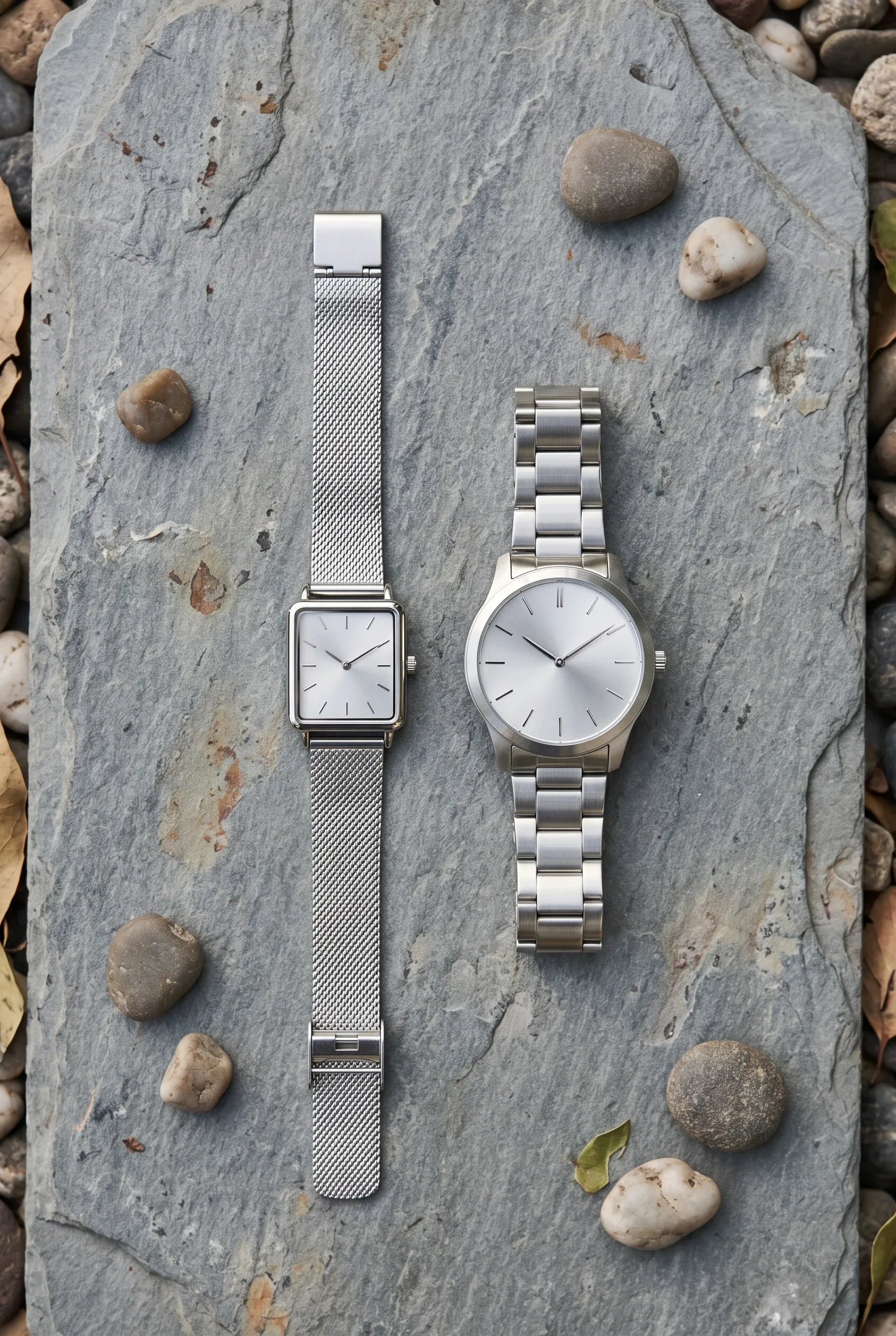
If your outfits lean tailored, shape matching works better than color matching. It creates a subtle link in photos, especially at weddings, dinners, and formal trips. The watches read as a pair even when one is jewelry-like and the other is restrained.
Keep the dial related, not identical
Dial color should feel like the same family. White with silver, black with charcoal, champagne with warm gold, or green with a muted olive strap all make sense. Two identical bright dials can tip into novelty fast.
Think about wardrobe before you choose. If one partner wears navy and grey all week, and the other wears cream and gold jewelry, a single shared metal with different dials often looks better than a forced identical face.
Decide how much sparkle both of you can actually wear
This is where many pairings fail. One person may love full stone coverage, while the other only wants a bezel or hour markers. That mismatch is fine, as long as the level of shine feels related.
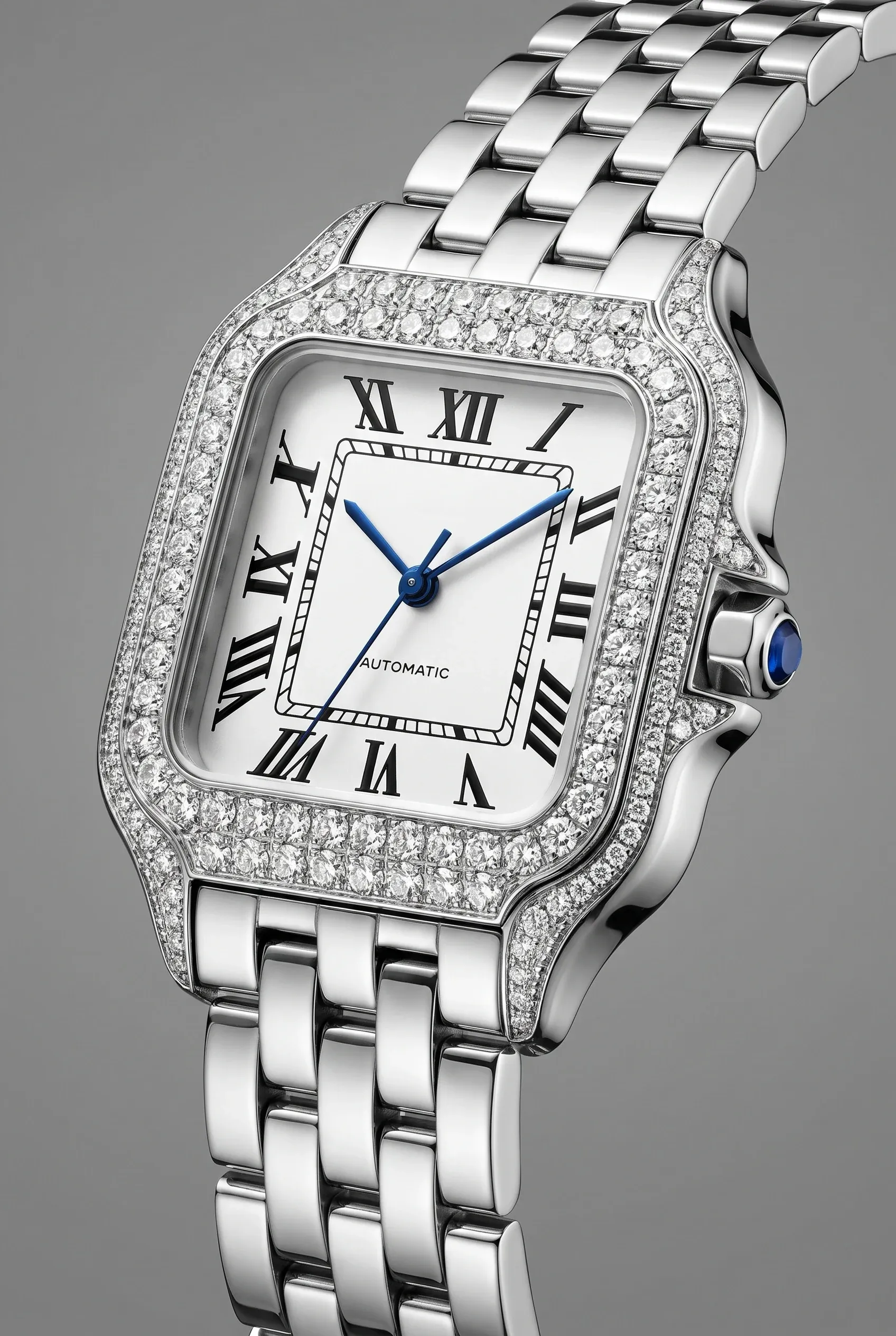
A plain steel watch beside a fully iced bracelet watch usually looks disconnected. A better move is plain dial with stone bezel on one side, then full stone dial or partial bracelet setting on the other. If you are exploring heavier shine, our primer on glued versus hand-set stones matters more than the marketing words.
Hand-set stones, done with prongs or bead setting, stay put far better than glued stones. On stone-set watches under $3,000, Japanese quartz is the norm, hardened mineral glass is common, and 3 ATM water resistance means rain and hand-washing, not swimming.
Pick a movement that suits real life
Movement should fit how you live, not how romantic the listing sounds. Quartz is usually the practical choice for a pair because it is thinner, cheaper, and easier to keep synchronized. Automatic watches bring more mechanical appeal, but they add thickness and service cost.
That difference matters when one partner wants a slim sleeve-friendly watch. It also matters when the pair includes stones, since heavier cases already wear larger. For a deeper breakdown, compare quartz versus automatic before you buy.
10 matching ideas that do not look matchy
1. Silver bracelet and white dial
Use a 28–32 mm or 34–36 mm white-dial watch on the smaller wrist, and a 40–42 mm white-dial watch on the larger wrist. Keep the bracelets similar, but let one case stay slimmer. This is the easiest everyday pair.
2. Black dial, different case shapes
Choose black dials for both, then split the shapes. A square or softly rectangular watch on one wrist and a round watch on the other looks deliberate, especially with evening clothes. The common dial color keeps the pair anchored.
3. Gold tone, one polished and one brushed
If both of you wear warm metals, match the tone but vary the finish. A polished dress watch can sit next to a brushed sportier piece without looking mismatched. This works especially well for couples with different office dress codes.
4. Blue dial pair for daily wear
Navy or dark blue is easier than black for daytime. Put the smaller partner in a clean dial with minimal markers, and the larger partner in a slightly chunkier bracelet watch. Blue reads coordinated without screaming special set.
5. Leather straps in the same color family
Two leather straps make a pair look quieter and more grown up. Try black and charcoal, or tan and cognac, instead of exact matches. This is a strong option when one partner does not like metal bracelets.
6. One plain watch, one stone bezel
This is one of the best high-low pairings. The simpler watch keeps the set wearable, while the stone bezel adds enough jewelry energy to make the pair feel intentional. The link should be dial color or metal, not more stones.
7. Shared green accents
Green dials look current in 2026 without becoming a short-lived novelty when the shade stays deep. A green dial on one partner and a green seconds hand or strap stitching on the other gives you a clever link. It is subtle in person and good in photos.
8. Matching chronograph mood without matching functions
Couples often like the sport look of a busier dial, but not both partners want a large chronograph case. Choose one actual chronograph-style watch and one cleaner three-hand watch with the same sporty bracelet. The pair feels related through attitude, not duplicated details.
9. Monochrome steel with different bracelets
Use the same cool metal and similar case finishing, then change the bracelet character. One can be a classic link bracelet, while the other uses a more jewelry-like bracelet or even a slim strap. This works well for a wedding gift pair.
10. Moissanite for one, plain metal for the other
If one partner wants obvious sparkle and the other does not, do not force two stone watches. Pair a moissanite watch on one wrist with a clean steel or gold-tone watch on the other, then match shape or dial color. The contrast looks modern, not uneven.
When moissanite makes sense for couples
Moissanite is silicon carbide, and nearly all jewelry moissanite is lab grown. It sits at 9.25 on the Mohs scale, below diamond at 10 but above crystal, glass, and most fashion-watch stones. It also has a refractive index of 2.65 to 2.69 and dispersion of 0.104, so it throws more rainbow fire than diamond.
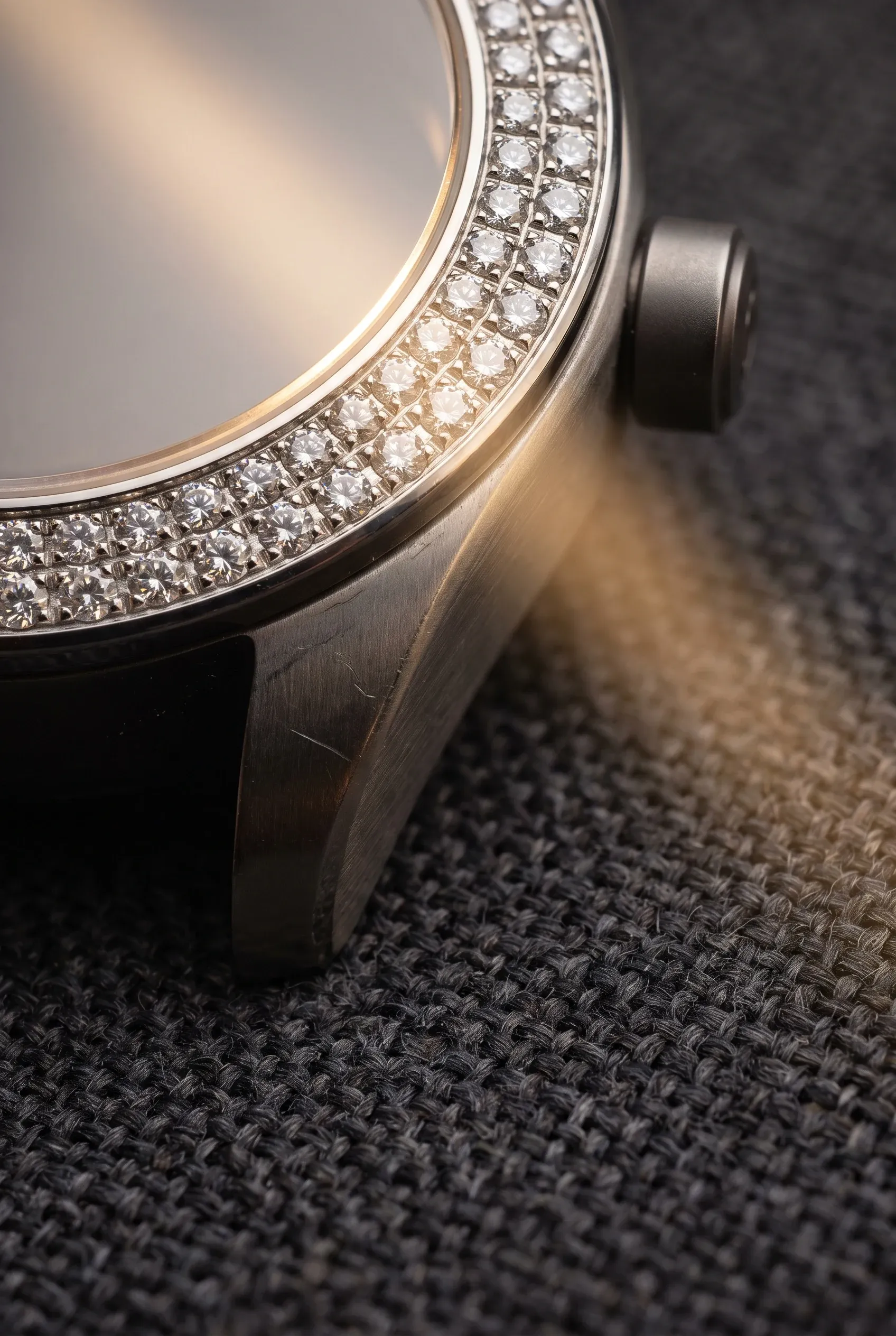
That extra fire is why moissanite watches look lively in evening light. It is also why some buyers feel full coverage can read flashy faster than diamond. If one partner likes bold sparkle and the other likes restraint, partial matching usually looks better than two fully set watches.
Ask whether the stones are colorless D-E-F or near-colorless G-H-I if you want the two watches to read similar whites. If paperwork is offered, a GRA report is the usual moissanite document. It identifies the stone as moissanite and lists carat, cut, and color, but it is not a GIA-style cut-quality guarantee.
One more practical point matters when couples shop together. A simple thermal pen often reads moissanite as diamond, so that test alone does not prove much. Dual thermal and electrical testers can separate them.
Red flags before you buy
The first red flag is a stone-set watch that looks heavily iced but is priced like costume jewelry while being described as moissanite. The second is vague wording around the setting method. If stones are glued, expect shedding within months on a frequently worn bracelet.
The third red flag is specs that skip the movement, crystal material, or water resistance. Those details affect everyday use more than promotional photos do. In this category, missing specs usually means the maker does not want you comparing.
Also watch for pairs that only work in product shots. If both watches are large, bright, and mirror each other too closely, one partner often stops wearing theirs after the first few outings.
Best occasions for matching watches
Matching watches make the most sense when the two of you will be photographed together. Weddings, engagement parties, anniversaries, birthdays, and holiday trips are the obvious moments. For US anniversaries, they fit especially well at the first anniversary if you lean into clocks, and the 15th, where watches are the modern gift.
They can also work as daily pieces, but only if the pair is subtle enough for your weekday wardrobe. That is why the best couple watches usually live in shared metal, related dials, and different proportions.
Frequently Asked Questions
Should matching watches be identical?
No. Identical watches usually look forced because wrists, wardrobes, and comfort preferences differ. Most couples get a better result by matching one or two elements, such as metal color and dial family, while changing case size, shape, bracelet, or sparkle level.
What size should each partner wear?
Start with wrist size, not labels. A wrist under 6 inches usually looks best at 36 mm or below. Many balanced pairs land around 28–36 mm for the smaller wrist and 38–42 mm for the larger wrist, with lug-to-lug staying inside the wrist width.
Are moissanite couple watches worth it?
They can be, especially if you want strong sparkle without diamond pricing. Fully set moissanite watches usually run about $900 to $2,700, far below custom diamond work. They make the most sense when at least one partner genuinely likes noticeable fire and stone coverage.
Is quartz or automatic better for a pair?
Quartz is usually better for matching pairs because it is thinner, cheaper, and easier to live with. That matters when one watch in the pair is small or stone set. Automatic movements add mechanical appeal, but they also add case height and future service cost.
How can you tell if an iced watch uses real moissanite?
Ask what stones are used, what tester was used, and whether any paperwork comes with the watch. A basic thermal pen is not enough because moissanite can read as diamond on that tool. Also pay attention to price, because ultra-cheap claims usually signal crystal or CZ instead.
Can matching watches be worn every day?
Yes, if the pair is subtle and the specs fit real life. Shared metal with clean dials wears far more often than two fully iced pieces. On stone-set watches, 3 ATM water resistance is fine for rain and hand-washing, but it is not swimming protection.
Are his and hers watches a good anniversary gift?
Yes, especially for couples who already enjoy wearing watches. The idea feels most natural for a first anniversary if you lean on clocks, and for a 15th anniversary where watches are the modern gift. Pick a pair that suits daily style, not just one dinner out.