Is Moissanite Better Than Cubic Zirconia?
For daily wear, yes — 9.25 against 8 to 8.5 on the Mohs scale decides it. Where cubic zirconia still makes sense, and where it does not.
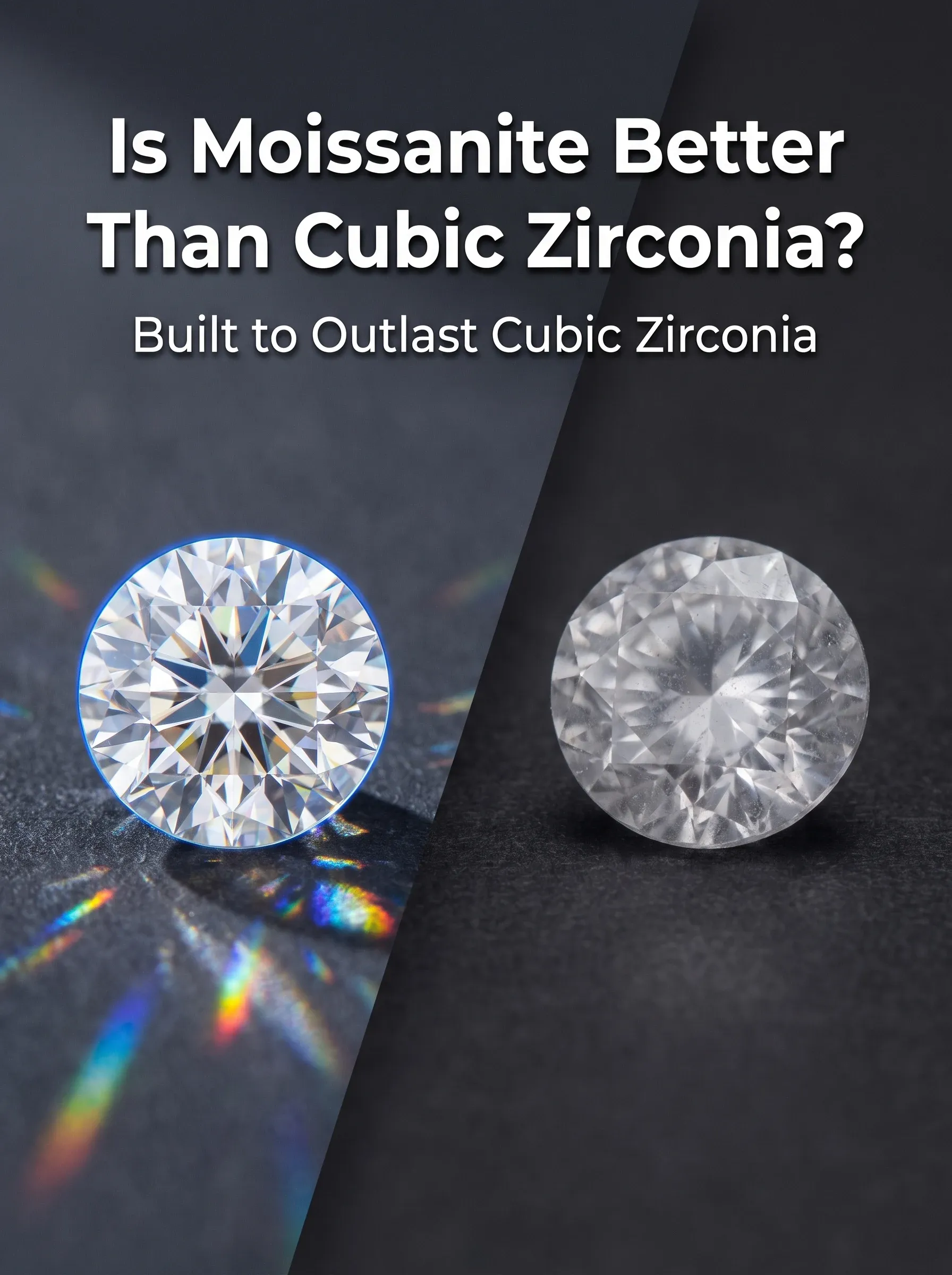
Yes—if you want a stone for daily wear, long-term durability, and stronger brilliance, moissanite is better than cubic zirconia. If your top priority is the lowest possible price for short-term or occasional jewelry, cubic zirconia still has a place.
The right choice depends on how you plan to wear it, how closely you want it to resemble diamonds, and whether you care more about upfront price or long-term value. Once you compare hardness, sparkle, refractive behavior, and wear over time, the differences become very clear.
Overview of Moissanite, Cubic Zirconia, and Diamonds
What Is Moissanite and Its Unique "Moissanite Cubic" Properties?
Moissanite is a gemstone made of silicon carbide. Natural moissanite exists, but it is extremely rare, so the moissanite used in jewelry is lab-grown in controlled environments.
Its standout properties are high durability, strong brilliance, and intense fire. Moissanite has a refractive index of 2.65 and a Mohs hardness of 9.25, which puts it just below diamond in scratch resistance among commonly worn jewelry stones.
If you have seen the phrase moissanite cubic, it usually reflects confusion between two different diamond simulants. Moissanite is not a type of cubic zirconia. They are separate materials with different composition, optical behavior, and long-term performance.
Understanding Cubic Zirconia and Zirconia Characteristics
Cubic zirconia, or CZ, is a synthetic stone made of zirconium dioxide. It became popular in jewelry in the 1970s because it offered a bright, diamond-like appearance at a very low price.
CZ has a Mohs hardness of about 8 to 8.5, which makes it reasonably hard but clearly softer than moissanite. That difference matters in real wear. A cubic zirconia stone picks up surface abrasion faster, loses crisp facet edges sooner, and is more likely to look cloudy or tired after repeated use.
Cubic zirconia is also denser than moissanite, so a CZ of the same size feels heavier. That weight difference is one of the easiest ways jewelers distinguish the two.
Comparing Synthetic Gems to Natural Diamonds
Moissanite and cubic zirconia are both diamond simulants, not diamonds. The Federal Trade Commission’s Jewelry Guides treat them as simulants and warn against describing them in ways that imply they share diamond’s full optical, physical, and chemical properties.
Diamonds are a different material entirely. A diamond is carbon, has a Mohs hardness of 10, and shows a different balance of brilliance and fire than either moissanite or cubic zirconia.
GIA identifies moissanite and CZ as important diamond simulants in the market. That matters because most shoppers comparing them are really asking a second question: which one gives the better diamond-like look without paying diamond prices?
Durability, Hardness, and Long-Term Wear Comparison
Assessing Durability and Hardness in Moissanite
Moissanite is the stronger choice for long-term wear. Its 9.25 hardness gives it excellent resistance to scratching, and that helps preserve both polish and brilliance over time.
For rings, this matters more than many buyers expect. A ring hits countertops, door handles, keyboards, sinks, and gym equipment. A stone that resists scratching keeps its clean, sharp appearance much longer.
Moissanite also holds up well against normal daily exposure to soaps, lotions, and household use. With routine cleaning and secure settings, it remains suitable for engagement rings, wedding bands, earrings, pendants, and other jewelry you wear frequently.
Evaluating Wear and Long-Term Quality in Cubic Zirconia
Cubic zirconia starts out attractive, but it does not age as well. At 8 to 8.5 on the Mohs scale, it is more vulnerable to surface wear, and that wear gradually reduces sparkle and overall quality.
GIA notes that CZ can yellow over time. Even before color shift becomes noticeable, the stone often loses its crisp, glassy brightness because tiny scratches build up across the surface. Cleaning helps remove residue, but it does not reverse physical wear.
That is why cubic zirconia works better in fashion jewelry, travel jewelry, or temporary pieces than in a ring you expect to wear every day for years. For long term use, its lower durability becomes the deciding weakness.
| Criterion | Moissanite | Cubic Zirconia | Better Choice |
|---|---|---|---|
| Composition | Silicon carbide | Zirconium dioxide | Depends on preference |
| Mohs hardness | 9.25 | 8 to 8.5 | Moissanite |
| Long-term wear | Excellent for daily jewelry | Better for occasional wear | Moissanite |
| Clouding and surface wear | Resists it well | More prone over time | Moissanite |
| Upfront price | Higher | Much lower | Cubic zirconia |
Visual Appeal: Brilliance, Sparkle, and Appearance
Exploring the Brilliance, Fire, and Refractive Qualities of Moissanite
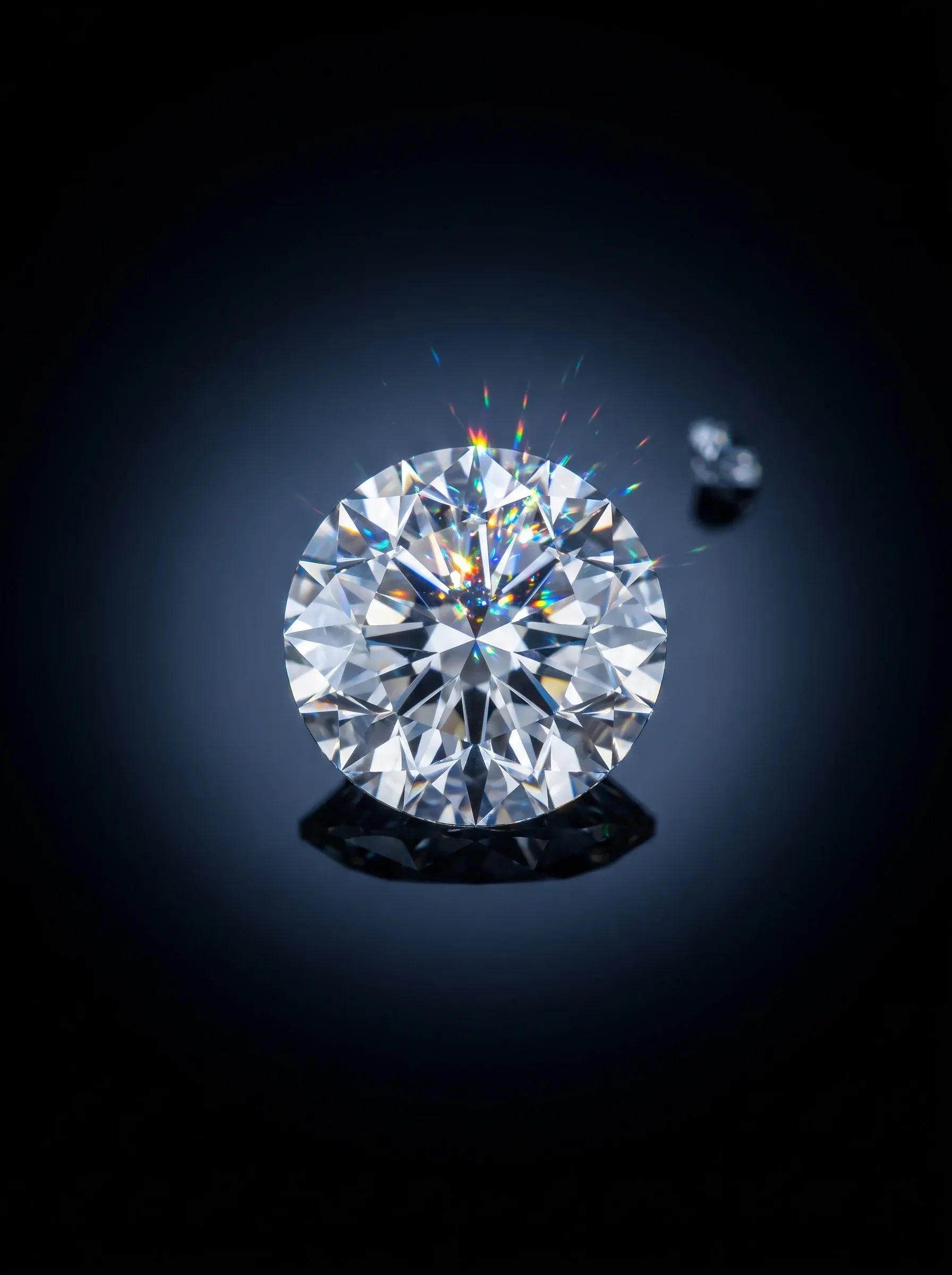
Moissanite is visually more dramatic than cubic zirconia. Its brilliance is high, and its fire is especially strong. GIA states that moissanite has more than twice the fire of diamond, which explains the vivid rainbow flashes you see under direct light.
It is also doubly refractive. Light entering the stone splits in a way that creates extra visual activity, giving moissanite its lively, energetic sparkle. In bright lighting, that effect is obvious.
This is where buyer preference matters. If you want maximum sparkle and a stone that grabs attention, moissanite wins. If you want a quieter appearance, its stronger fire might feel too bold.
Analyzing the Sparkle and Appearance of Cubic Zirconia
Cubic zirconia has a more restrained look. Its refractive index is about 2.15, lower than moissanite’s 2.65, so it returns light less intensely and shows less depth.
GIA describes CZ as having slightly more fire but less brilliance than diamond. In practice, that gives cubic zirconia a bright but flatter appearance than moissanite. It can look convincing at first glance, especially when new, but side-by-side the difference in light performance is easy to spot.
Many people think CZ looks more like a diamond in a quick glance because it lacks moissanite’s strong rainbow fire. That can be true at first. Over time, though, wear reduces its sparkle faster, and the appearance gap widens.
Price, Quality, and Value Considerations
Price Comparison: Moissanite vs. Cubic Zirconia
Price is the one category where cubic zirconia clearly leads. CZ commonly sells for a small fraction of moissanite, while moissanite often costs more, with higher figures also appearing depending on cut, size, and quality.
That gap explains why cubic zirconia remains popular. You can get a large, bright-looking stone for very little money. If you are buying costume jewelry, a backup ring, or a piece you do not plan to wear long, that low price is hard to ignore.
Moissanite costs more upfront because its production is more complex and its performance is much closer to fine jewelry standards. It still costs far less than many diamonds, so it occupies a middle ground between bargain simulants and premium diamond pricing.
Quality and Long-Term Investment Value in Jewelry
Moissanite offers better value, even though it has a higher price. The reason is simple: it keeps its appearance much longer. You are paying for durability, stable brilliance, and a stone that does not need frequent replacement.
Cubic zirconia has lower initial cost but weaker long term value. If a ring needs replacing after repeated wear, the cheap stone stops being the cheaper choice in practical terms.
Neither moissanite nor cubic zirconia should be treated as an investment asset in the way some buyers think about rare natural diamonds. In jewelry value terms, though, moissanite is the higher-quality purchase because it delivers better wear performance per dollar spent.
| Buying Goal | Best Option | Why |
|---|---|---|
| Lowest possible price | Cubic zirconia | Costs a fraction of moissanite |
| Best daily-wear stone | Moissanite | Higher hardness and better durability |
| Most brilliance and sparkle | Moissanite | Higher refractive index and stronger fire |
| Temporary or travel jewelry | Cubic zirconia | Low replacement cost |
| Long-term fine jewelry value | Moissanite | Maintains quality and appearance longer |
Practical Applications in Jewelry Making and Daily Wear
Adaptability of Moissanite and Cubic Zirconia in Jewelry Design
Both stones work in a wide range of jewelry making styles. You can find moissanite and cubic zirconia in solitaire rings, halo settings, studs, pendants, tennis bracelets, and fashion pieces.
The difference is not design flexibility but use case. Moissanite suits jewelry you intend to keep and wear regularly. Cubic zirconia suits jewelry where trend, size, or price matters more than lifespan.
If you want a center stone in an engagement ring, moissanite is the stronger choice. If you want statement earrings for occasional events, cubic zirconia can make sense because the lower wear on earrings reduces its main weakness.
Factors Influencing Wear, Care, and Overall Term Performance
Daily wear affects rings far more than pendants or earrings. That is why the same cubic zirconia that looks fine in a pendant may disappoint in a ring after extended use.
Care is straightforward for both stones: clean with warm water, mild soap, and a soft brush; store pieces separately; and remove rings for heavy manual work. Good care protects the metal setting as much as the stone.
If you are trying to identify a stone, visual inspection is not always enough. Jewelers use refractive and thermal tools, but the FTC warns that thermal testers used to distinguish diamonds from cubic zirconia may not accurately identify moissanite. In other words, professional testing needs the right method, not just any handheld tester.
Comprehensive Decision Guide: Key Differences and Choice Factors
Explaining Essential Differences and Important Terms
The essential differences come down to material, optics, and lifespan.
- Moissanite: silicon carbide, 9.25 hardness, high brilliance, intense fire, strong long-term wear performance.
- Cubic zirconia: zirconium dioxide, 8 to 8.5 hardness, lower brilliance, more modest sparkle, lower price, shorter useful life in daily jewelry.
- Diamond: carbon, 10 hardness, different optical profile, higher price in most cases.
Two terms matter most when comparing appearance. Brilliance is the white light returned to your eye. Fire is the rainbow color you see as light disperses. Moissanite delivers more of both than CZ, and more fire than diamond.
Making the Better and Higher Value Choice Based on Durability, Brilliance, and Price
If your question is “Which is better?” the answer is moissanite. It is better in durability, hardness, brilliance, resistance to wear, and long term value.
If your question is “Which is cheaper?” the answer is cubic zirconia. That lower price is its main advantage, and for short-term jewelry that advantage is real.
A simple buying rule works well:
- Choose moissanite for engagement rings, wedding jewelry, daily rings, and pieces you want to keep looking sharp for years.
- Choose cubic zirconia for costume jewelry, trend pieces, travel rings, or situations where replacing the stone later does not matter.
Ethical and Environmental Considerations
Assessing the Environmental Impact of Synthetic Gemstones
Both moissanite and cubic zirconia are lab-created, which removes mining from the stone itself. For buyers focused on avoiding newly mined center stones, that is a meaningful advantage over natural diamonds.
Moissanite usually fits the long-term sustainability argument better because it lasts longer. A stone that stays in use for many years creates less replacement churn than a cheaper stone that gets swapped out repeatedly.
Cubic zirconia still has an environmental advantage over mined stones at the point of origin, but its shorter lifespan weakens that advantage when you look at total use over time.
Evaluating Ethical Implications Compared to Natural Diamonds
Ethically, both moissanite and cubic zirconia appeal to buyers who want a lab-created alternative to natural diamonds. They avoid many of the sourcing concerns that push shoppers toward synthetic gems in the first place.
That said, ethical buying still includes honest labeling. The FTC’s Jewelry Guides require truthful descriptions, and that matters when a seller presents a stone as a diamond alternative. Moissanite and CZ are legitimate products, but they should be sold as what they are, not as diamonds by implication.
If ethical sourcing and lasting use both matter to you, moissanite is the stronger overall choice because it combines lab-grown origin with higher durability and better long-term jewelry quality.
Frequently Asked Questions
Is moissanite the same as cubic zirconia?
No. Moissanite is silicon carbide, while cubic zirconia is zirconium dioxide. They differ in composition, hardness, brilliance, fire, and long-term wear performance.
Does moissanite look more like a diamond than cubic zirconia?
Moissanite performs more like a premium gemstone, but its stronger rainbow fire makes it look less identical to a diamond in some lighting. Cubic zirconia can resemble a diamond at first glance, yet it lacks the depth, brilliance, and durability that help the look last.
Which lasts longer, moissanite or cubic zirconia?
Moissanite lasts longer. Its 9.25 hardness gives it much better resistance to scratching and surface wear than cubic zirconia at 8 to 8.5.
Can you wear cubic zirconia every day?
You can, but it will show wear faster than moissanite. For a daily ring, cubic zirconia is the weaker choice because it scratches more easily and may become cloudy or yellow over time.
Why is moissanite more expensive than cubic zirconia?
Moissanite costs more because it offers higher durability, stronger brilliance, and better long-term performance in jewelry. Its production is also more complex than cubic zirconia.
How can you tell moissanite from cubic zirconia?
Look at fire, weight, and light behavior. Moissanite shows stronger rainbow flashes and double refraction, while cubic zirconia is denser and has a flatter sparkle. A jeweler can confirm the difference with proper gemological testing.
Is cubic zirconia better for any situation?
Yes. Cubic zirconia is better when your main goal is spending as little as possible on a temporary, fashion, travel, or occasional-wear piece.
Is moissanite worth the extra price?
Yes, if you want a stone for long-term wear. The extra price buys better durability, stronger brilliance, and a much better chance that your jewelry will still look good years later.