Is Moissanite a Diamond?
No — moissanite is silicon carbide, diamond is carbon. What that difference actually changes in sparkle, grading, price and resale.
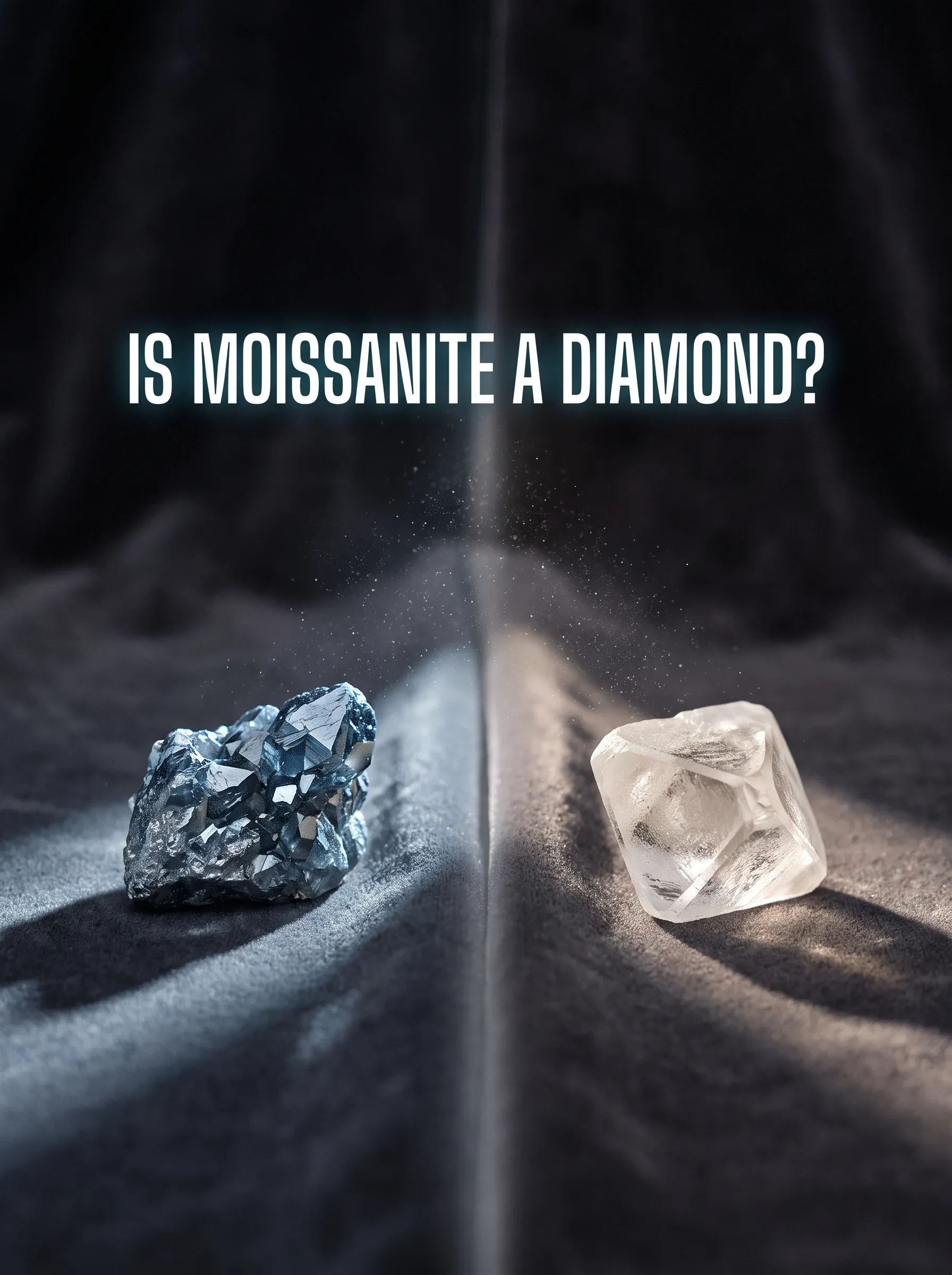
No. Moissanite is not a diamond. It is a real gemstone used in jewelry, but it has a different chemical composition, different optical behavior, and a different place in the market than natural or lab grown diamonds.
If you are choosing between moissanite and diamond, the most useful way to think about it is simple: moissanite is a diamond alternative, not a type of diamond. It can look similar at first glance, but the differences matter in sparkle, value, grading, and long-term expectations.
Introduction to Moissanite and Diamonds
Moissanite and diamonds are often compared because they can appear similar in rings, earrings, and other fine jewelry. Both are durable enough for everyday wear, both can be colorless or near-colorless, and both are popular for engagement jewelry.
The confusion starts because appearance and identity are not the same thing. A stone can look like a diamond without being a diamond. That is exactly where moissanite fits.
Overview of Key Properties and Industry Terminology
A diamond is made of carbon. Moissanite is made of silicon carbide. That one difference affects nearly everything else: hardness, brilliance, fire, grading, price, and how the stone interacts with light.
Industry terminology matters here. The FTC states that moissanite is not the same as a diamond, even if it looks similar. The Gemological Institute of America also places moissanite in the category of diamond simulants or diamond imitations, alongside stones such as cubic zirconia — though moissanite and cubic zirconia are not close to equivalent in hardness or light performance. That does not make moissanite worthless or fake in the sense of being plastic or glass. It means it is a different gem.
What Is Moissanite? Composition, Creation, and Characteristics
Moissanite is a mineral form of crystalline silicon carbide. It was first identified in 1893 by Henri Moissan while he was examining material from a meteor crater in Arizona. Natural moissanite is extremely rare, so the moissanite used in modern jewelry is lab created.
That lab origin is central to its appeal. It allows consistent quality, strong durability, and a lower price than comparable diamonds. It also gives buyers access to larger-looking center stones without moving into the budget range of many mined diamonds.
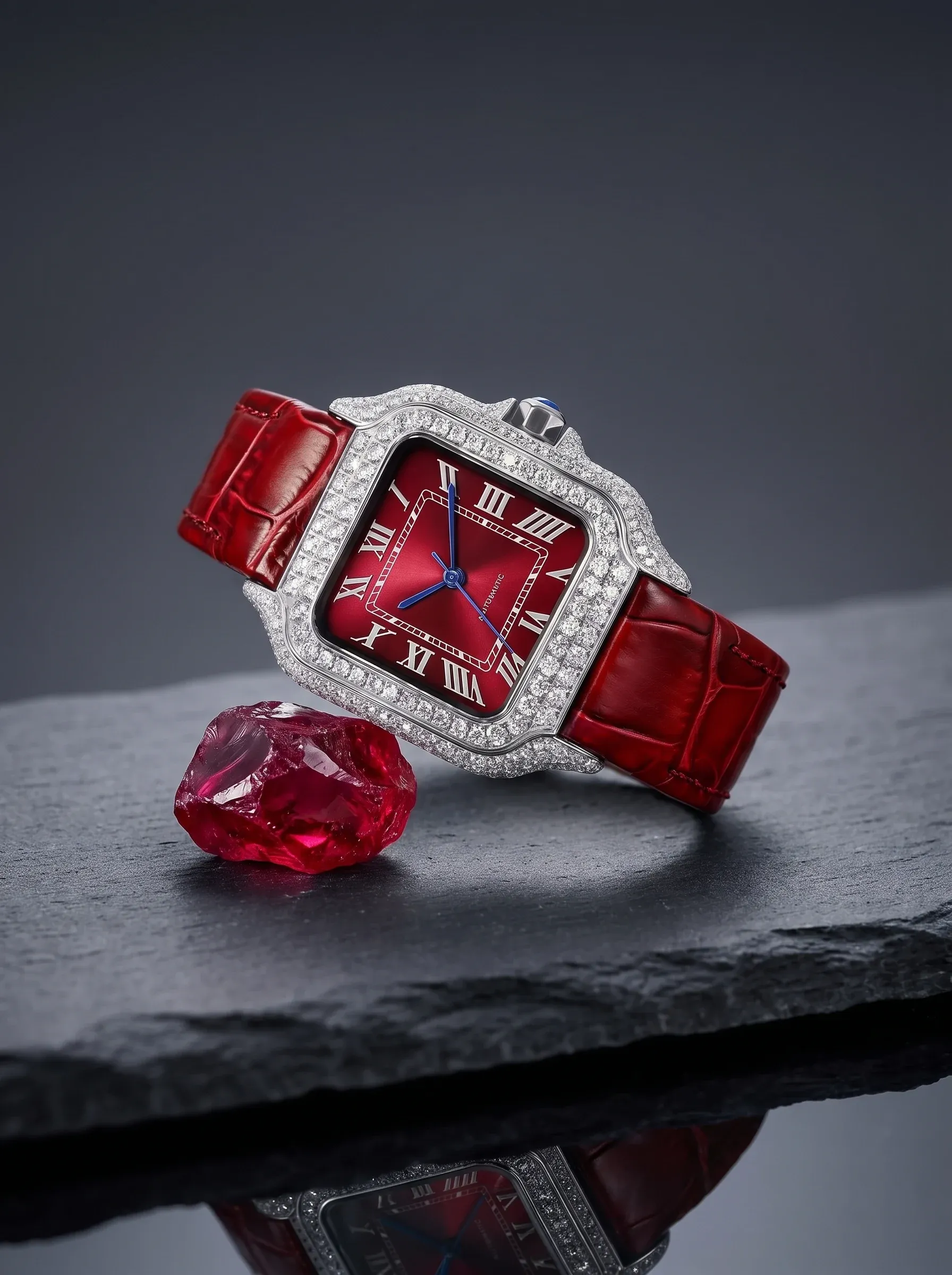
Chemical Composition: Silicon Carbide and Carbide Elements
Moissanite is silicon carbide, not carbon crystal. Diamond is pure carbon in a different crystal structure. Because moissanite and diamond do not share the same chemical composition or physical properties, gem labs and regulators do not classify moissanite as a diamond.
Silicon carbide also helps explain moissanite’s visual character. It produces strong brilliance and pronounced fire, which is why moissanite often throws more rainbow flashes than diamonds under direct light.
Lab-Created Versus Naturally Occurring Moissanite
Natural moissanite exists, but it is so rare that jewelry-grade stones are effectively lab created. In practice, if you buy moissanite for a ring or other jewelry, you are buying a lab-created stone.
That is different from lab grown diamonds. Lab grown diamonds are also created in a lab, but they are still diamonds because they have the same optical, physical, and chemical properties as mined diamonds. Moissanite does not meet that standard, so it remains its own gem category.
Understanding Diamonds: Origins, Varieties, and Properties
Diamonds come in two main commercial categories: mined diamonds and lab grown diamonds. Both are real diamonds. The difference is origin, not identity.
Mined diamonds form naturally deep within the earth. Lab grown diamonds are created above ground under controlled conditions. In both cases, the material is carbon crystal, and both are graded using the same basic 4Cs framework: cut, color, clarity, and carat weight.
Mined Diamonds Versus Lab-Grown Diamonds
Mined diamonds are extracted from the earth and are valued for natural rarity, tradition, and long-standing market recognition. Lab grown diamonds share the same material properties as mined diamonds, but their origin is technological rather than geological.
That distinction matters because buyers sometimes group lab grown diamonds and moissanite together as if they were the same kind of alternative. They are not. Lab grown diamonds are diamonds. Moissanite is a separate stone, and the moissanite versus lab grown diamond question deserves its own answer.
Evaluating Brilliance, Hardness, Color, and Cut
Diamonds rank 10 on the Mohs hardness scale. Moissanite ranks 9.25, which is still excellent for daily wear. In practical use, both are durable enough for engagement rings and everyday jewelry.
Color and cut are more nuanced. Diamonds are sold across a wide range of color and clarity grades. Moissanite is commonly sold in colorless or near-colorless ranges and is valued heavily for its cut because cut drives the stone’s brightness and fire.
| Criterion | Moissanite | Diamond |
|---|---|---|
| Identity | Silicon carbide gemstone | Carbon gemstone |
| Is it a real diamond? | No | Yes |
| Main origin in jewelry | Lab created | Mined or lab grown |
| Hardness | 9.25 Mohs | 10 Mohs |
| Sparkle profile | More rainbow fire | More white brilliance |
| Price level | Fraction of diamond price | Higher |
| Typical use | Diamond alternative in jewelry | Traditional fine jewelry and engagement rings |
Comparing Optical and Physical Attributes
The biggest visual difference between moissanite and diamonds appears under light. If you have ever seen a stone throw sharp rainbow flashes across a room, that effect is more closely associated with moissanite than with diamond.
Physical differences also matter, but less dramatically in daily wear. A diamond is harder. Moissanite is still tough enough for rings, which is why it remains one of the most practical non-diamond stones for regular use.
Sparkle, Fire, and Brilliance in Moissanite and Diamonds
“Sparkle” is a catch-all word, but it helps to break it down into brilliance and fire. Brilliance is the white light reflected back to your eye. Fire is the colored light dispersion that creates rainbow flashes.
Moissanite has more fire than diamond, and many buyers notice that immediately. Diamonds deliver a more restrained white brilliance. Neither look is better in an absolute sense. The better choice depends on whether you want bold sparkle or a more classic diamond look.
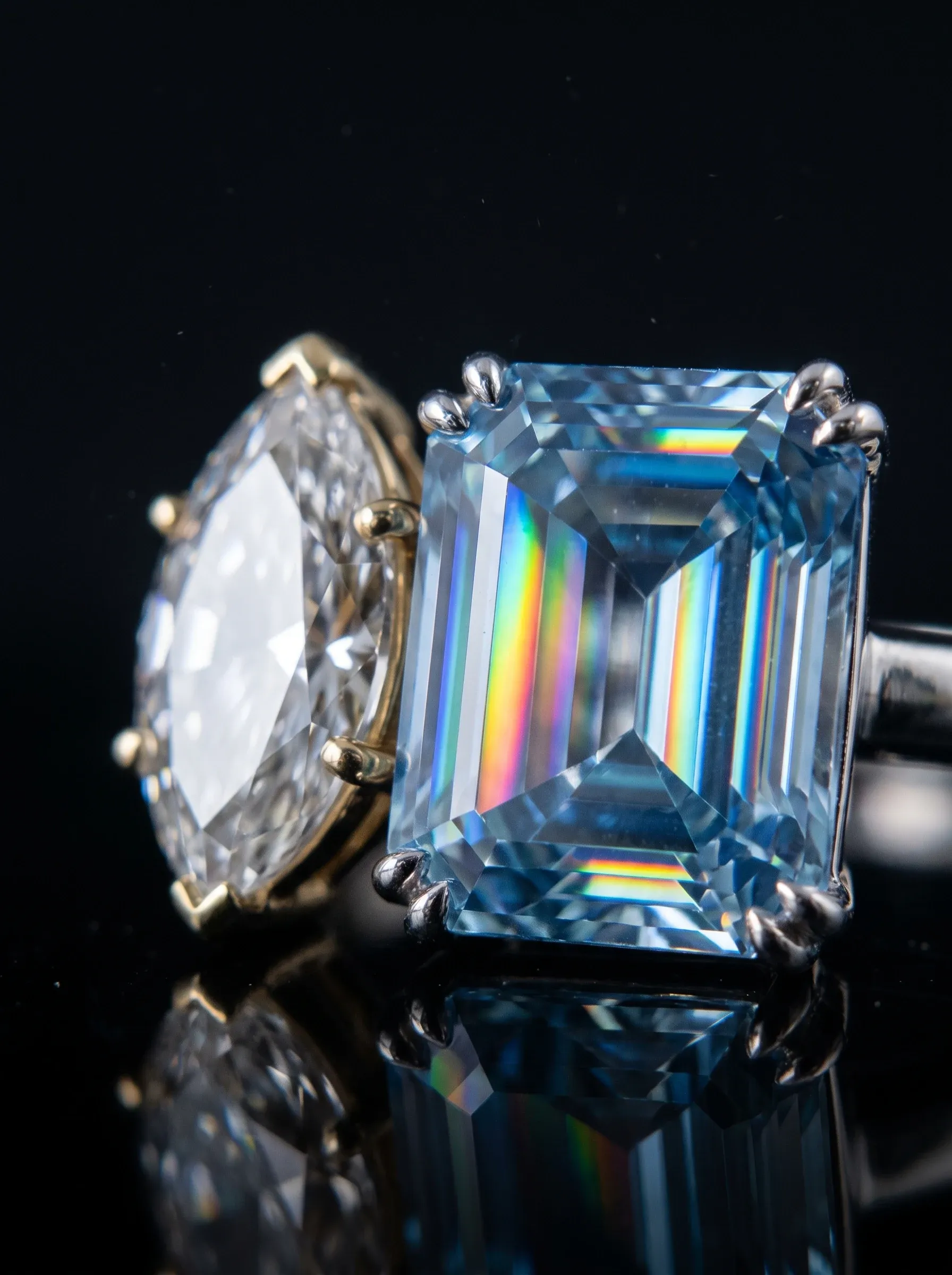
Moissanite can also be mistaken for diamond because some of its properties, including hardness and thermal conductivity, come close to diamond. That similarity explains why visual confusion happens so easily, especially to the untrained eye.
Assessing Durability and Stone-Making Techniques
Moissanite is strong enough for daily rings, including engagement rings. It resists scratching well, holds its polish, and does not lose sparkle permanently. If it looks dull, the cause is usually surface buildup from lotion, soap, or everyday wear.
Diamond remains the hardest gemstone used in jewelry, which gives it the edge in scratch resistance. Still, the real-world durability gap between 10 and 9.25 is smaller than many shoppers expect. For everyday making and wearing of rings, both stones perform well.
Moissanite as a Diamond Alternative in Jewelry
Moissanite has become a mainstream choice in jewelry because it solves a specific problem: many buyers want the look of a bright, durable center stone without paying diamond prices. It also appeals to people who prefer a lab-created product over a mined stone.
That does not mean moissanite is only for buyers trying to imitate diamonds. Many people choose it precisely because it looks different under light and offers its own style.
Engagement Rings and Modern Jewelry Trends
Moissanite works especially well in engagement rings because it combines durability, large visual presence, and strong brilliance. Buyers who want a bigger center stone for the same budget often gravitate toward moissanite first.
Diamonds still dominate traditional engagement rings because of symbolism, long-term market recognition, and the expectation attached to the word “diamond.” If that symbolism matters to you, moissanite will not replace it. If appearance, budget, and daily wear matter more, moissanite becomes a very strong choice.
Value, Choice, and Market Perceptions
Value depends on what you mean by the word. If you mean purchase price, moissanite offers excellent value because it costs far less than diamonds while still delivering durability and sparkle. If you mean resale or market prestige, diamonds generally hold the stronger position.
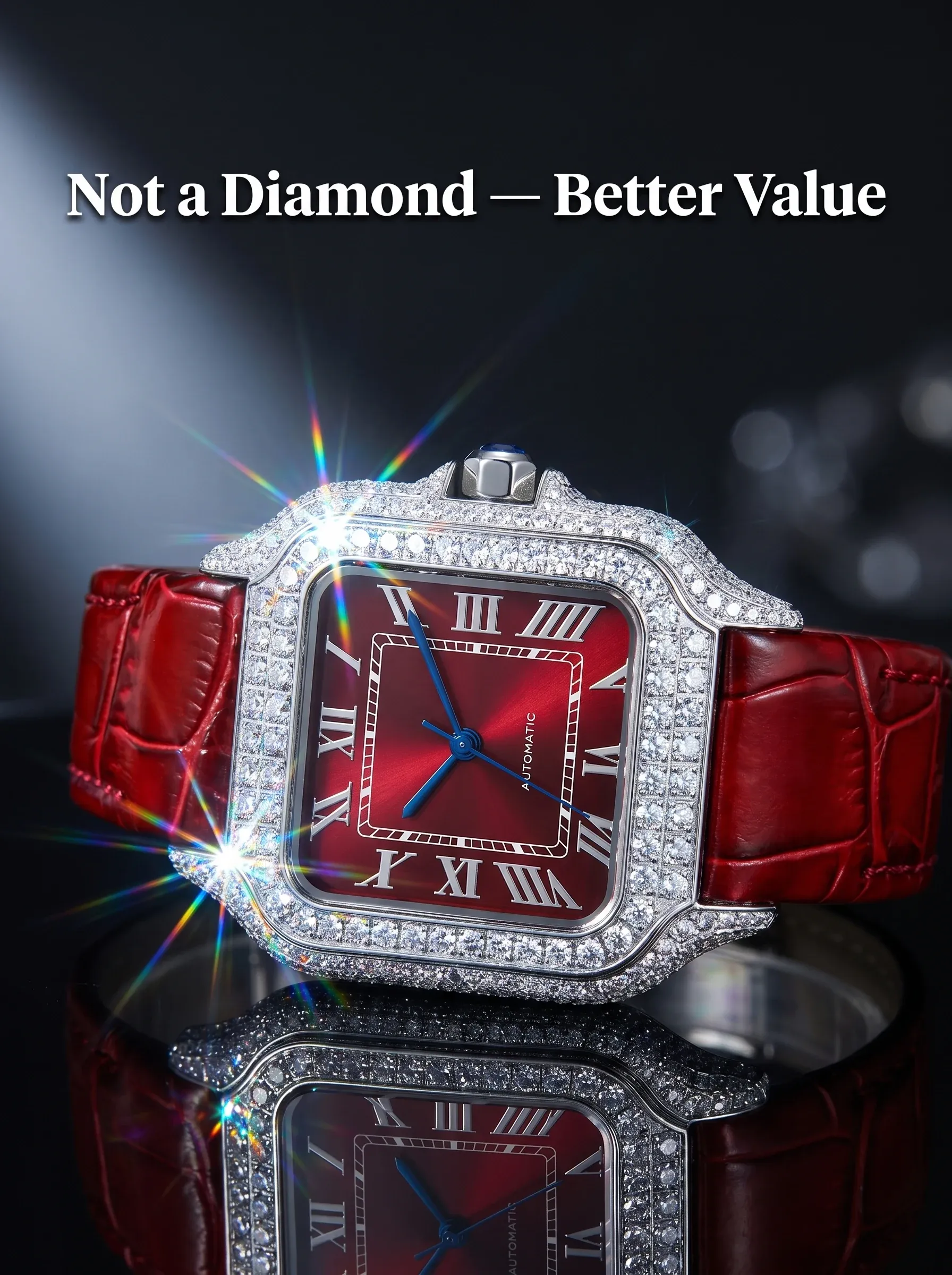
Market perception also shapes satisfaction after purchase. Some buyers love telling people their stone is moissanite. Others want the social and emotional weight that comes with a diamond. Being honest with yourself about that preference matters as much as comparing hardness or color.
The Debate: Is Moissanite a Diamond?
The short answer remains no. Moissanite is not a diamond, not a type of diamond, and not the same as a lab grown diamond. It is a separate gemstone used as a diamond alternative.
The confusion persists because moissanite can resemble a diamond in jewelry, and because older retail language sometimes blurred the line. Clear terminology protects you from buying with the wrong expectation.
Terminology and Consumer Perspectives (Diamond Moissanite vs. Diamonds Moissanite)
Phrases such as diamond moissanite or diamonds moissanite create confusion more than clarity. The accurate wording is simpler: moissanite, diamond simulant, or diamond alternative. If a seller labels moissanite in a way that implies it is a diamond, that wording is misleading.
The FTC Jewelry Guides draw an important line here. Terms such as “laboratory-grown” or “synthetic” should not be used in a way that suggests a stone has essentially the same optical, physical, and chemical properties as a mined diamond when it does not. That distinction is exactly why moissanite and lab grown diamonds must not be treated as the same product.
Testing creates another point of confusion. Basic thermal testers that separate diamonds from cubic zirconia may not accurately identify moissanite. That is one reason moissanite often passes a diamond tester and why proper gem identification matters.
Sustainability and Ethical Considerations
Sustainability is one of the most common reasons people compare moissanite, mined diamonds, and lab grown diamonds. The simple version is not enough here. “Lab created” does not automatically mean low impact, and “mined” does not automatically answer every ethical concern either.
If sustainability is your priority, you need to ask about origin, energy use, and supply chain transparency rather than assuming one label settles the issue.
Environmental Impact: Mined Versus Lab-Created Stones
Mined diamonds involve extraction from the earth. Moissanite and lab grown diamonds avoid mining because they are created in labs. That gives lab-created stones a clear appeal for buyers who want to avoid mined materials.
Energy use still matters. A lab-created stone depends on how the manufacturing process is powered. Without that information, broad environmental claims stay incomplete. The most accurate conclusion is that moissanite avoids mining, but its total environmental footprint depends on production methods and energy sources.
Future Trends in Lab Grown Jewelry and Ethical Sourcing
Lab grown jewelry is expanding because buyers want more control over price, origin, and style. That trend benefits both lab grown diamonds and moissanite, but for different reasons. Lab grown diamonds appeal to buyers who want a real diamond with a lab origin. Moissanite appeals to buyers who want maximum sparkle and lower cost in a separate gem category.
Ethical sourcing will keep becoming more specific. Buyers increasingly want exact answers about whether a stone was mined or lab created, how it was made, and what they are actually paying for. Clear labeling will matter more, not less.
Conclusion: Making an Informed Choice
If you want a direct answer, here it is again: moissanite is not a diamond. It is a real silicon carbide gemstone that looks similar to diamond in jewelry but differs in composition, optical behavior, grading, and market value.
The right choice depends on what you want your stone to do for you. If you want tradition, diamond identity, and classic white brilliance, choose a diamond. If you want strong fire, excellent durability, and lower cost, moissanite is a smart, attractive alternative.
Recap of Key Differences and Considerations
- Identity: Moissanite is silicon carbide; diamond is carbon.
- Status: Moissanite is not a real diamond, but it is a real gemstone.
- Origin: Most moissanite in jewelry is lab created; diamonds are mined or lab grown.
- Sparkle: Moissanite shows more rainbow fire; diamonds show more white brilliance.
- Hardness: Diamond is 10 on Mohs; moissanite is 9.25.
- Price: Moissanite costs far less than comparable diamonds.
- Best fit: Choose based on your priorities in beauty, symbolism, budget, and value.
Frequently Asked Questions
Is moissanite a real diamond?
No. Moissanite is not a diamond. It is a real gemstone made of silicon carbide.
Is moissanite fake?
Moissanite is not fake in the sense of being glass or plastic. It is a genuine lab-created gemstone, but it is not a diamond.
Does moissanite look like a diamond?
Yes. To many people, moissanite looks very similar to a diamond at first glance, especially in everyday jewelry settings.
Why does moissanite sparkle more than a diamond?
Moissanite shows more fire, which means it throws more rainbow flashes under light. Diamonds produce a whiter, more restrained brilliance.
Does moissanite lose its sparkle over time?
No. Moissanite does not permanently lose its sparkle. If it looks dull, it usually just needs cleaning.
How hard is moissanite compared with diamond?
Moissanite ranks 9.25 on the Mohs scale, while diamond ranks 10. Both are durable enough for daily wear, but diamond is harder.
Does moissanite pass a diamond tester?
Some basic thermal testers may not accurately identify moissanite. A simple tester is not always enough to distinguish it from diamond.
Is lab grown diamond the same as moissanite?
No. A lab grown diamond is a real diamond with the same core properties as a mined diamond. Moissanite is a different stone entirely.
Is moissanite good for engagement rings?
Yes. Moissanite is a strong choice for engagement rings because it is durable, bright, and much more affordable than diamond.
What color does moissanite come in?
Moissanite is commonly sold in colorless or near-colorless ranges for jewelry.