Green Dial Watches for Women: Why Emerald Is the Color of 2026
A practical guide to green dial watches for women, with the best sizes, metal pairings, stone options, and honest 2026 price ranges.
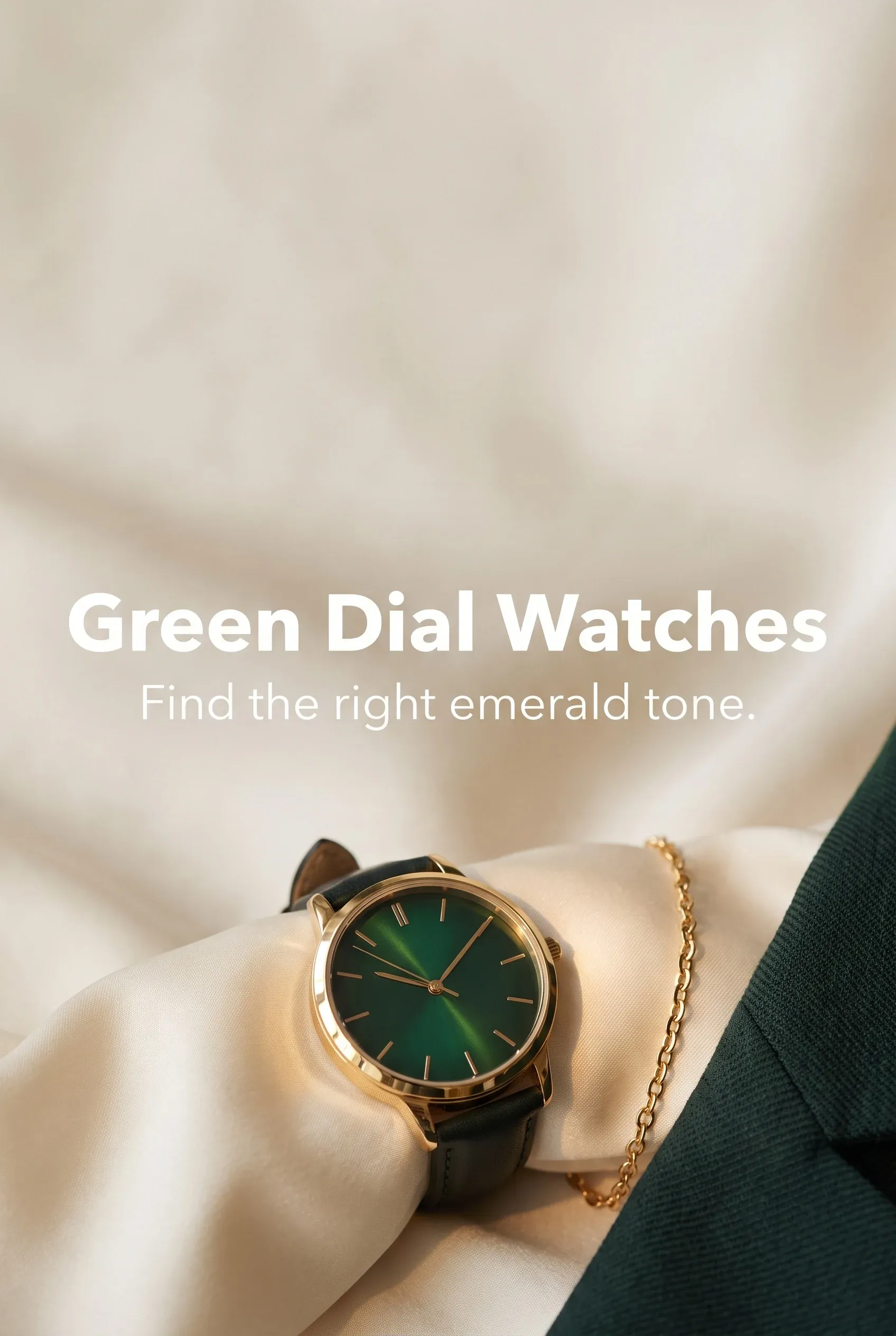
A green dial watch for women looks current because it adds color without shouting. The best ones use deep emerald, fit your wrist correctly, and match your wardrobe metal before they chase sparkle. If you are choosing between a plain dial, a stone-set bezel, or a fully iced look, size, finish, and budget matter more than trend.
Emerald usually means color, not gemstone
On a watch, an emerald dial usually means emerald-colored, not a dial cut from emerald. That is useful, because you are really choosing a shade of green and a surface finish first.
Dark emerald works for most readers because it behaves almost like a neutral. It reads richer than black, softer than navy, and less expected than silver. In low light it can look nearly black, which makes it easier to wear to work and formal dinners.
Start with wrist size, not color
A beautiful dial cannot fix a watch that overwhelms your wrist. Before you think about sparkle, case shape, or bracelet style, choose the size category that actually fits. If your wrist is under 6 inches, stay at or below 36 mm.
The second fit check is lug-to-lug. The lugs should not extend past the width of your wrist. If they do, even a lovely green dial will look borrowed instead of balanced. For a deeper breakdown, see this women’s watch size guide.
| Watch category | Case size | Who it suits best |
|---|---|---|
| Women’s classic | 26–32 mm | Dressy proportions, smaller wrists, jewelry-first styling |
| Women’s contemporary | 34–36 mm | Everyday wear, most wrists, easiest starting point |
| Unisex | 38–40 mm | Oversized look, cuffs and knits, wrists that can handle longer lugs |
| Men’s sizing | 40–44 mm | Usually too large for a small wrist, intentionally bold when chosen well |
If you want one safe recommendation, start at 28–32 mm for a dress watch and 34–36 mm for daily wear. Green is already distinctive, so you usually do not need oversized dimensions to make it feel special.
Pick the shade of green first
Not every green dial wears the same way. Deep emerald and forest green look dressy, especially with polished cases and simple markers. Olive green looks softer and more casual. Bright grass green has more personality, but it can date faster and limits what you wear with it.
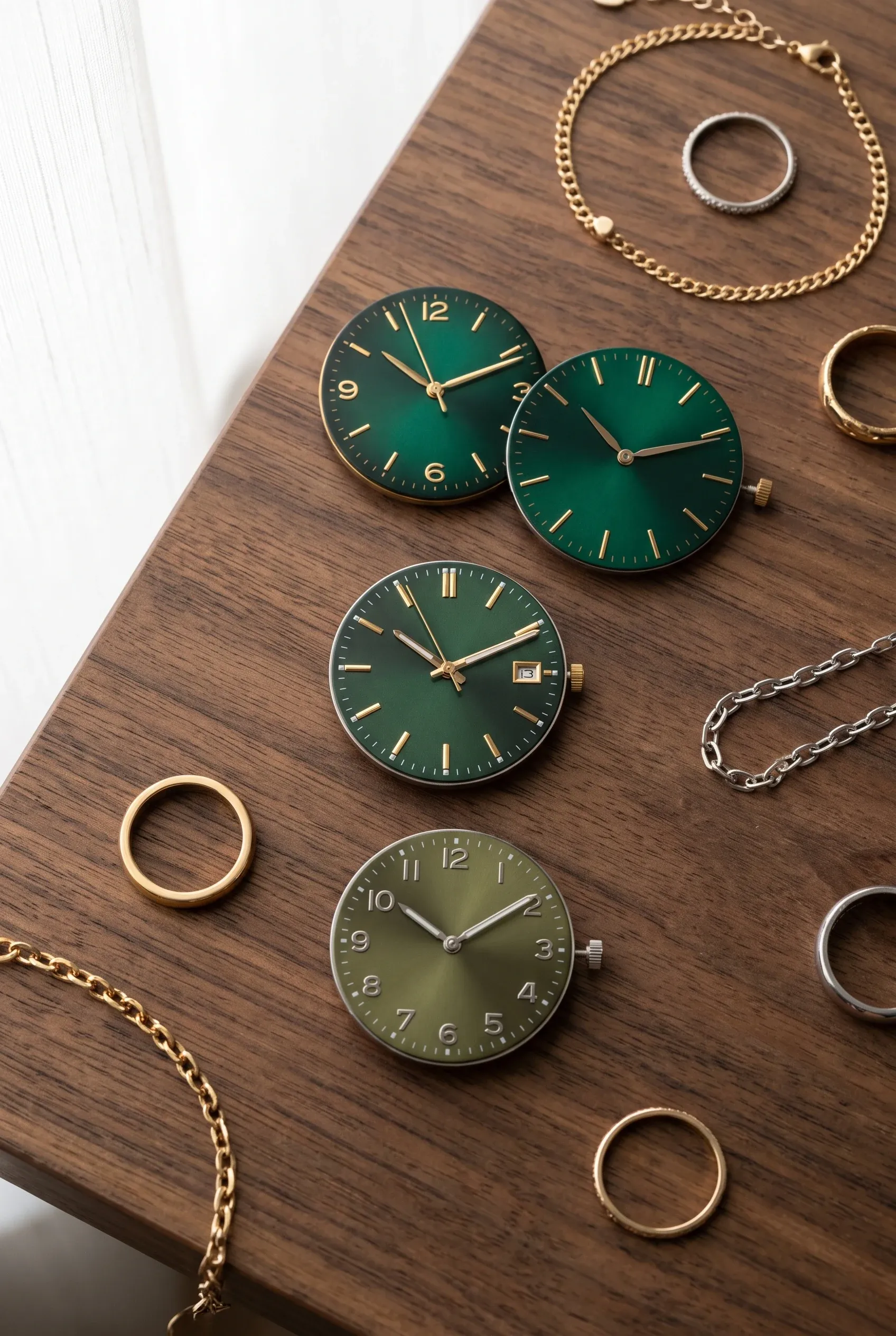
For a first green watch, choose the darkest shade you still recognize as green from arm’s length. That gives you the color payoff you want without making the watch feel costume-like. If you already own black, white, and blue dials, then a brighter green can make sense as a second or third watch.
Finish matters too. A glossy or sunburst dial throws more light and feels dressier. A flatter finish looks quieter and more practical. If you wear the watch mostly in office light, a slightly reflective emerald usually gives the best depth.
Do not sacrifice legibility
Green looks luxurious, but not if you cannot read the time. Hands and markers need enough contrast against the dial. Silver-tone hardware usually looks sharpest on mid and dark green, while yellow-gold hands soften the look and can disappear slightly in dim light.
If the watch also has stones, make sure the dial stays open enough to read quickly. A fully decorated bezel can work, but a crowded dial with reflective markers, stones, and a dark center often turns into jewelry first and watch second. That may be fine for evening wear, but it is less useful every day.
Match the case metal to the dial
Green changes character depending on the metal around it. Yellow gold with emerald green is the dressiest pairing. It feels warm, rich, and slightly vintage. If you already wear gold hoops, rings, or bracelets, this combination is usually the easiest win.
Silver-tone steel with green looks cleaner and more modern. It has more contrast, so the dial feels crisper and more graphic. This is a strong choice if your wardrobe leans black, white, gray, denim, or navy.
Rose-tone cases can work with softer olive greens, but they are less universal. When in doubt, match the watch to the jewelry metal you already wear most days. A green dial is enough of a statement, so consistency elsewhere helps.
Decide how much sparkle you want
There are four common levels here. First is no stones at all, just a green dial and a clean case. Second is a stone-set bezel. Third is a dial with some marker or bezel stones. Fourth is a fully iced style, where the case, bezel, and bracelet carry heavy stone coverage.
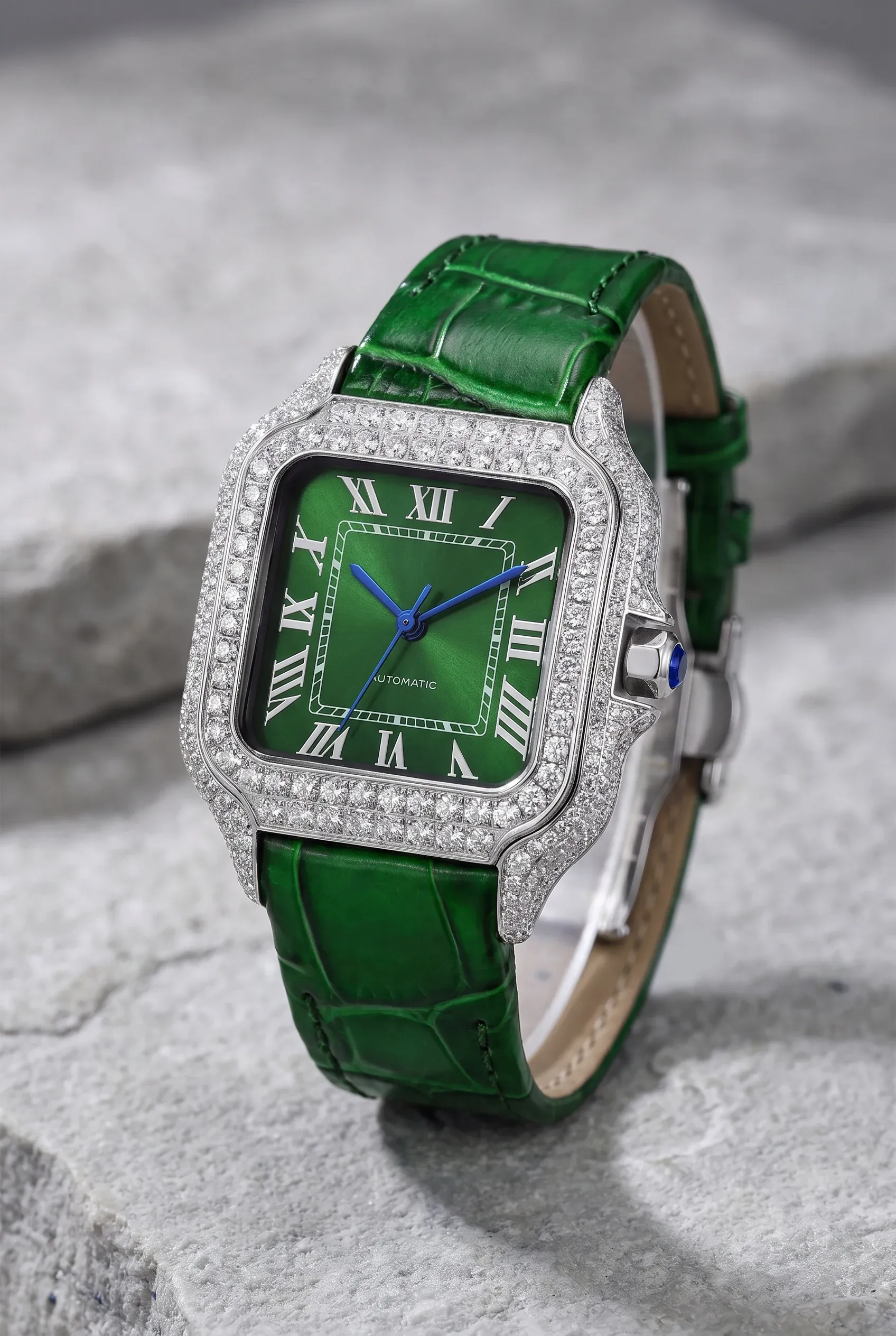
For daily wear, most readers will get the longest use from the first two levels. They give you the color story without turning every outfit into an evening look. A fully iced green watch can be fun, but it is much more specific. If you are still learning what suits you, start restrained.
If you want stones, ask how they are set. Prong and bead setting are hand set and hold up far better than glued stones. Cheap glued stones often start shedding within months, especially on bracelets and around the bezel. We explain the failure points in this guide to hand-set stones.
Also separate the stone type from the dial color in your budget. A green dial itself is not the expensive part. The jump in price usually comes from moving from crystal or CZ into moissanite, lab diamond, or natural diamond. If you are considering that jump, our moissanite watch guide for women is the more useful next read than generic fashion advice.
Choose movement, crystal and thickness together
In stone-set watches under $3,000, Japanese quartz is the norm. That is not a downgrade by itself. Quartz keeps the case slimmer, is easy to live with, and avoids the higher service cost that comes with automatics.
Automatics appeal to people who care about mechanics, but they add thickness and weight. That matters on smaller wrists, where an overbuilt case can feel top-heavy. If you want a watch mainly for color, style, and ease, quartz is often the better fit. For the trade-offs, read this quartz versus automatic explainer.
The crystal matters too. Hardened mineral glass is common at lower prices and can be perfectly fine for occasional wear. Sapphire crystal becomes more common above about $1,500 and is the better long-term choice if the watch will be in weekly rotation.
Check water resistance before daily wear
Many dressy women’s watches are less rugged than they look. A 3 ATM rating means rain and hand-washing, not swimming. If you want a green dial watch as an everyday piece, that single line on the spec sheet matters more than another row of stones.
This is especially important with stone-set bracelets. Water, soap, and impact are all harder on decorative settings than on plain metal links. A watch can still be good for daily office wear without being a pool watch.
Style a green dial by outfit, not trend
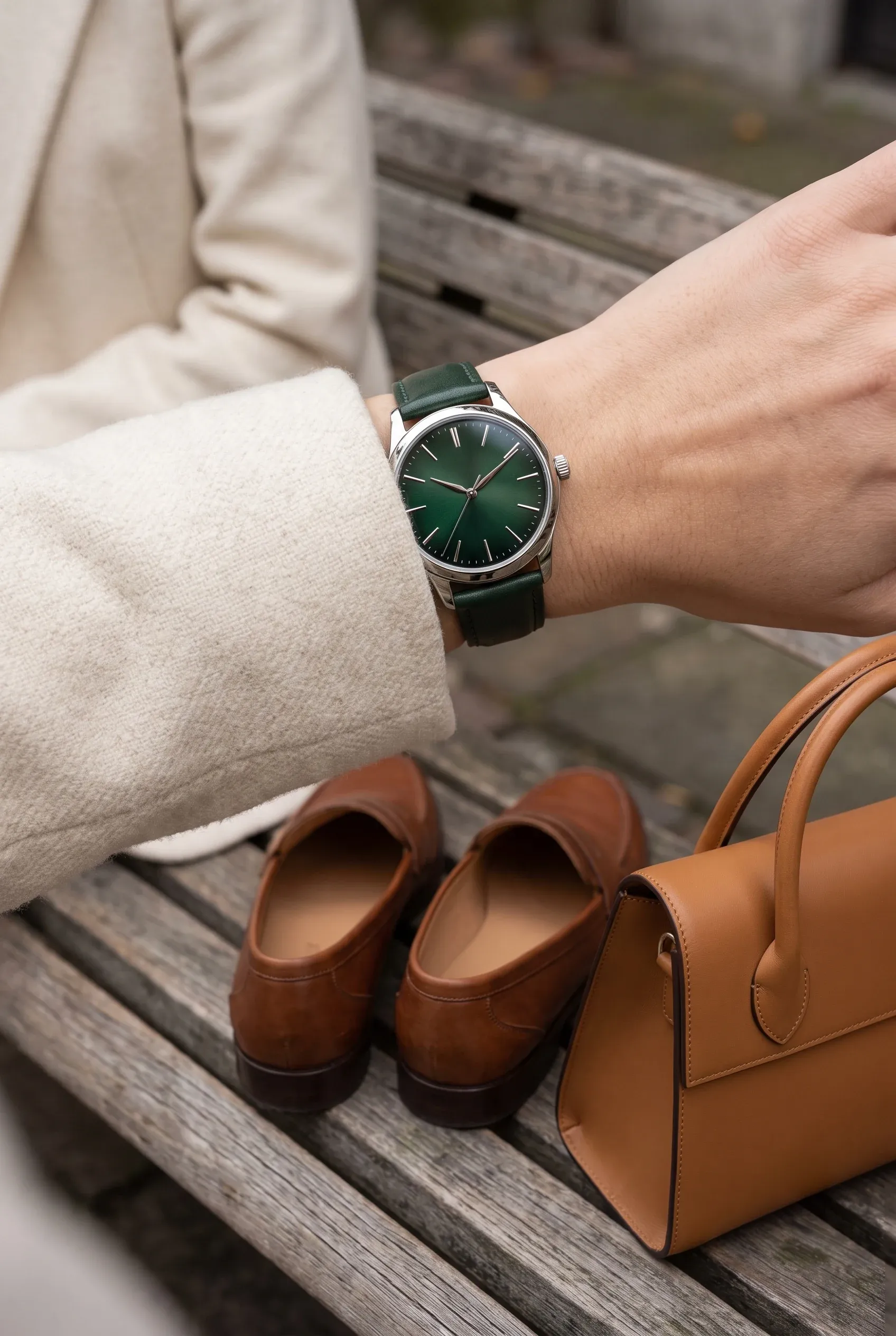
Emerald works best when you treat it like a wardrobe color, not a novelty accent. It should connect to the rest of what you wear, either by echoing your jewelry metal or by picking up a tone from shoes, a bag, or a knit. If you need outfit ideas, our piece on styling a statement watch helps translate that into real combinations.
For work
A dark green dial with a clean case works well with cream, camel, gray, navy, and black. Keep the rest of the jewelry simple. Green already adds interest, so you do not need stacked bracelets fighting for the same attention.
For weekends
Olive and forest green pair naturally with denim, white shirts, loafers, and knitwear. A strap watch can feel softer here than a polished bracelet. If the dial is bright, keep the outfit neutral so the color looks deliberate rather than random.
For evening
This is where emerald and stones make the most sense together. Deep green next to gold, black satin, or dark brown reads expensive even when the budget is moderate. If the watch is fully iced, let it be the main jewelry piece and scale back the necklace and earrings.
What prices look like in 2026
For plain green dial watches with no stones, pricing varies widely by maker, case metal, and movement. The clearest numbers in 2026 are on stone-set watches, where the stone category drives the budget much more than dial color does.
| Type of stone-set watch | Typical price | What to expect |
|---|---|---|
| Crystal or CZ fully set | $100 to $400 | Fashion look, lower durability, common at entry level |
| Fully set moissanite | $900 to $2,700 | Strong sparkle, lab-grown stones, usually quartz at this price |
| Custom lab-diamond set | $5,000 to $15,000 | Higher material cost, custom work, thicker budget |
| Custom natural-diamond set | $15,000 to $60,000 and up | Luxury custom territory, large premium for natural stones |
| Factory diamond-set from a major house | $40,000 to $250,000 and up | Brand-driven luxury, not just stone cost |
One useful warning: a watch sold as moissanite under about $300 is almost certainly crystal or CZ. That does not make it worthless, but it does change what you are buying. If the listing is vague about stone setting, movement, crystal type, and water resistance, assume the low price is telling the truth.
When a moissanite green dial watch makes sense
A moissanite green dial watch makes sense when you want obvious sparkle without diamond pricing. Moissanite is silicon carbide, and nearly all jewelry moissanite is lab grown. It is durable at 9.25 on the Mohs scale, below diamond at 10 but above softer gem options often used in fashion jewelry.
Optically, moissanite is lively. Its refractive index is 2.65 to 2.69, compared with diamond at 2.42, and its dispersion is 0.104, compared with diamond at 0.044. In plain terms, it throws more rainbow fire. Around a dark green dial, that can look striking, especially on the bezel and bracelet.
Read the paperwork correctly. The common report is GRA, which identifies the stone as moissanite and lists basics like carat, cut, and color. It is not a GIA-style quality guarantee. Also, VVS is the usual clarity you will see, because lab growth makes that standard rather than rare.
If you prefer quieter sparkle, choose fewer stones and a cleaner dial. If you want a dress watch that feels festive at night, moissanite is the sweet spot between fashion crystal and diamond budgets. It is most convincing when the case size still suits the wrist and the dial remains readable.
A short buying checklist
- Measure your wrist first. Under 6 inches usually means staying at or below 36 mm.
- Choose your green. Dark emerald is the safest first buy, olive is softer, bright green is the most specific.
- Match your usual jewelry metal. Gold warms green, steel sharpens it.
- Decide plain versus stones early. That choice changes the budget more than the dial color does.
- Ask how stones are set. Hand-set stones are worth prioritizing over glued ones.
- Check movement and crystal. Quartz is practical, sapphire becomes more common above about $1,500.
- Read the water resistance line. A 3 ATM dress watch is for rain and hand-washing, not swimming.
If you only remember one thing, remember proportion. Emerald looks expensive when the case fits, the shade suits your clothes, and the sparkle level matches your life. Get those three right, and the dial color does the rest.
Frequently Asked Questions
Are green dial watches for women still in style in 2026?
Yes. Dark green is especially strong because it feels distinctive without being hard to wear. It gives you more personality than black or silver, but it still works with office neutrals, denim, black evening clothes, and both gold and steel jewelry.
What does an emerald dial watch usually mean?
Usually it means the dial is emerald-colored, not made from emerald. In practice, you are choosing a shade of green and a finish, such as a glossy or light-catching surface. That is why color depth and legibility matter more than the word emerald itself.
What size green watch looks best on a small wrist?
For a wrist under 6 inches, stay at or below 36 mm. Dress watches often look best around 26–32 mm, while 34–36 mm works well for a contemporary everyday look. Also check lug-to-lug, because a compact case can still wear too large if the lugs are long.
Should I choose a plain green dial or a stone-set one?
Choose plain if you want the watch to work several days a week. Choose a stone-set bezel if you want some jewelry effect without losing versatility. Save fully iced styles for readers who already know they enjoy bolder watches and do not need the piece to disappear under a cuff.
Is moissanite good for a women’s watch?
Yes, when you want strong sparkle and better durability than fashion crystal. It works especially well on bezels and bracelets around a dark green dial. The key is buying the watch for the right reasons, meaning visible fire, practical hardness, and a budget below diamond territory.
Will a diamond tester call moissanite a diamond?
A basic thermal diamond tester usually reads moissanite as diamond. A dual thermal and electrical tester can tell them apart. That is why a single pen test is not enough if you are trying to verify what stones are in a watch or piece of jewelry.
Can I swim with a 3 ATM green dial watch?
No. A 3 ATM rating is for rain and hand-washing. It is not a swimming rating. That is even more important on stone-set pieces, where water exposure and impact create more long-term stress than they do on a plain metal watch.