Does Moissanite Tarnish?
The stone does not. The setting might. Separating what happens to silicon carbide from what happens to silver, gold and platinum.
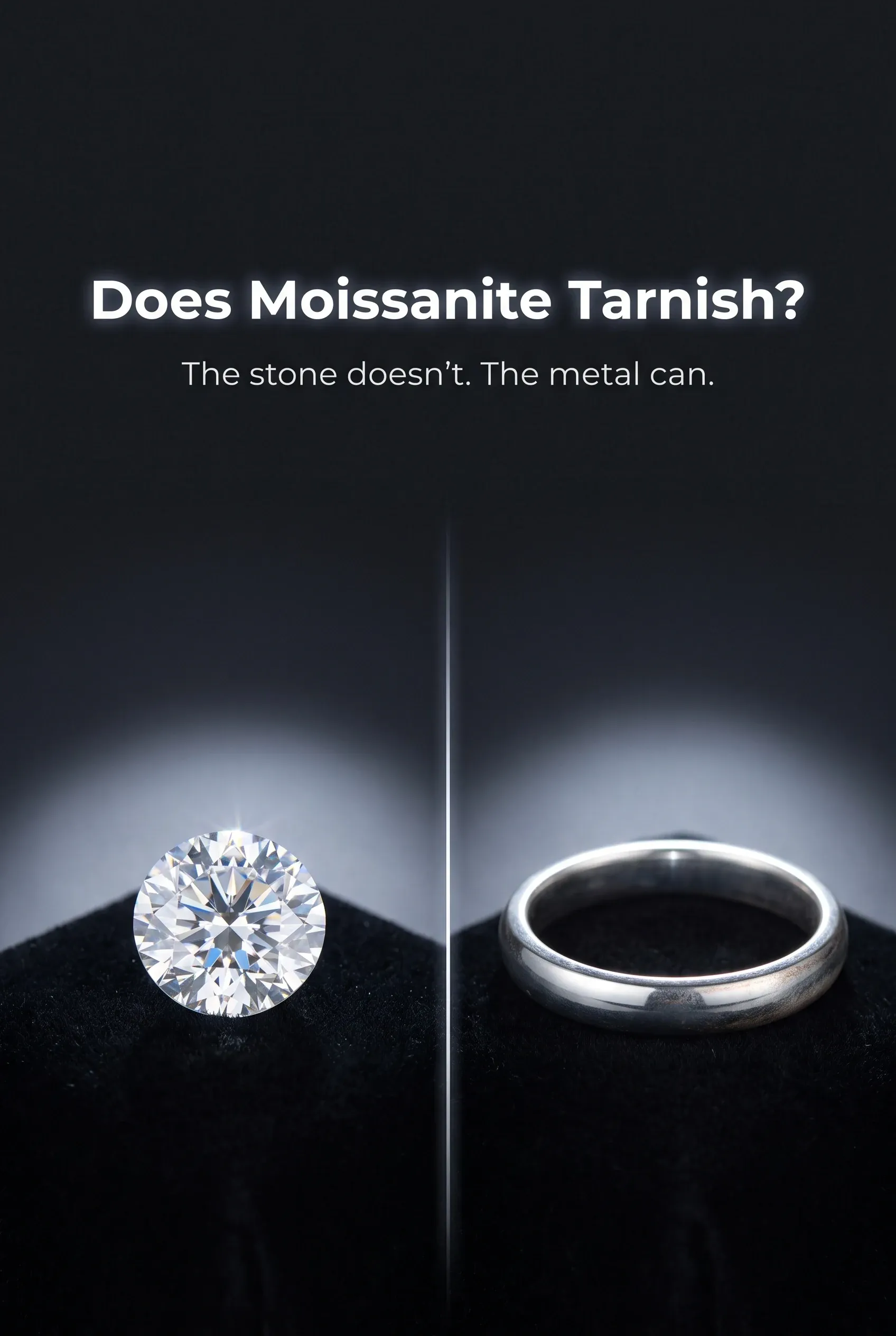
No—moissanite itself does not tarnish. If your moissanite ring looks dull, cloudy, or less bright over time, the problem is almost always surface buildup from oils, soap, hard-water residue, or dirt, not a change in the stone itself.
The important distinction is this: the moissanite stone stays chemically stable, but the metal setting around it might tarnish or lose polish depending on whether it is silver, gold, or platinum. Once you separate the stone from the setting, the question becomes much easier to answer.
Introduction to Moissanite
What is Moissanite? Composition, Clarity, and Brilliance
Moissanite is a gemstone made from silicon carbide. In fine jewelry, nearly all moissanite stones are lab-grown for consistent clarity, color, and cut quality. That controlled growth process is one reason moissanite is so clear and visually crisp.
Its brilliance comes from a high refractive index of 2.65–2.69, which gives the stone strong sparkle and noticeable fire. The color runs through the crystal itself rather than sitting in a coating, so normal exposure to light, air, and everyday wear does not make the stone fade.
Moissanite is also non-porous. Oils, soap film, lotion, and dirt stay on the surface instead of soaking into the stone. That matters because a cloudy look on moissanite is almost always a cleaning issue, not permanent damage to clarity.
Moissanite vs. Diamonds: Appearance, Sparkle, and Durability
Moissanite and diamonds are close in durability, but they do not look identical. Diamonds return more white light, while moissanite produces stronger rainbow flashes. If you like extra sparkle, moissanite delivers a brighter, more fiery look.
On the Mohs hardness scale, diamond ranks 10 and moissanite ranks about 9.25. That makes moissanite one of the hardest stones used in jewelry and highly resistant to scratch marks from daily wear.
Compared with softer alternatives such as cubic zirconia, moissanite holds its shine, clarity, and crisp surface much better over time.
| Gemstone | Hardness | Long-Term Cloudiness | Surface Buildup | Sparkle Style |
|---|---|---|---|---|
| Moissanite | 9.25 | Very unlikely internally | Easy to clean off | Strong fire and rainbow sparkle |
| Diamond | 10 | Very unlikely internally | Easy to clean off | Bright white sparkle |
| Cubic zirconia | Lower | More likely over time | More noticeable with wear | Less durable brilliance |
Understanding Tarnish on Moissanite
How Tarnish Affects the Stone’s Shine and Surface
Tarnish is a chemical reaction that affects metals, not moissanite. Since moissanite contains no iron, it does not rust, and because silicon carbide is highly stable, the stone does not corrode or discolor the way reactive metals do.
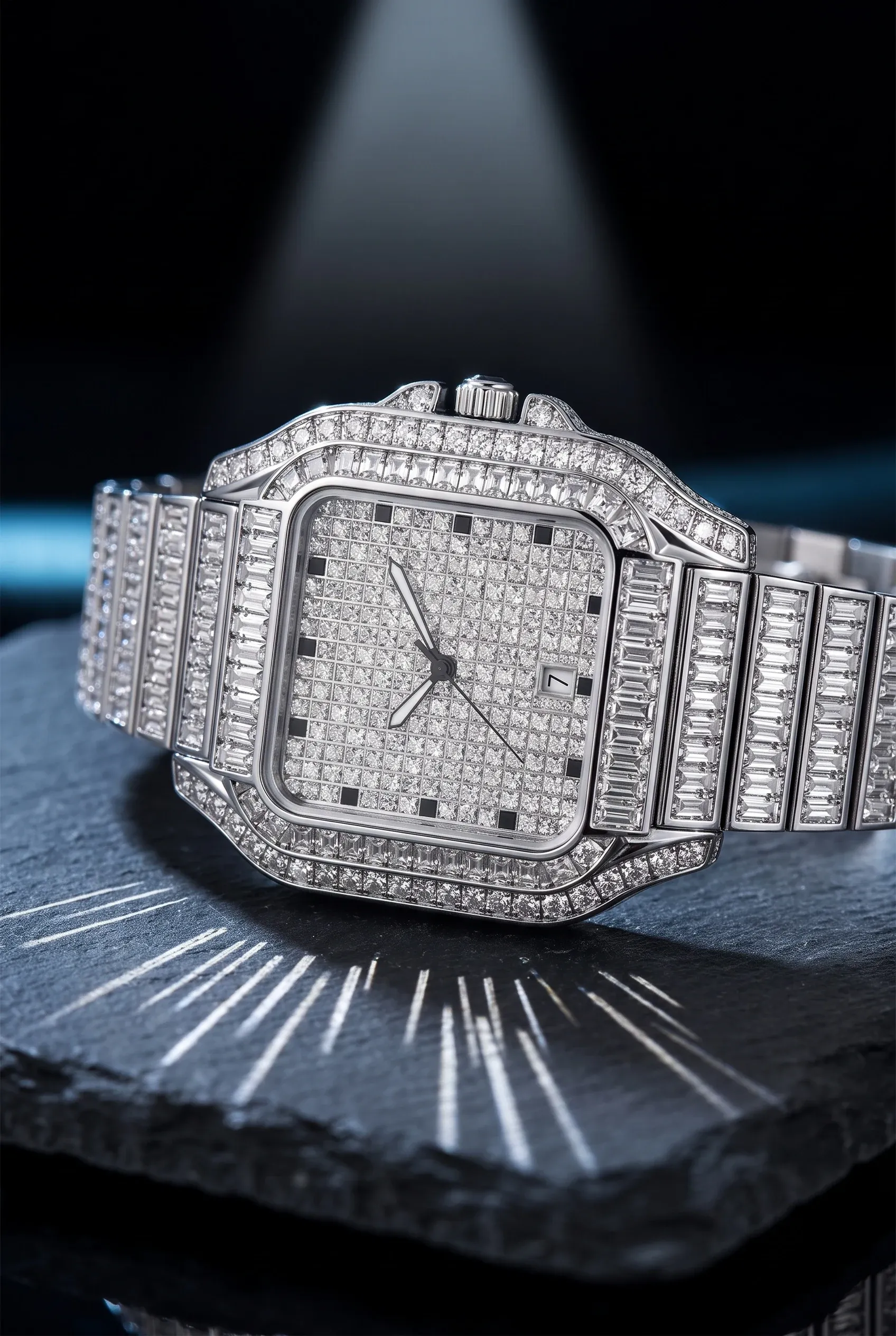
If your ring loses sparkle, what you are seeing is a film on the stone. That film might come from hand cream, skin oils, soap scum, cooking grease, sunscreen, perfume, or mineral deposits left by water. A residue layer scatters light before it enters and exits the stone, which makes the moissanite look flat, cloudy, or less lively.
Some stones develop an oily-looking film on the surface. That is still a cleaning issue, not tarnish. Once the residue is removed, the original brilliance returns.
The Role of Everyday Wear, Scratches, and Damage
Everyday wear affects moissanite far less than it affects softer gems. Its hardness helps it resist scratches, and its non-porous structure keeps grime from settling inside the crystal. That is why moissanite does not permanently turn cloudy from ordinary use.
Still, “scratch-resistant” does not mean indestructible. A hard knock against a countertop, gym equipment, or a metal tool can damage a setting, loosen prongs, or chip an edge. In that situation, the problem is structural damage to the ring, not tarnish of the moissanite.
The setting also changes how clean the stone looks. Dirt trapped under prongs or along a halo can make even a clear moissanite appear dull from the top. Sometimes the stone is perfectly fine, but the design of the ring hides buildup where you cannot easily see it.
Factors Affecting Moissanite Tarnish
Impact of Environmental Elements: Water, Oils, Dirt, and Soap
Water does not harm moissanite. Handwashing, rain, showers, and humidity do not make the stone fade, rust, or tarnish. The issue is not the water itself; it is what the water leaves behind.
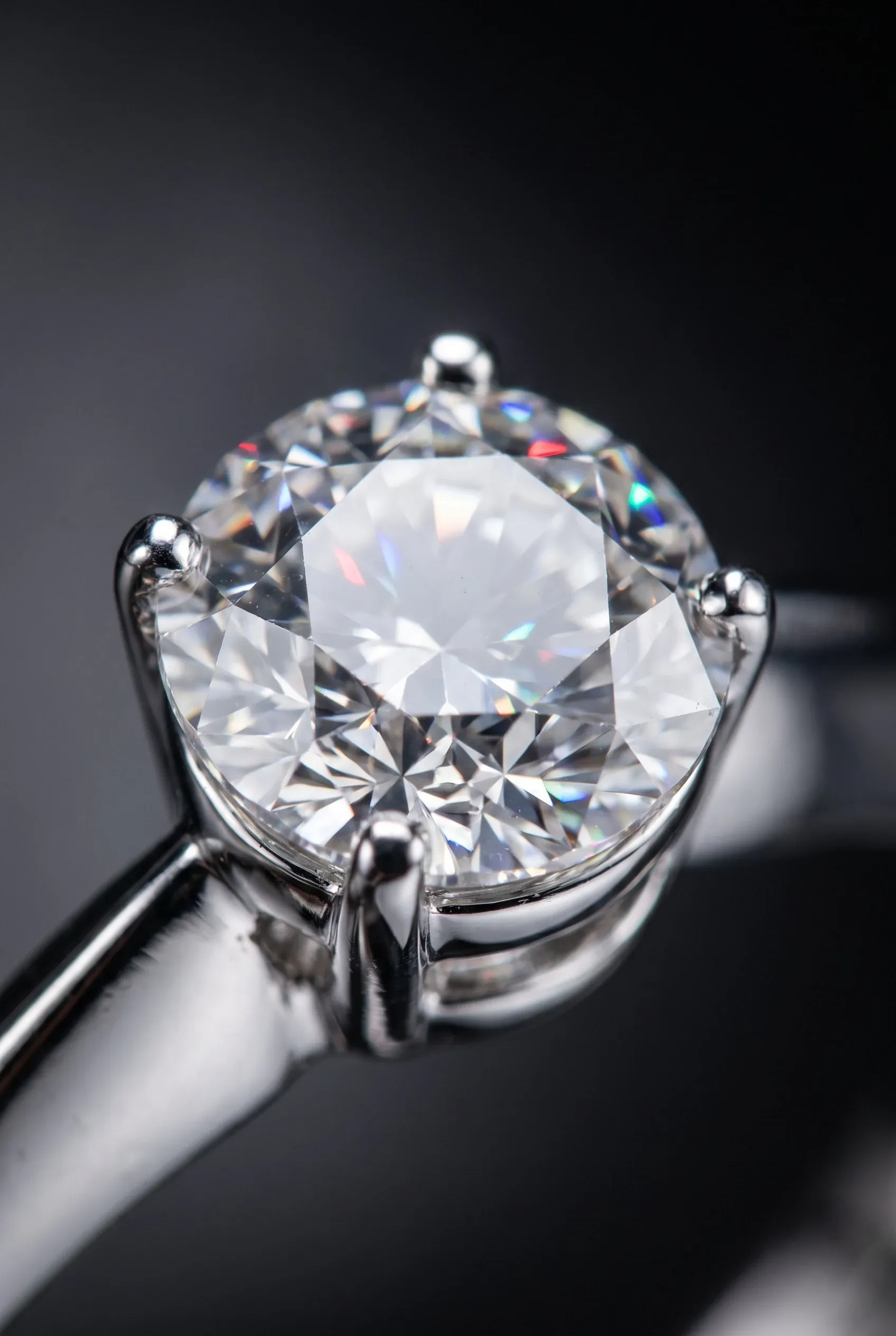
Hard water can deposit minerals such as calcium and magnesium on the surface. Soap can leave a thin film. Oils from your skin collect fastest on rings because your hands touch everything all day. Dirt, makeup, powder, lotion, and hair products add another layer that blocks sparkle.
These are the most common causes of a cloudy look:
- Skin oils
- Hand lotion and sunscreen
- Soap residue
- Hard-water deposits
- Dust and everyday dirt
- Cosmetic powders and perfume
- Grease from cooking
None of those substances change the stone permanently. They simply cover it.
Effects of Time, Warm Conditions, and Soft Contact
Time alone does not make moissanite tarnish. A moissanite stone worn for years stays stable in color and clarity if you keep it clean. What changes over time is the amount of residue that builds up from repeated contact.
Warm conditions speed up that buildup indirectly. Heat from your skin, warm water, kitchens, and daily activity makes oils and product residue spread more easily across the surface. Soft contact also matters more than people expect. A soft towel with fabric softener, a lotion-coated fingertip, or a makeup brush will not scratch the stone, but each can leave a film that reduces shine.
That is why a ring can look less bright even when nothing is actually wrong with it. The stone has not aged badly; it just needs proper cleaning.
Cleaning and Maintenance of Moissanite
Effective Cleaning Techniques Using Soap and Water
The safest at-home method is simple: warm water, mild soap, and a soft toothbrush. Our step-by-step cleaning guide covers the full routine. This removes oils and dirt without being harsh on the setting.
- Fill a small bowl with warm water and add a drop or two of mild dish soap.
- Let the ring soak for 10 to 15 minutes.
- Gently brush the stone, the underside, and the area around the prongs.
- Rinse thoroughly with clean warm water.
- Dry with a soft, lint-free cloth.
A commercial non-acid jewelry cleaner also works if it is suitable for the metal in your ring. Avoid bleach, chlorine, abrasive pastes, and rough brushes because they can damage the metal even though the moissanite itself is tough.
If residue stays trapped under the setting after home cleaning, a jeweler can deep-clean the ring and inspect the prongs at the same time.
Tips to Restore Clarity, Sparkle, and Brilliance Over the Years
Regular maintenance matters more than aggressive cleaning. A quick wash every week or two prevents heavy buildup and keeps the stone looking clear.
Use these habits to preserve sparkle over the years:
- Wipe the ring after daily wear with a soft cloth.
- Clean more often if you use hand cream, sunscreen, or hair products every day.
- Store the ring separately in a pouch or lined compartment.
- Have the setting checked professionally once or twice a year.
Some manufacturers offer coverage for defects or replacement, but warranty terms vary by seller. That reflects how stable the material is over long periods of wear.
Preventing Tarnish in Moissanite Rings
Best Practices for Protecting Your Moissanite Ring from Wear
The best way to protect a moissanite ring is to reduce residue and avoid impact. Remove your ring before heavy cleaning, gardening, weight training, swimming in chlorinated water, or any task where the setting might take a hit.

If your ring is set in sterling silver, the metal deserves extra attention because silver tarnishes far more easily than moissanite. Gold holds up better, though lower-karat gold alloys can dull over time. Platinum does not tarnish, but it develops a patina that a jeweler can polish.
| Part of the Ring | What Happens Over Time | What You Should Do |
|---|---|---|
| Moissanite stone | Does not tarnish or fade | Clean away surface film |
| Sterling silver setting | Can tarnish | Polish metal regularly |
| Gold setting | Can dull depending on alloy | Clean and polish as needed |
| Platinum setting | Develops patina, not tarnish | Professional polish if desired |
Routine Care and Handling to Keep Rings Clear and Cloud-Free
Put your ring on last when getting ready. Lotion, perfume, hairspray, powder, and sunscreen all reduce sparkle when they settle on the stone. Let those products dry first, then wear the ring.
At the end of the day, a quick rinse or wipe removes fresh oils before they harden into film. That one habit does more for long-term shine than occasional deep cleaning.
Storage matters too. Keep moissanite rings away from other jewelry pieces so the metal does not get scratched. The stone is hard, but the setting is still vulnerable to everyday contact.
Myth vs. Reality: Debunking Common Moissanite Tarnish Myths
Separating Fact from Fiction on Moissanite Durability
Myth: Moissanite tarnishes like silver.
Reality: The stone does not tarnish. Silver settings do.
Myth: Water ruins moissanite.
Reality: Water does not damage the stone. Mineral residue from water can make the surface look cloudy until you clean it.
Myth: A cloudy moissanite is worn out.
Reality: Cloudiness on moissanite is almost always surface buildup from oils, dirt, or soap.
Myth: Moissanite loses color over time.
Reality: The color is part of the crystal, not a coating, so normal light and daily wear do not strip it away.
Real-World Insights on Maintaining a Soft, Sparkling Stone
The most useful way to think about moissanite is this: it is a hard stone that needs gentle care. You do not need harsh chemicals or constant polishing. You need consistent, soft cleaning and realistic protection for the ring as a whole.
If your moissanite ever looks lifeless, start with the obvious before assuming damage: check for lotion film, soap scum under the setting, hard-water marks, or tarnish on the band. In most cases, a clean stone and polished setting restore the bright look you expected from day one.
That combination of durability, easy maintenance, and lasting brilliance is exactly why moissanite works so well for engagement rings and other jewelry you wear every day.
Frequently Asked Questions
Does moissanite get cloudy permanently?
No. Moissanite does not become permanently cloudy from normal wear. If it looks cloudy, the cause is almost always surface residue or buildup under the setting.
Does moissanite tarnish in water?
No. Moissanite does not tarnish in water, including showers, handwashing, or humidity. Hard-water minerals can leave marks on the surface, but those clean off easily.
Why does my moissanite ring look dull?
A dull look usually comes from oils, soap film, lotion, dirt, or residue trapped around the prongs. Clean the stone and setting thoroughly before assuming the ring is damaged.
How often should you clean a moissanite ring?
For a ring you wear daily, light cleaning every one to two weeks keeps sparkle high. A professional cleaning once or twice a year helps remove buildup in hard-to-reach areas.
Can you clean moissanite with dish soap?
Yes. Mild dish soap and warm water are one of the safest and most effective ways to clean moissanite at home.
What part of a moissanite ring can tarnish?
The metal band or setting can tarnish, especially sterling silver. The moissanite stone itself does not tarnish.
Does moissanite scratch easily?
No. With a Mohs hardness of about 9.25, moissanite is highly resistant to scratches and well suited to daily wear.
Will moissanite keep its sparkle for years?
Yes. Moissanite keeps its brilliance for years because the stone is hard, stable, and non-porous. Regular cleaning is what keeps that sparkle visible.